Hebrew calligraphy torah
1344×768 · AVIF · CC BY 4.0
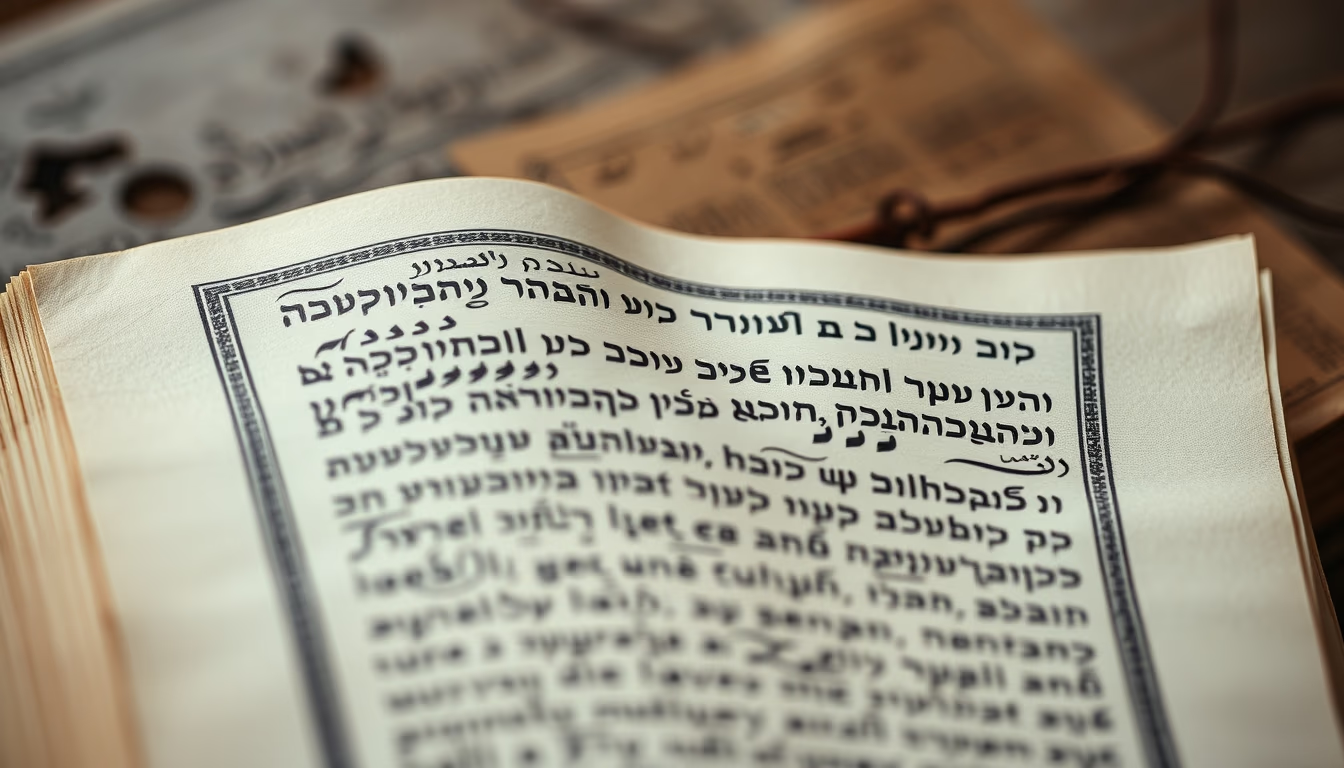
Hebrew calligraphy of the Torah is an ancient art combining technical precision and religious devotion, preserved by specialized scribes.
About this subject
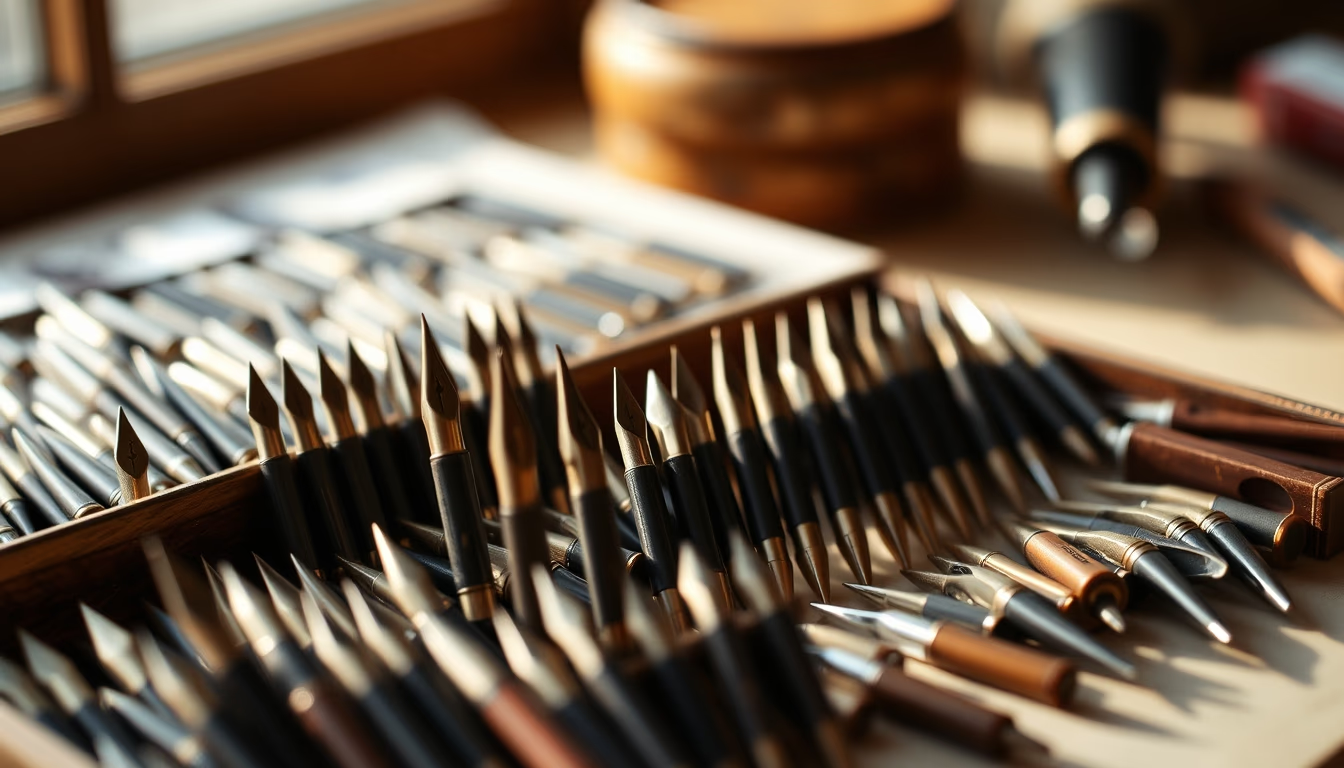
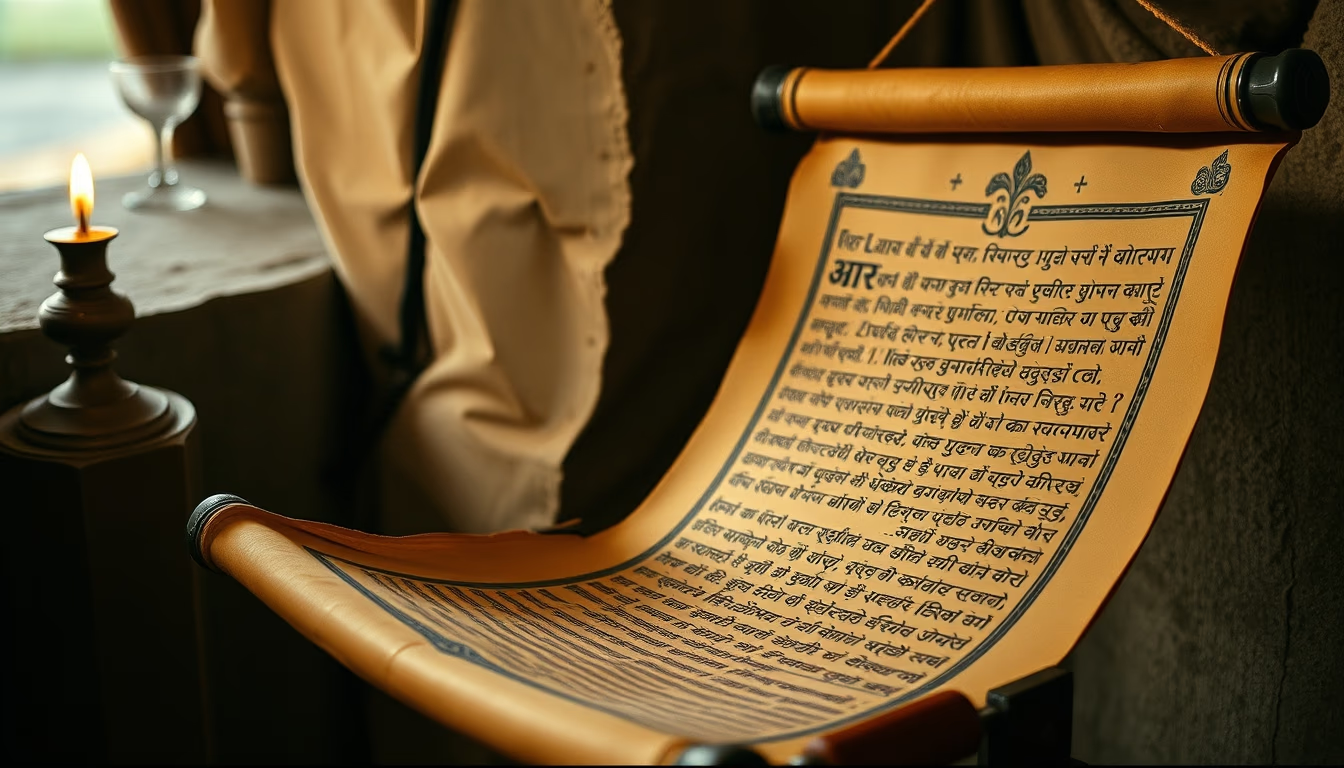
Hebrew calligraphy applied to the Torah, the first five books of the Hebrew Bible, follows strict rules established millennia ago. Each Torah scroll, called a Sefer Torah, is handwritten by a trained sofer (scribe) using a quill and special black ink on kosher parchment. The tradition demands absolute precision; any error renders the scroll invalid for liturgical use. The script is square Hebrew (ketav ashuri), without vowels or punctuation, and each letter must be formed according to specific proportion and shape guidelines.
The production of a Sefer Torah can take up to a year, involving not only calligraphic skill but also deep knowledge of Jewish law (halakha). Sofers undergo years of study and practice, often coming from family lineages that have passed down the craft for generations. Even with modern technology, a Torah is never industrially printed for ritual use; manual calligraphy remains irreplaceable in Judaism.
Historically, Hebrew calligraphy evolved from the Phoenician alphabet, and the current square form was consolidated around the 6th century BCE during the Babylonian exile. Different Jewish communities (Ashkenazi, Sephardi, Yemenite) developed stylistic variations, but the basic structure remains universal. A curiosity: the Torah text is written in columns called 'bread columns' (amudei ha-seder), and certain letters are adorned with crowns (tagin) that carry mystical meanings. The slightest mistake can invalidate an entire scroll, so scribes recite a blessing before writing the name of God.
Torah calligraphy is not only art but an act of spiritual connection. In Israel, specialized institutes train new scribes and certify scrolls for synagogues worldwide. In 2023, UNESCO recognized the art of Jewish calligraphy as intangible cultural heritage, highlighting its historical and ongoing importance. For Jews, the hand-written Torah represents the continuity of the covenant with God, and its handcrafted production reflects the value of human labor in preserving faith.
Frequently Asked Questions
What is a sofer and what is his role in Torah calligraphy?
A sofer is a Jewish scribe trained to write Torah scrolls, tefillin, and mezuzot. He must master Hebrew calligraphy rules and religious laws, ensuring each letter is written with ritual purity and absolute precision.
Why must the Torah be handwritten and not printed?
Jewish tradition requires that the Torah used in religious services be handwritten on kosher parchment, because the manual act of the scribe is believed to confer sanctity and continuity to the transmission of the divine word. Industrial printing is not permitted for liturgical purposes.
How long does it take to write a complete Torah scroll?
The process can take from six months to over a year, depending on the scribe's speed and the complexity of the work. Each scroll contains 304,805 letters, and any error requires correction or replacement of the damaged section.
Direct URL
https://pub-c7d6a6ea828543ac903a74a341ccb2e1.r2.dev/imagens/hebrew-calligraphy-torah-documentary-nature-style-fresh10.avifHow to credit
Include a visible link back to UtilizAí. Copy one of the snippets below:
<a href="https://xn--utiliza-eza.com/en/midia/imagens/hebrew-calligraphy-torah-documentary-nature-style-fresh10">Hebrew calligraphy torah</a> by <a href="https://xn--utiliza-eza.com">UtilizAí</a>, licensed under <a href="https://creativecommons.org/licenses/by/4.0/">CC BY 4.0</a>.
[Hebrew calligraphy torah](https://xn--utiliza-eza.com/en/midia/imagens/hebrew-calligraphy-torah-documentary-nature-style-fresh10) by [UtilizAí](https://xn--utiliza-eza.com), CC BY 4.0
License: CC-BY-4.0