Hdd platter exposed
1344×768 · AVIF · CC BY 4.0
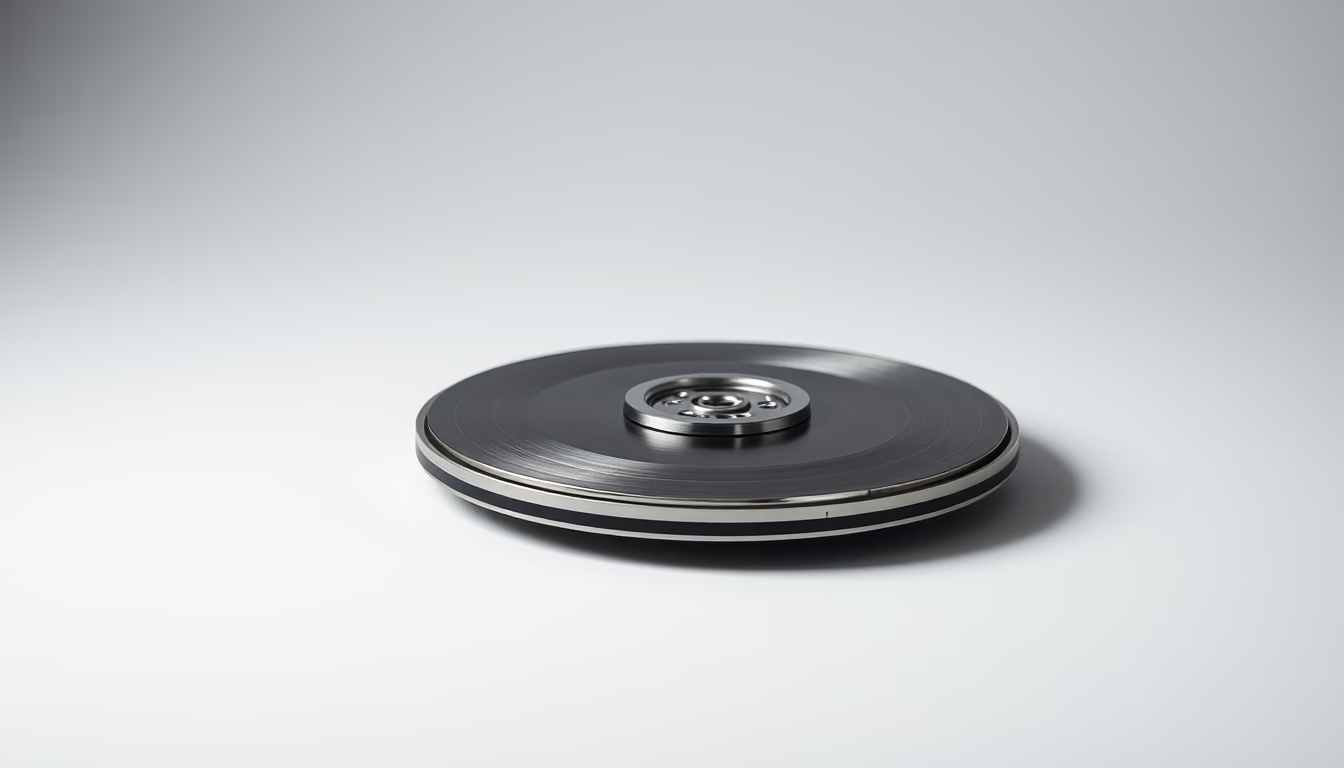
Hard drive revealed: the exposed magnetic platter showcases the storage technology that revolutionized computing.
About this subject
The platter of a mechanical hard disk drive, when exposed, reveals the ultra-thin polished surface that stores data magnetically. Typically made of aluminum or glass, the platter is coated with a magnetic layer composed of cobalt-chromium-platinum alloys. During operation, the read and write head floats nanometers above the surface, never touching, reading and writing bits via magnetic fields. Storage density has increased exponentially since IBM's first hard drive in 1956, the RAMAC 350, which used 50 24-inch platters to store just 5 MB. Today, 2.5-inch platters in laptops can hold terabytes. Exposing the platter is common in data recovery situations, when the drive is opened in a clean room to replace components. The platter is extremely fragile: any dust particle or scratch can destroy data. Hence, production takes place in Class 10 cleanrooms. Perpendicular recording technology, introduced in 2005, allowed density to increase by aligning magnetic domains vertically. Modern HDDs employ technologies like HAMR and microwave-assisted recording to continue Kryder's law, despite competition from SSDs. Nevertheless, mechanical HDDs remain essential for mass storage due to lower cost per gigabyte.
Frequently Asked Questions
What are HDD platters made of?
Platters are typically made of aluminum or glass, coated with a magnetic layer of cobalt-chromium-platinum alloys. This polished surface enables magnetic data storage.
Why is exposing a hard drive platter dangerous?
Exposure to normal air introduces dust particles that can scratch the surface, causing data loss. Opening should only be done in cleanroom environments.
What is the difference between perpendicular and longitudinal recording?
Longitudinal recording aligns magnetic domains horizontally, while perpendicular recording aligns them vertically, allowing higher storage density. Perpendicular became mainstream in 2005.
Direct URL
https://pub-c7d6a6ea828543ac903a74a341ccb2e1.r2.dev/imagens/hdd-platter-exposed-studio-still-life-p2.avifHow to credit
Include a visible link back to UtilizAí. Copy one of the snippets below:
<a href="https://xn--utiliza-eza.com/en/midia/imagens/hdd-platter-exposed-studio-still-life-p2">Hdd platter exposed</a> by <a href="https://xn--utiliza-eza.com">UtilizAí</a>, licensed under <a href="https://creativecommons.org/licenses/by/4.0/">CC BY 4.0</a>.
[Hdd platter exposed](https://xn--utiliza-eza.com/en/midia/imagens/hdd-platter-exposed-studio-still-life-p2) by [UtilizAí](https://xn--utiliza-eza.com), CC BY 4.0
License: CC-BY-4.0