Harp golden frame strings
1344×768 · AVIF · CC BY 4.0
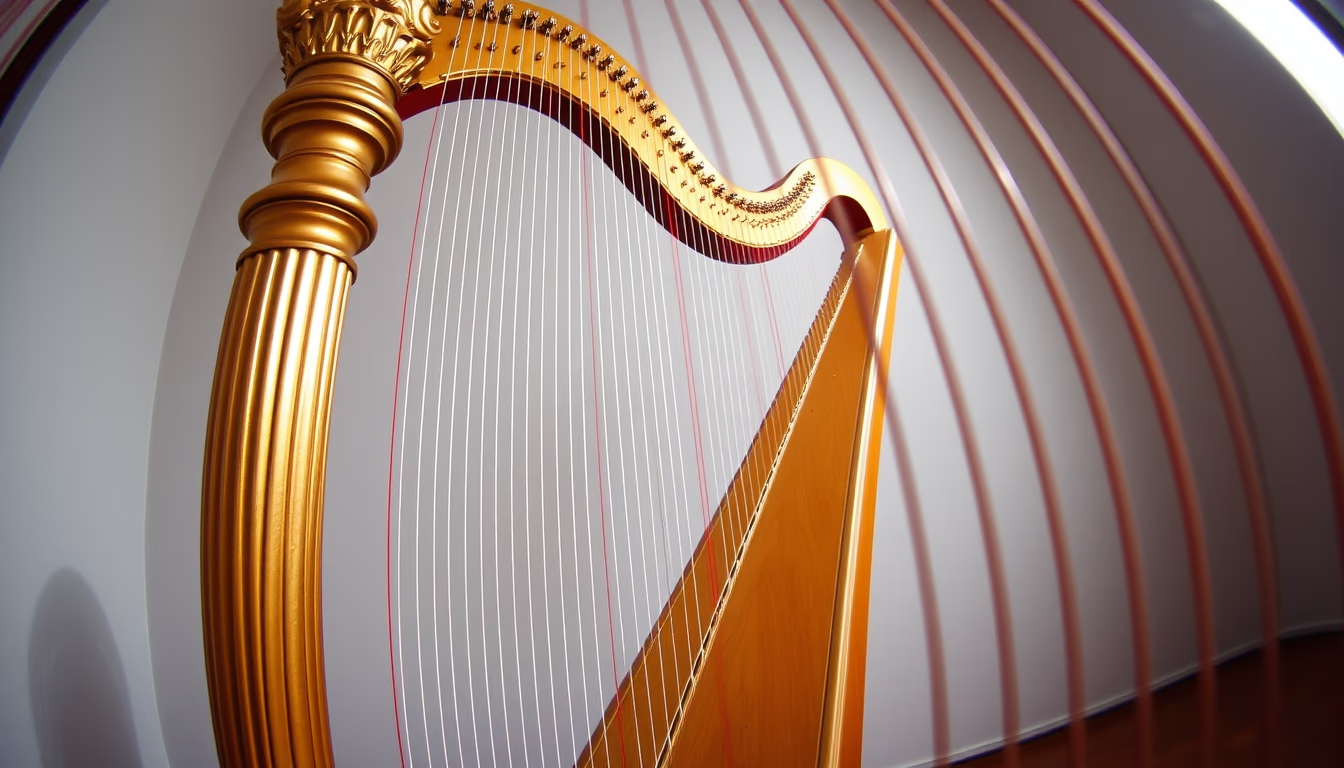
The golden-framed harp is a string instrument that blends visual elegance and unique sound, found in orchestras and folk traditions worldwide.
About this subject
The harp is one of the oldest musical instruments known to humanity, with evidence dating back to Ancient Egypt around 3000 BC. Over centuries, it evolved into various forms, such as the pedal harp (used in symphony orchestras) and the Celtic harp (typical of Irish and Scottish folk music). The version with a golden frame, often intricately carved and decorated, is associated with noble and solemn settings like opera houses and concert halls. Gilding can be achieved with gold leaf or metallic paints, highlighting ornamental details.
In Brazil, the harp is less common in popular music but appears in classical ensembles and folk groups influenced by European traditions. In Paraguay, the diatonic harp (without pedals) is considered the national instrument, with a bright timbre used in polkas and guarânias. A harp typically has 30 to 40 strings made of gut, nylon, or steel, stretched over a wooden frame (e.g., mahogany or maple) reinforced by a gilded or painted column.
Tuning is done via tuning keys or pedals (in concert harps), which shorten or lengthen strings to alter pitch. A curious fact: the pedal harp has seven pedals, one for each note of the scale, each with three positions (natural, sharp, and flat). The Celtic harp, on the other hand, is tuned to a diatonic scale, usually in C or F, requiring manual adjustments for chromatic changes. Renowned harpists like Brazilian Cristina Braga and Irish Turlough O'Carolan have helped popularize the instrument in different contexts.
Frequently Asked Questions
What is the difference between a pedal harp and a Celtic harp?
The pedal harp has pedals that allow chromatic tuning changes, used in orchestras. The Celtic harp is smaller, without pedals, tuned diatonically (usually in C or F), and more common in Irish and Scottish folk music.
How is harp string maintenance done?
Gut strings require frequent replacement and humidity care. Nylon or steel strings last longer, but all need regular tuning. Lubricating contact points and wiping the frame with a dry cloth help preservation.
What is the historical origin of the harp?
The harp originated in Ancient Egypt over 5000 years ago, depicted in tombs and temples. It later spread to Europe and Asia. In the Middle Ages, the Celtic harp became a symbol of Irish culture. The modern orchestral model with pedals was developed in the 18th century and perfected by Sébastien Érard in the early 19th century.
Direct URL
https://pub-c7d6a6ea828543ac903a74a341ccb2e1.r2.dev/imagens/harp-golden-frame-strings-fish-eye-wide-angle-p1.avifHow to credit
Include a visible link back to UtilizAí. Copy one of the snippets below:
<a href="https://xn--utiliza-eza.com/en/midia/imagens/harp-golden-frame-strings-fish-eye-wide-angle-p1">Harp golden frame strings</a> by <a href="https://xn--utiliza-eza.com">UtilizAí</a>, licensed under <a href="https://creativecommons.org/licenses/by/4.0/">CC BY 4.0</a>.
[Harp golden frame strings](https://xn--utiliza-eza.com/en/midia/imagens/harp-golden-frame-strings-fish-eye-wide-angle-p1) by [UtilizAí](https://xn--utiliza-eza.com), CC BY 4.0
License: CC-BY-4.0