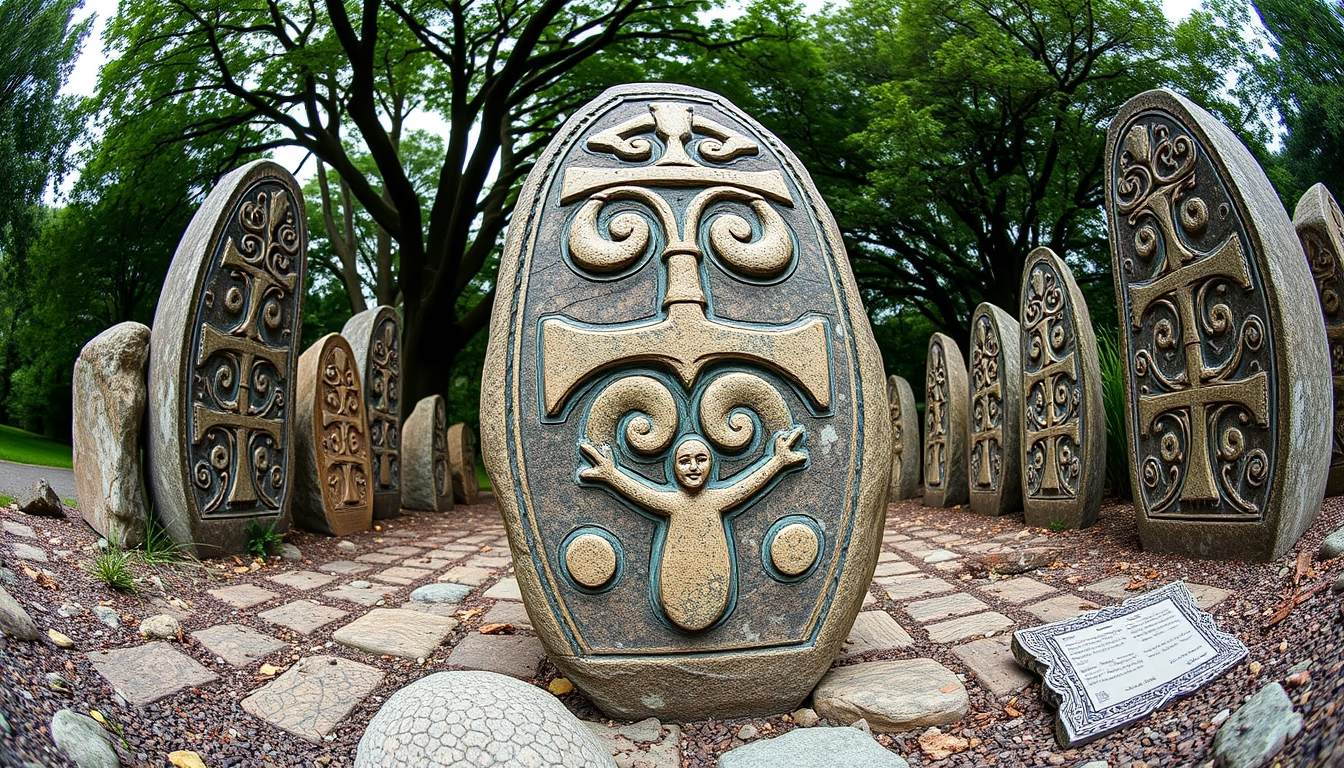
Hangul korean ancient
1344×768 · AVIF · CC BY 4.0

Hangul, the Korean alphabet created in the 15th century by King Sejong, is a scientific and elegant writing system, celebrated as a cultural and linguistic heritage.
About this subject
Hangul, also known as Hangeul, is the native alphabet of Korea, created in 1443 by King Sejong the Great and promulgated in 1446 through the document 'Hunminjeongeum' (The Correct Sounds for the Instruction of the People). Unlike logographic systems such as Chinese characters (hanja), Hangul was designed to be intuitive and accessible to all social classes, combating illiteracy in pre-modern Korea. Its structure is based on articulatory phonetics: consonants represent the shape of the vocal organs (tongue, palate, lips) when producing sound, while vowels symbolize heaven, earth, and the human being. This scientific approach earned Hangul UNESCO Memory of the World recognition in 1997, and it remains a subject of worldwide linguistic study.
Korean calligraphy (seoye) uses Hangul as a medium for artistic expression, blending precise strokes with fluidity, and is practiced in both classical and contemporary forms. The editorial image, set in a 'magazine-editorial' context, likely highlights the aesthetic beauty of ancient characters, now used in design, art, and global media. The fact that Hangul was artificially created, unlike alphabets that evolved organically, reinforces its historical uniqueness. Today, Hangul is celebrated annually on Hangul Day (October 9) in South Korea, and its design has inspired fonts and visual identities around the world.
Interestingly, the name 'Hangul' means 'great writing' in archaic Korean, and the system consists of 24 basic letters (14 consonants and 10 vowels) that combine into syllabic blocks. Unlike linear alphabets, Hangul groups letters into virtual squares to form syllables, making it visually distinct and efficient for writing and reading. Despite its modern appearance, ancient Hangul texts, such as the 'Worin Seokbo' (1459), demonstrate calligraphic evolution and cultural resilience during periods of foreign domination. Today, Hangul is not only a means of communication but a symbol of Korean national identity and linguistic innovation.
Frequently Asked Questions
Why did King Sejong create Hangul?
King Sejong created Hangul to promote literacy among the Korean people, who at the time relied on complex Chinese characters (hanja) that were difficult to learn. His goal was to make written communication accessible to all, regardless of social class.
What is the difference between Hangul and Chinese characters (hanja)?
Hangul is a phonetic alphabet with 24 letters representing sounds, while hanja are logograms representing words or ideas. Hangul is much simpler to learn and use, and it is the official writing system in both South and North Korea.
Is Hangul considered a scientific alphabet?
Yes, Hangul is often called a scientific alphabet because its design is based on the anatomy of the speech organs and philosophical principles of yin-yang. The shapes of consonants mimic the organs of speech, and vowels reflect heavenly and earthly elements.
Direct URL
https://pub-c7d6a6ea828543ac903a74a341ccb2e1.r2.dev/imagens/hangul-korean-ancient-magazine-editorial-fresh7.avifHow to credit
Include a visible link back to UtilizAí. Copy one of the snippets below:
<a href="https://xn--utiliza-eza.com/en/midia/imagens/hangul-korean-ancient-magazine-editorial-fresh7">Hangul korean ancient</a> by <a href="https://xn--utiliza-eza.com">UtilizAí</a>, licensed under <a href="https://creativecommons.org/licenses/by/4.0/">CC BY 4.0</a>.
[Hangul korean ancient](https://xn--utiliza-eza.com/en/midia/imagens/hangul-korean-ancient-magazine-editorial-fresh7) by [UtilizAí](https://xn--utiliza-eza.com), CC BY 4.0
License: CC-BY-4.0