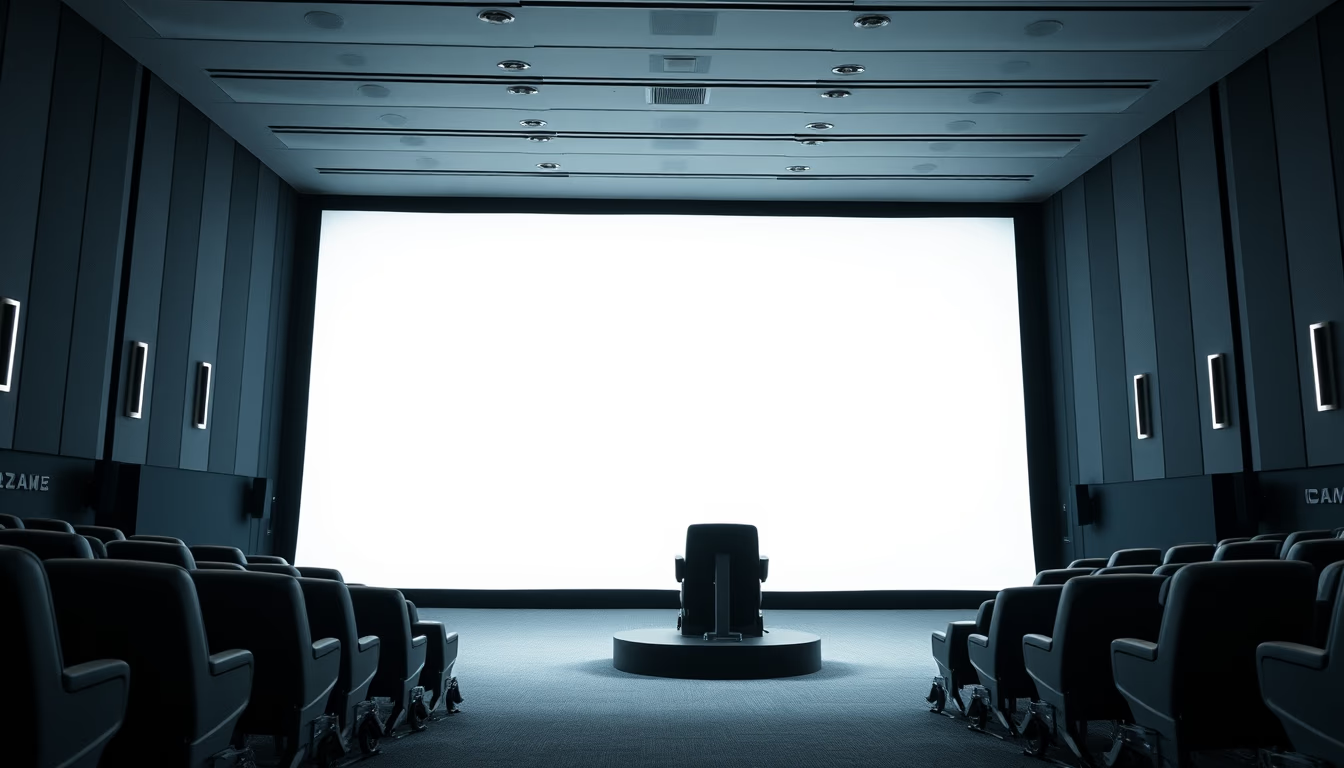
Green screen production
1344×768 · AVIF · CC BY 4.0

The chroma key technique, popularly known as green screen, revolutionized cinema by enabling real-time insertion of virtual backgrounds.
About this subject
The chroma key technique, which uses a uniform green background to replace it with computer-generated or separately filmed images, has become essential in modern audiovisual production. Unlike blue, green is preferred by digital camera sensors due to its higher luminance and lower interference with skin tones and common objects.
The use of green screens dates back to the early days of cinema, with filmmaker Larry Butler creating the first chroma key in 1940 for the film "The Thief of Bagdad". Since then, technological evolution has allowed independent productions and major studios to incorporate the technique, reducing location costs and expanding creative possibilities.
In practice, uniform lighting of the green background is crucial to avoid shadows and reflections that compromise transparency. Software like DaVinci Resolve and Adobe After Effects perform keying by separating the green hue from the rest of the image. In productions like National Geographic, green screens are used to recreate natural or historical environments with documentary precision.
Interestingly, blue is still used in scenes with green elements, such as plants or uniforms. The technique has also expanded to live broadcasts, like weather forecasting and sports, where anchors interact with real-time graphics.
Frequently Asked Questions
What is the difference between green screen and blue screen?
The main difference is the background color. Green is more used due to higher luminance and less interference with skin tones. Blue is preferred when there are green objects in the scene or in analog film shoots.
How does lighting work in chroma key?
Lighting must be uniform and diffuse, avoiding shadows and hot spots. The background needs to be well lit separately from the subject, who should receive light compatible with the final virtual environment.
Why is green the most used color for chroma key?
Digital camera sensors are more sensitive to green, providing better color separation. Additionally, green is the least present color in human skin and common costumes, making background removal easier.
Direct URL
https://pub-c7d6a6ea828543ac903a74a341ccb2e1.r2.dev/imagens/green-screen-production-national-geographic-style-p6.avifHow to credit
Include a visible link back to UtilizAí. Copy one of the snippets below:
<a href="https://xn--utiliza-eza.com/en/midia/imagens/green-screen-production-national-geographic-style-p6">Green screen production</a> by <a href="https://xn--utiliza-eza.com">UtilizAí</a>, licensed under <a href="https://creativecommons.org/licenses/by/4.0/">CC BY 4.0</a>.
[Green screen production](https://xn--utiliza-eza.com/en/midia/imagens/green-screen-production-national-geographic-style-p6) by [UtilizAí](https://xn--utiliza-eza.com), CC BY 4.0
License: CC-BY-4.0