Green roof on building
1344×768 · AVIF · CC BY 4.0
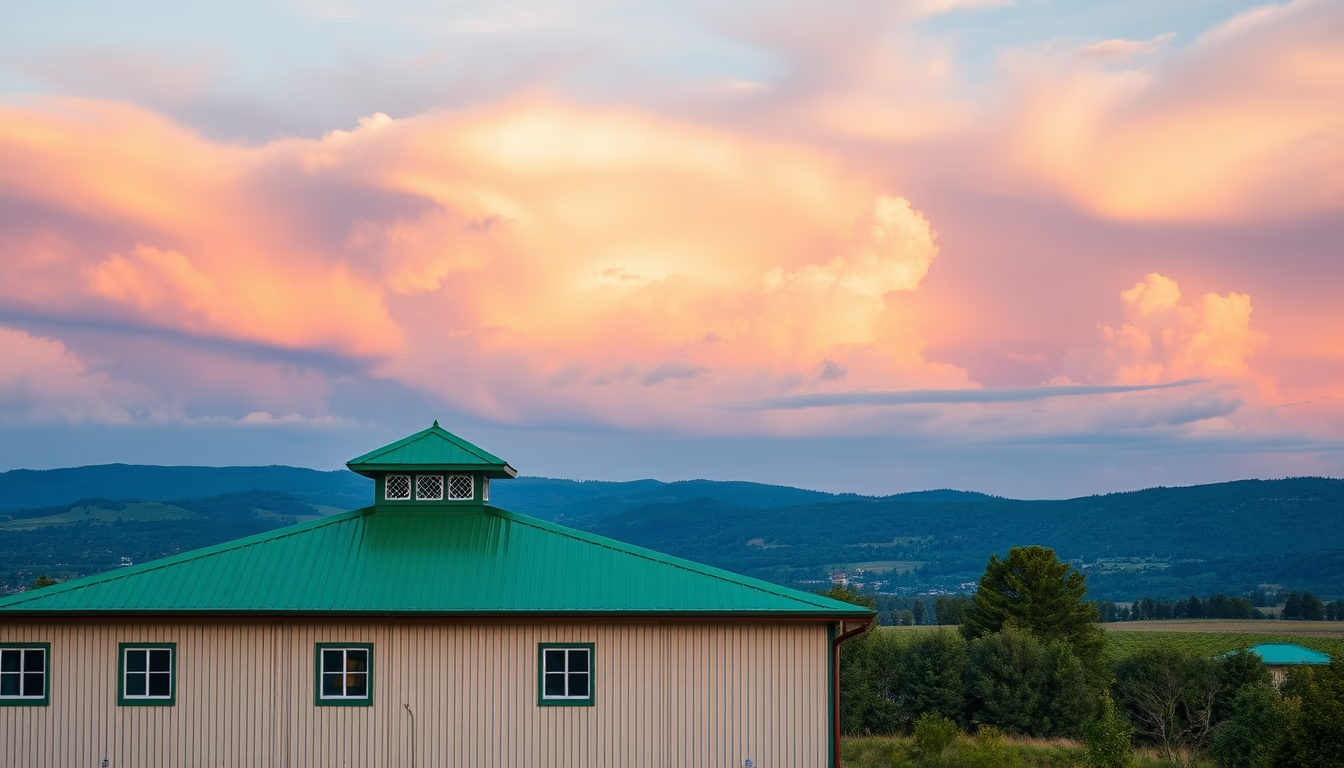
Telhados verdes são soluções sustentáveis que integram vegetação a edificações urbanas, reduzindo ilhas de calor e melhorando a qualidade do ar.
Sobre o tema
Telhados verdes, também conhecidos como coberturas vegetadas, são sistemas construtivos que aplicam uma camada de vegetação sobre a laje de uma edificação. Essa técnica milenar, com origens nos jardins suspensos da Babilônia e nos telhados de grama escandinavos, foi modernizada para atender demandas contemporâneas de sustentabilidade urbana. Em cidades como São Paulo e Curitiba, projetos de telhados verdes têm sido incentivados por políticas públicas que oferecem benefícios fiscais, como o IPTU Verde, visando mitigar problemas como enchentes e poluição atmosférica.
Do ponto de vista técnico, um telhado verde típico é composto por camadas de impermeabilização, drenagem, substrato e vegetação. A escolha das plantas depende do clima local e da profundidade do substrato: em regiões tropicais, espécies como gramíneas, suculentas e bromélias são comuns por sua resistência à seca e baixa manutenção. Estudos da Universidade de São Paulo indicam que telhados verdes podem reduzir a temperatura interna de edifícios em até 4°C no verão, gerando economia de energia elétrica com ar-condicionado.
Além dos benefícios térmicos, essas coberturas contribuem para a gestão de águas pluviais. Em vez de escoar rapidamente para bueiros, a água da chuva é retida pelo substrato e pelas plantas, sendo liberada gradualmente. Isso reduz o risco de alagamentos, problema crônico em metrópoles como o Rio de Janeiro. Um telhado verde de 100 m² pode reter até 70% do volume de chuva anual, conforme dados da Prefeitura de São Paulo.
A biodiversidade urbana também se beneficia. Telhados verdes funcionam como corredores ecológicos para aves, insetos polinizadores e pequenos mamíferos, ajudando a conectar fragmentos de vegetação isolados. Em Londres, o projeto “Living Roofs” já documentou mais de 200 espécies de artrópodes em coberturas vegetadas, demonstrando o potencial ecológico dessa infraestrutura. Apesar do custo inicial mais alto que um telhado convencional, a economia a longo prazo em energia e manutenção, somada aos ganhos ambientais, torna essa tecnologia cada vez mais atrativa para construtoras e governos.
Perguntas frequentes
Quais são os principais tipos de telhado verde?
Existem dois tipos principais: extensivo (substrato raso, plantas resistentes como suculentas, baixa manutenção) e intensivo (substrato profundo, permite jardins com arbustos e árvores, exige irrigação e cuidados constantes).
Telhados verdes precisam de irrigação constante?
Depende do tipo e do clima. Telhados extensivos em regiões tropicais podem usar plantas tolerantes à seca e dispensar irrigação após estabelecidas. Já os intensivos geralmente requerem sistema de irrigação, especialmente em períodos de estiagem.
Qual o custo médio de instalação de um telhado verde no Brasil?
O custo varia conforme o tipo e a área. Telhados extensivos custam entre R$ 150 e R$ 300 por m², enquanto intensivos podem ultrapassar R$ 500 por m². A economia em energia e a redução de impermeabilização podem compensar o investimento ao longo do tempo.
URL direta
https://pub-c7d6a6ea828543ac903a74a341ccb2e1.r2.dev/imagens/green-roof-on-building-landscape-photography.avifComo creditar
Inclua um link visível de volta pro UtilizAí. Copie um dos snippets abaixo:
<a href="https://xn--utiliza-eza.com/midia/imagens/green-roof-on-building-landscape-photography">Green roof on building</a> by <a href="https://xn--utiliza-eza.com">UtilizAí</a>, licensed under <a href="https://creativecommons.org/licenses/by/4.0/">CC BY 4.0</a>.
[Green roof on building](https://xn--utiliza-eza.com/midia/imagens/green-roof-on-building-landscape-photography) by [UtilizAí](https://xn--utiliza-eza.com), CC BY 4.0
Licença: CC-BY-4.0