Gong large bronze
1344×768 · AVIF · CC BY 4.0
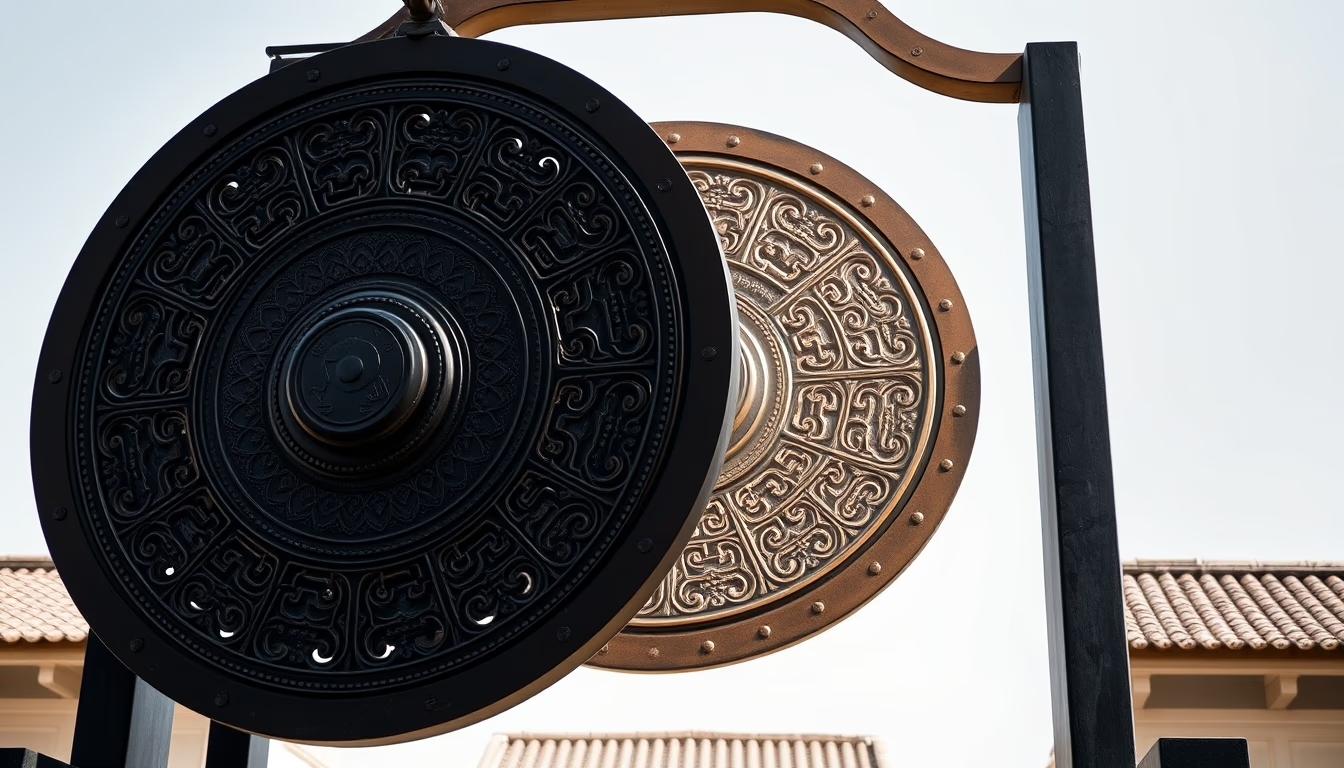
A large bronze gong: an ancient percussion instrument with a striking presence in ceremonies, orchestras, and architectural installations.
About this subject
The gong is an ancient percussion instrument originating in Southeast Asia, likely from China or Indonesia. Crafted from a bronze alloy of copper and tin, traditional fabrication involves casting and hammering to achieve the characteristic curved shape. Size and thickness determine pitch: larger gongs produce deeper, more resonant notes, sometimes below 50 Hz.
Asian cultures have long used gongs in religious rituals, festivals, and imperial courts. In China, they announced the arrival of dignitaries or warded off evil spirits. In Indonesia, gong sets form the gamelan orchestra, accompanying dance and theater. Global diffusion brought the gong into Western classical music; composers like Olivier Messiaen and John Cage composed works exploring its dense, vibrating timbre.
Today, beyond orchestral use, large bronze gongs appear in meditation and sound healing, their sustained vibration generates sound waves that induce deep relaxation. Architectural installations feature suspended gongs in atria or gardens, inviting acoustic interaction and blending sound with design. The polished bronze surface also reflects light, creating a visual impact to match the sound.
Preservation of antique gongs is challenging: bronze oxidizes over time, developing a protective green patina that slightly alters timbre. Artisans continue to produce gongs using centuries-old methods, keeping alive a tradition that spans millennia.
Frequently Asked Questions
How is a bronze gong manufactured?
The gong is cast from a bronze alloy (copper and tin) then hammered into a curved shape. The artisanal process requires precise thickness control to set the pitch.
What is the difference between a gong and a tam-tam?
A gong has a smooth or slightly domed center, while a tam-tam has a raised central boss. This structural difference alters timbre: gongs produce a more sustained sound; tam-tams a more percussive one.
Are large bronze gongs used in music therapy?
Yes. The sustained vibration of the gong induces slow brainwaves (theta/delta), promoting relaxation. They are common in sound baths and guided meditation sessions.
Direct URL
https://pub-c7d6a6ea828543ac903a74a341ccb2e1.r2.dev/imagens/gong-large-bronze-architectural-photography-p8.avifHow to credit
Include a visible link back to UtilizAí. Copy one of the snippets below:
<a href="https://xn--utiliza-eza.com/en/midia/imagens/gong-large-bronze-architectural-photography-p8">Gong large bronze</a> by <a href="https://xn--utiliza-eza.com">UtilizAí</a>, licensed under <a href="https://creativecommons.org/licenses/by/4.0/">CC BY 4.0</a>.
[Gong large bronze](https://xn--utiliza-eza.com/en/midia/imagens/gong-large-bronze-architectural-photography-p8) by [UtilizAí](https://xn--utiliza-eza.com), CC BY 4.0
License: CC-BY-4.0