Gladius roman short
1344×768 · AVIF · CC BY 4.0

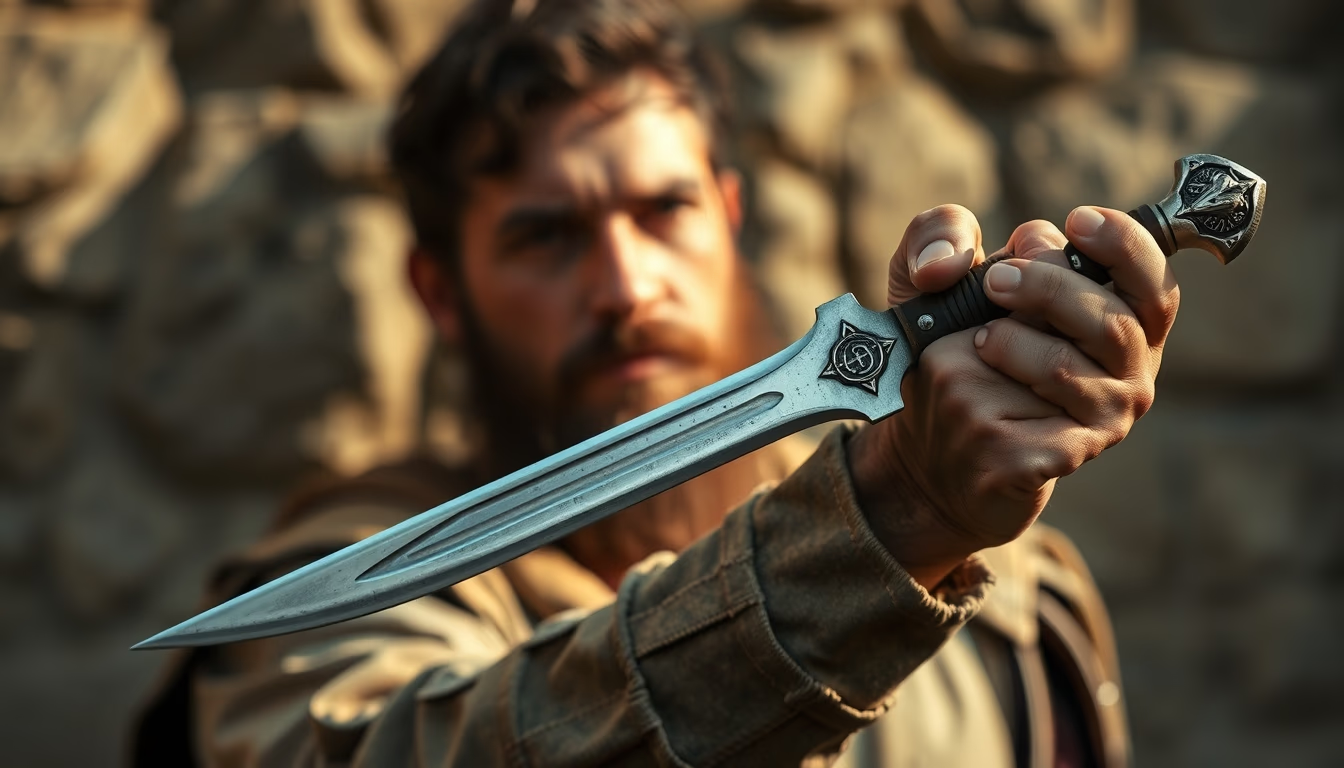
Roman gladius, a short infantry sword that dominated the battlefields of the Roman Empire for centuries.
About this subject
The gladius was the standard sword of Roman legionaries during the Republic and Empire. Ranging from 60 to 85 cm in total length, with a blade of 45 to 55 cm, it was a short-hilted weapon ideal for close-quarters combat in tight formations. Its origin traces back to the gladius hispaniensis, adopted from the Celtiberian warriors of the Iberian Peninsula after the Punic Wars.
The blade was typically double-edged, with a sharp point for thrusting but also capable of cutting. The hilt was often made of bone, wood, or ivory, and the guard and pommel were metallic. Romans used several variants, such as the Mainz gladius (with a wider blade) and the Pompeii gladius (shorter and lighter), each adapted to the tactical needs of its time.
The gladius was used in conjunction with the rectangular shield (scutum), forming the basis of Roman tactics of advancing in lines and attacking at short distances. The weapon's effectiveness was crucial for conquests such as Gaul, Britain, and Dacia. After the 3rd century AD, the gladius was gradually replaced by the spatha, a longer sword, but its legacy endures as a symbol of Roman military might.
Interestingly, the gladius also had ceremonial use, being awarded as a military prize (hasta pura) and depicted in statues and reliefs of emperors. Today, replicas are used by historical reenactors and collectors, keeping the tradition alive.
Frequently Asked Questions
What is the difference between gladius and spatha?
The gladius is shorter (up to 85 cm) and used mainly by legionaries, while the spatha is longer (90 to 110 cm) and was adopted by cavalry and late infantry.
Was the gladius only used for thrusting?
No, although the sharp point favored thrusts, the double-edged blade also allowed for cuts. Roman technique prioritized short thrusts, but the gladius was versatile.
Are there original gladii in museums?
Yes, several have been found at archaeological sites like Pompeii and in Germany. Museums such as the British Museum and the National Roman Museum display well-preserved examples.
Direct URL
https://pub-c7d6a6ea828543ac903a74a341ccb2e1.r2.dev/imagens/gladius-roman-short-studio-editorial-portrait-fresh2.avifHow to credit
Include a visible link back to UtilizAí. Copy one of the snippets below:
<a href="https://xn--utiliza-eza.com/en/midia/imagens/gladius-roman-short-studio-editorial-portrait-fresh2">Gladius roman short</a> by <a href="https://xn--utiliza-eza.com">UtilizAí</a>, licensed under <a href="https://creativecommons.org/licenses/by/4.0/">CC BY 4.0</a>.
[Gladius roman short](https://xn--utiliza-eza.com/en/midia/imagens/gladius-roman-short-studio-editorial-portrait-fresh2) by [UtilizAí](https://xn--utiliza-eza.com), CC BY 4.0
License: CC-BY-4.0