Gear mechanism mechanical
1344×768 · AVIF · CC BY 4.0
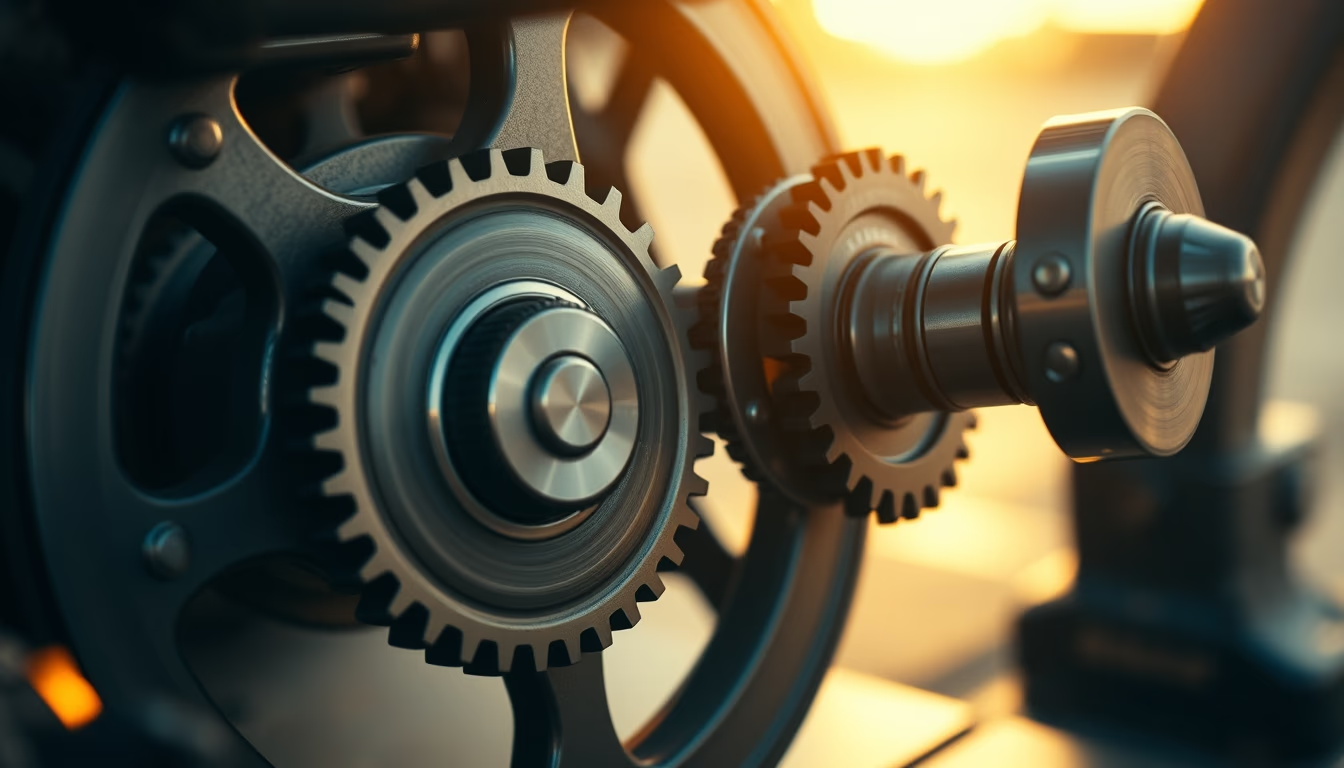
Gears are fundamental mechanical components that transmit torque and rotation between shafts in machines, from watches to industrial turbines.
About this subject
Gears are machine elements with teeth that interlock to transfer motion and force. The basic principle dates back to antiquity, with the Antikythera mechanism (circa 100 BC) being the earliest known example. During the Industrial Revolution, mass production of standardized gears enabled locomotives, looms, and steam engines. Today, gears are made from steel, cast iron, brass, and polymers, using processes like milling, broaching, and sintering. The gear ratio is determined by the number of teeth: two meshing gears alter speed and torque proportionally. Spur gears with straight teeth are common, but variations include helical (quieter), bevel (for perpendicular shafts), and worm gears (high reduction). Lubrication is critical to reduce wear and heat. Typical failures include tooth root fatigue fracture and abrasive wear. Standards such as AGMA (American Gear Manufacturers Association) define tooth profiles and tolerances. In Brazil, the automotive and agricultural machinery industries are major gear consumers. A curiosity: the most used tooth shape, the involute, allows gears to function even with small variations in center distance.
Frequently Asked Questions
How does gear ratio work?
The gear ratio is the ratio of the number of teeth on the driven gear to the driving gear. If the driving gear has 10 teeth and the driven has 20, the ratio is 2:1, doubling torque and halving speed.
What are the main types of gears?
The main types are spur gears (simple and cheap), helical gears (quiet), bevel gears (for changing shaft direction), and worm gears (high reduction in compact space).
Why is lubrication important for gears?
Lubrication reduces friction between teeth, dissipates heat generated by contact, and prevents premature wear and failures such as corrosion and cold welding.
Direct URL
https://pub-c7d6a6ea828543ac903a74a341ccb2e1.r2.dev/imagens/gear-mechanism-mechanical-cinematic-wide-shot-v2.avifHow to credit
Include a visible link back to UtilizAí. Copy one of the snippets below:
<a href="https://xn--utiliza-eza.com/en/midia/imagens/gear-mechanism-mechanical-cinematic-wide-shot-v2">Gear mechanism mechanical</a> by <a href="https://xn--utiliza-eza.com">UtilizAí</a>, licensed under <a href="https://creativecommons.org/licenses/by/4.0/">CC BY 4.0</a>.
[Gear mechanism mechanical](https://xn--utiliza-eza.com/en/midia/imagens/gear-mechanism-mechanical-cinematic-wide-shot-v2) by [UtilizAí](https://xn--utiliza-eza.com), CC BY 4.0
License: CC-BY-4.0