Flying boat catalina
1344×768 · AVIF · CC BY 4.0
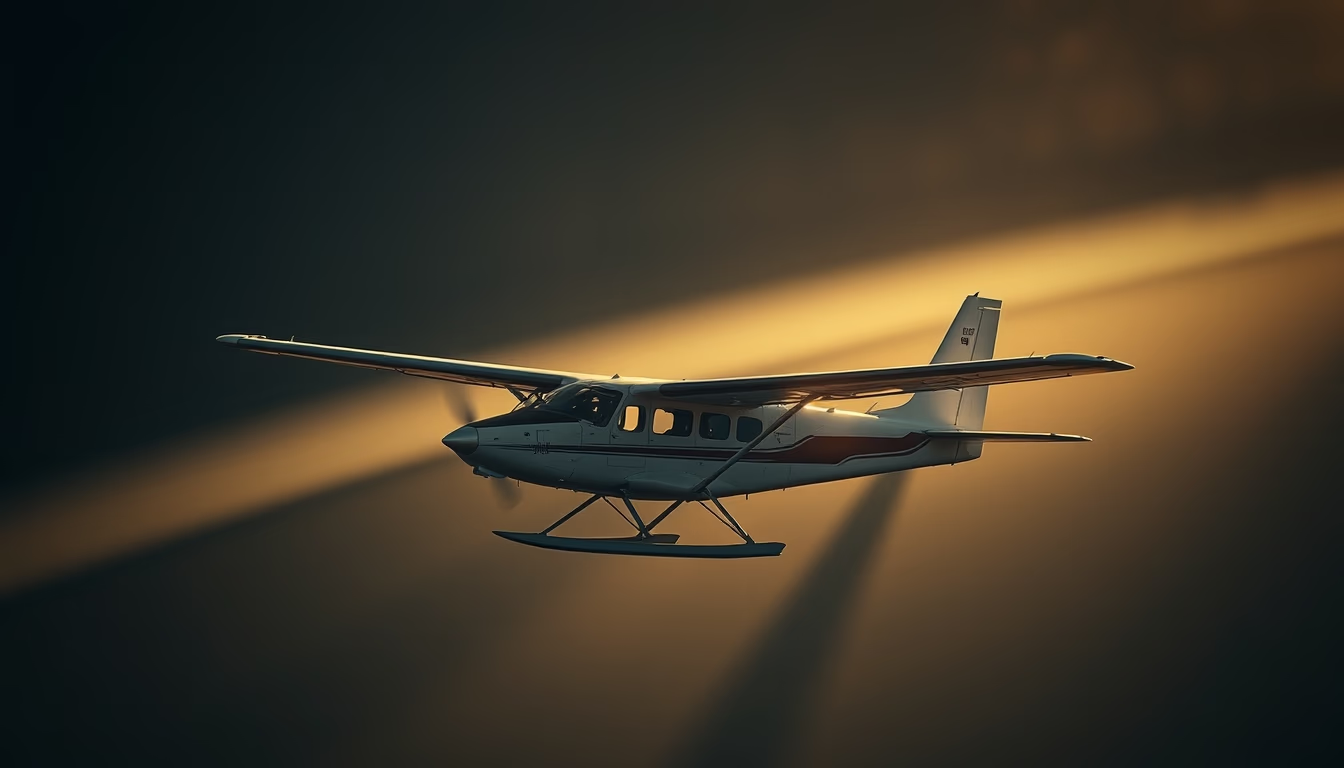
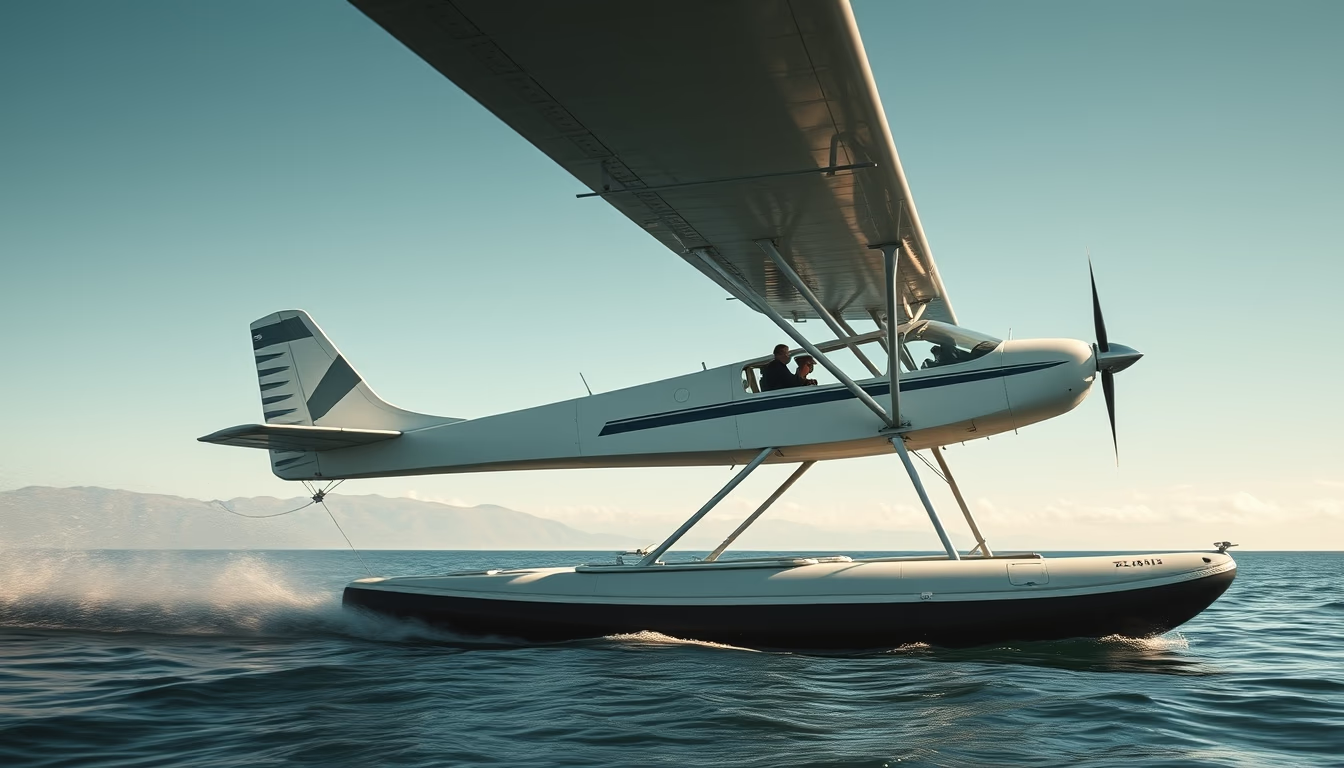
The Consolidated PBY Catalina was an iconic WWII military flying boat used for maritime patrol and rescue, notably in the South Atlantic.
About this subject
The Consolidated PBY Catalina, manufactured by Consolidated Aircraft Corporation, is one of the most famous flying boats in history. Designed in the 1930s, it entered service in 1936 and was widely used during World War II. Its flight range (up to 4,800 km) and ability to land on water made it ideal for maritime patrol, reconnaissance, and search and rescue missions. The Catalina was powered by Pratt & Whitney R-1830 Twin Wasp engines and could carry torpedoes, bombs, or depth charges.
During the war, the PBY played a crucial role in the Battle of the Atlantic, hunting German submarines. In Brazil, the Brazilian Air Force operated Catalinas from Florianópolis Air Base and other units, conducting patrols along the coast. Approximately 4,000 units were produced, including export versions for Canada, the United Kingdom, and the Soviet Union. The Catalina also became famous for rescuing downed pilots in the Pacific, such as the case of Lieutenant John F. Kennedy.
After the war, many Catalinas were converted for civilian use, such as passenger transport and forest firefighting. The civilian version, designated PBY-6A, was used by companies like Panair do Brasil. Today, a few restored examples participate in air shows, and the model is remembered for its distinctive silhouette with high wings and stabilizing floats. The nickname 'Catalina' was given by the British Royal Air Force, referencing Santa Catalina Island in California.
Frequently Asked Questions
How many crew could the PBY Catalina carry?
The PBY Catalina typically had a crew of 7 to 9, including pilot, co-pilot, navigator, radio operator, and gunners. In rescue missions, it could carry up to 10 passengers.
Is the Catalina still in use today?
Some restored Catalinas still fly in air shows, but most have been retired. They are rarely used for forest firefighting, especially in Canada.
What was the top speed of the Catalina?
The top speed was about 320 km/h (200 mph), with a cruising speed of approximately 200 km/h (125 mph).
Direct URL
https://pub-c7d6a6ea828543ac903a74a341ccb2e1.r2.dev/imagens/flying-boat-catalina-rembrandt-lighting-dramatic-shadows-fresh8.avifHow to credit
Include a visible link back to UtilizAí. Copy one of the snippets below:
<a href="https://xn--utiliza-eza.com/en/midia/imagens/flying-boat-catalina-rembrandt-lighting-dramatic-shadows-fresh8">Flying boat catalina</a> by <a href="https://xn--utiliza-eza.com">UtilizAí</a>, licensed under <a href="https://creativecommons.org/licenses/by/4.0/">CC BY 4.0</a>.
[Flying boat catalina](https://xn--utiliza-eza.com/en/midia/imagens/flying-boat-catalina-rembrandt-lighting-dramatic-shadows-fresh8) by [UtilizAí](https://xn--utiliza-eza.com), CC BY 4.0
License: CC-BY-4.0