Falchion medieval curved
1344×768 · AVIF · CC BY 4.0
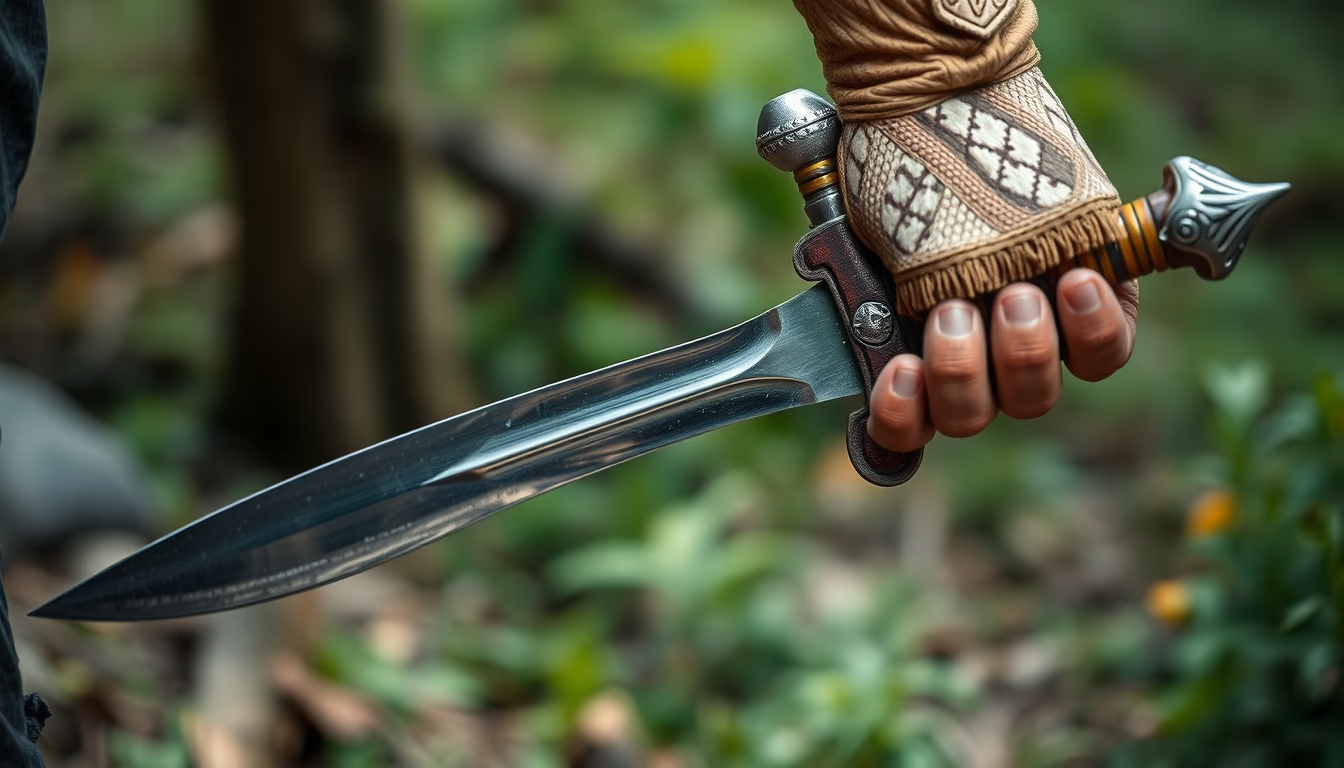
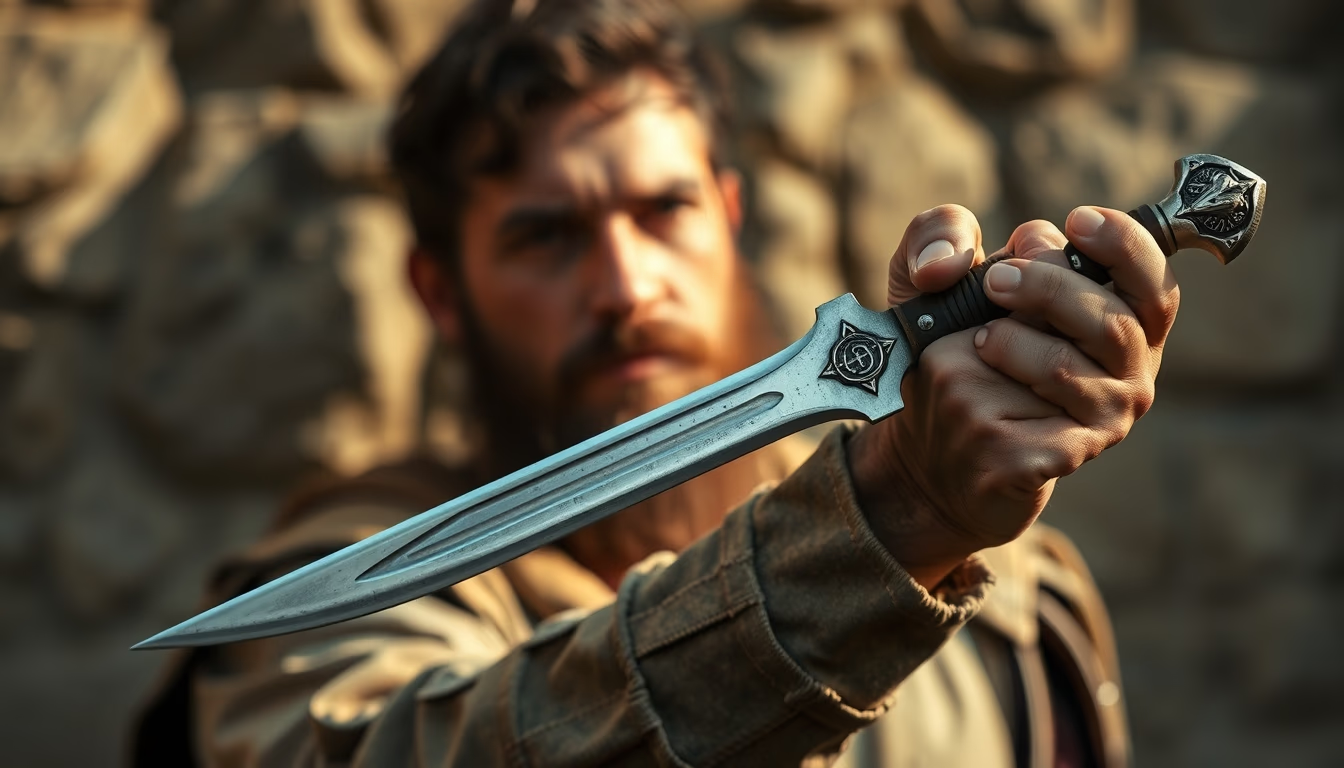
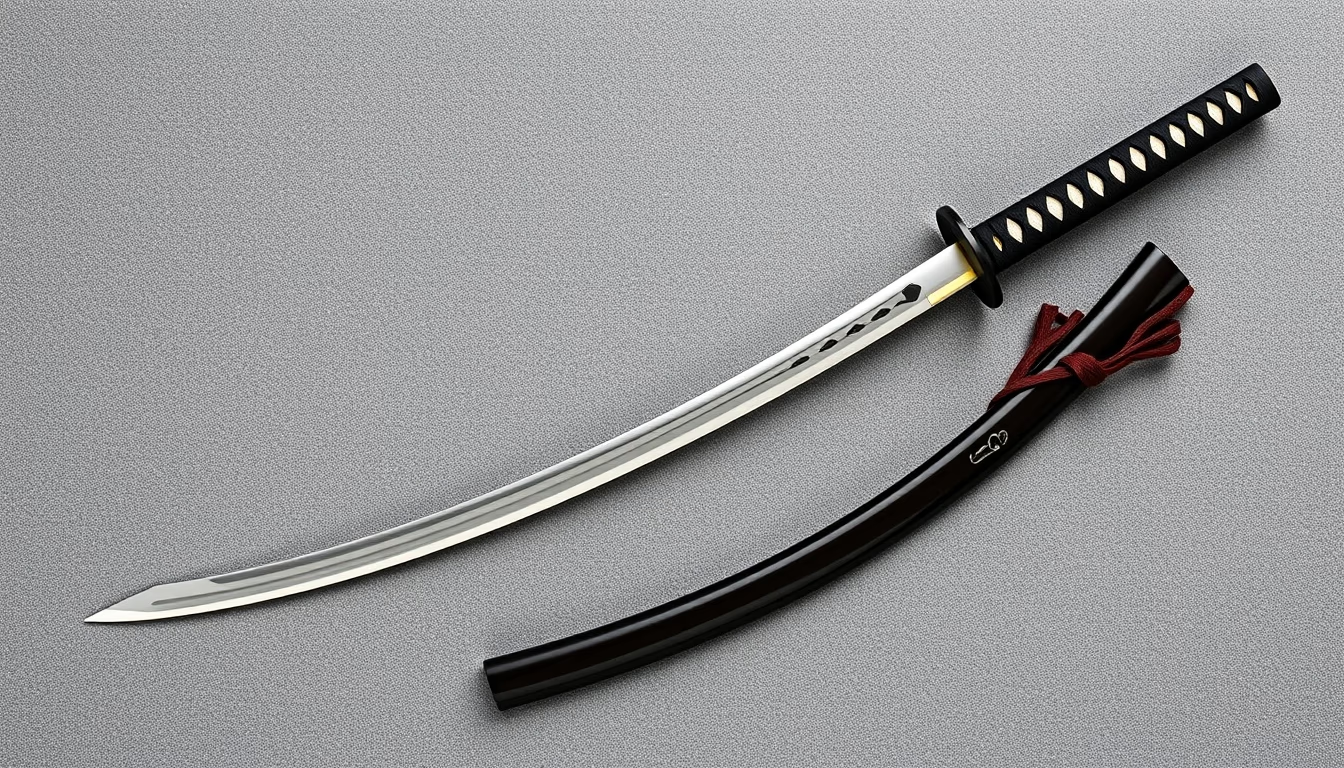
The falchion is a medieval single-edged curved sword, popular in Europe between the 13th and 15th centuries, renowned for its powerful cutting efficiency in close combat.
About this subject
The falchion is a wide, curved single-edged sword that resembles a machete. Unlike double-edged longswords, the falchion was designed to maximize the impact of slashing blows, being especially effective against mail armor and unarmored targets. Its origin is European, with archaeological specimens found in France, England, and Germany, dating from the 13th to the 15th centuries. It was relatively inexpensive to produce, making it popular among infantry soldiers, peasants, and even some knights who carried it as a secondary weapon.
The curvature of the blade, though less pronounced than that of a scimitar or shamshir, allowed weight to concentrate near the tip during a swing, generating deep cuts. The tip was often blunted or rounded, reflecting its focus on cutting rather than thrusting. Regional variations exist, such as the German falchion with a straighter blade and the French one with a more exotic, sickle-like shape. The name derives from Latin 'falx', meaning sickle, highlighting its heritage from agricultural tools adapted for warfare.
Historically, the falchion appears in medieval manuscript illustrations, such as the Maciejowski Bible, where it is wielded by common soldiers. Though lacking the prestige of longswords or greatswords, its practical effectiveness ensured its use for over two centuries. Interestingly, some falchions had blades with curved designs and even a small notch near the tip, similar to a 'false edge', to facilitate thrusts. Today, the falchion is appreciated by collectors and historical reenactors, representing the ingenuity of affordable medieval weaponry.
Frequently Asked Questions
What is the difference between a falchion and a scimitar?
The falchion is a European medieval sword with a curved single-edged blade, while the scimitar originates from the Middle East, featuring a more pronounced curve and lighter weight. The falchion was primarily used by European infantry, whereas the scimitar is associated with Persian and Ottoman horsemen.
Was the falchion used by knights or only by common soldiers?
Although more common among infantry due to low cost, the falchion was also used by knights as a secondary weapon, especially in close-quarters combat. Medieval manuscripts depict knights wielding falchions in battles.
What were the advantages of a curved blade on a falchion?
The curvature concentrated weight near the tip during a swing, enabling deeper, more effective cuts. Additionally, the single-edged design allowed simpler and cheaper manufacture without sacrificing the ability to inflict severe wounds against unarmored or mail-clad targets.
Direct URL
https://pub-c7d6a6ea828543ac903a74a341ccb2e1.r2.dev/imagens/falchion-medieval-curved-documentary-nature-style-fresh6.avifHow to credit
Include a visible link back to UtilizAí. Copy one of the snippets below:
<a href="https://xn--utiliza-eza.com/en/midia/imagens/falchion-medieval-curved-documentary-nature-style-fresh6">Falchion medieval curved</a> by <a href="https://xn--utiliza-eza.com">UtilizAí</a>, licensed under <a href="https://creativecommons.org/licenses/by/4.0/">CC BY 4.0</a>.
[Falchion medieval curved](https://xn--utiliza-eza.com/en/midia/imagens/falchion-medieval-curved-documentary-nature-style-fresh6) by [UtilizAí](https://xn--utiliza-eza.com), CC BY 4.0
License: CC-BY-4.0