Erhu chinese fiddle
1344×768 · AVIF · CC BY 4.0
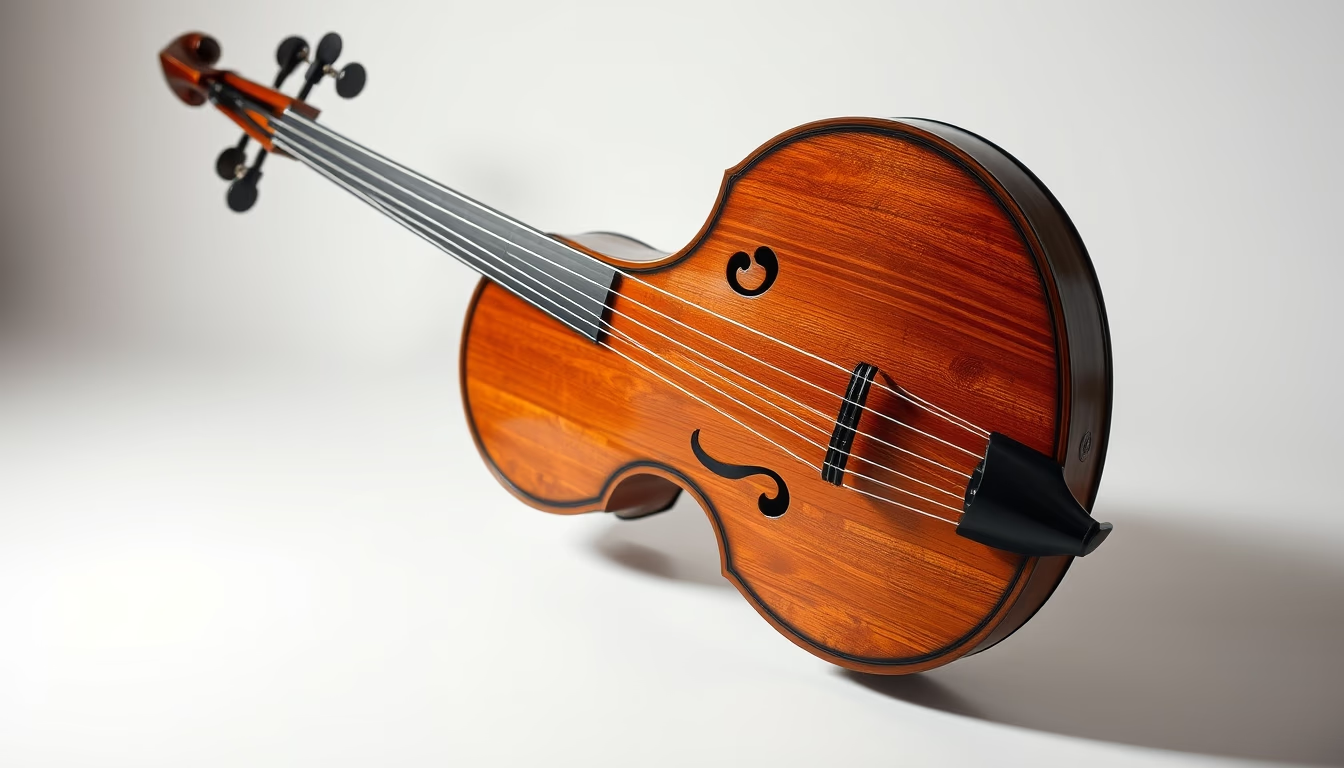
The erhu is a Chinese two-stringed bowed instrument, known for its melancholic and expressive sound, played with a bow that passes between the strings.
About this subject
The erhu is a Chinese bowed string instrument with a distinctive structure and emotive sound. Unlike Western violins, it has only two strings, and the bow is fixed between them, allowing the player to bow both strings simultaneously. The resonator box is typically made of precious wood such as rosewood or mahogany, covered with python skin or, in modern instruments, synthetic materials. The instrument has no fingerboard or frets, requiring precise finger placement to produce correct pitches.
Historically, the erhu traces its origins to the Tang dynasty (618-907 CE), when bowed string instruments were introduced to China via the Silk Road. Initially called 'huqin' (instrument of non-Han peoples), it evolved into various regional forms. The modern erhu gained prominence during the Song dynasty and is now a cornerstone of Chinese traditional music, used in Chinese opera, folk ensembles, and even contemporary compositions and film scores.
A notable technical feature is the absence of a fingerboard; the player presses the strings directly with fingertips to change pitch, enabling characteristic vibrato and glissandi. Standard tuning is D4 and A4 (a fifth apart). Pioneering performers like Liu Tianhua (1895-1932) transformed erhu technique and repertoire, elevating it to a solo instrument. Today, the erhu is globally recognized, often serving as the quintessential sound of Chinese music in international media.
Culturally, the erhu's sound is often described as melancholy or poetic, evoking natural landscapes and deep emotions. It plays a central role in Chinese festivals and ceremonies, and its versatility spans classical pieces such as 'Erquan Yingyue' (Moon Reflected in Erquan Spring) to collaborations with jazz and electronic music.
Frequently Asked Questions
Is the erhu difficult to learn?
Yes, the erhu is considered challenging because it lacks frets or a fingerboard, requiring precise pitch control by ear and touch. The bowing technique is also complex, but with practice it can be mastered.
What is the origin of the name 'erhu'?
The name 'erhu' literally means 'two-stringed instrument' in Chinese: 'er' (two) and 'hu' (short for huqin, a general term for bowed string instruments). It was introduced to China during the Tang dynasty.
Is the erhu only used in traditional Chinese music?
No, while it is essential in traditional Chinese music and opera, the erhu is also used in pop, jazz, film scores, and contemporary compositions, showcasing its versatility.
Direct URL
https://pub-c7d6a6ea828543ac903a74a341ccb2e1.r2.dev/imagens/erhu-chinese-fiddle-studio-still-life-p8.avifHow to credit
Include a visible link back to UtilizAí. Copy one of the snippets below:
<a href="https://xn--utiliza-eza.com/en/midia/imagens/erhu-chinese-fiddle-studio-still-life-p8">Erhu chinese fiddle</a> by <a href="https://xn--utiliza-eza.com">UtilizAí</a>, licensed under <a href="https://creativecommons.org/licenses/by/4.0/">CC BY 4.0</a>.
[Erhu chinese fiddle](https://xn--utiliza-eza.com/en/midia/imagens/erhu-chinese-fiddle-studio-still-life-p8) by [UtilizAí](https://xn--utiliza-eza.com), CC BY 4.0
License: CC-BY-4.0