English horn rare
1344×768 · AVIF · CC BY 4.0
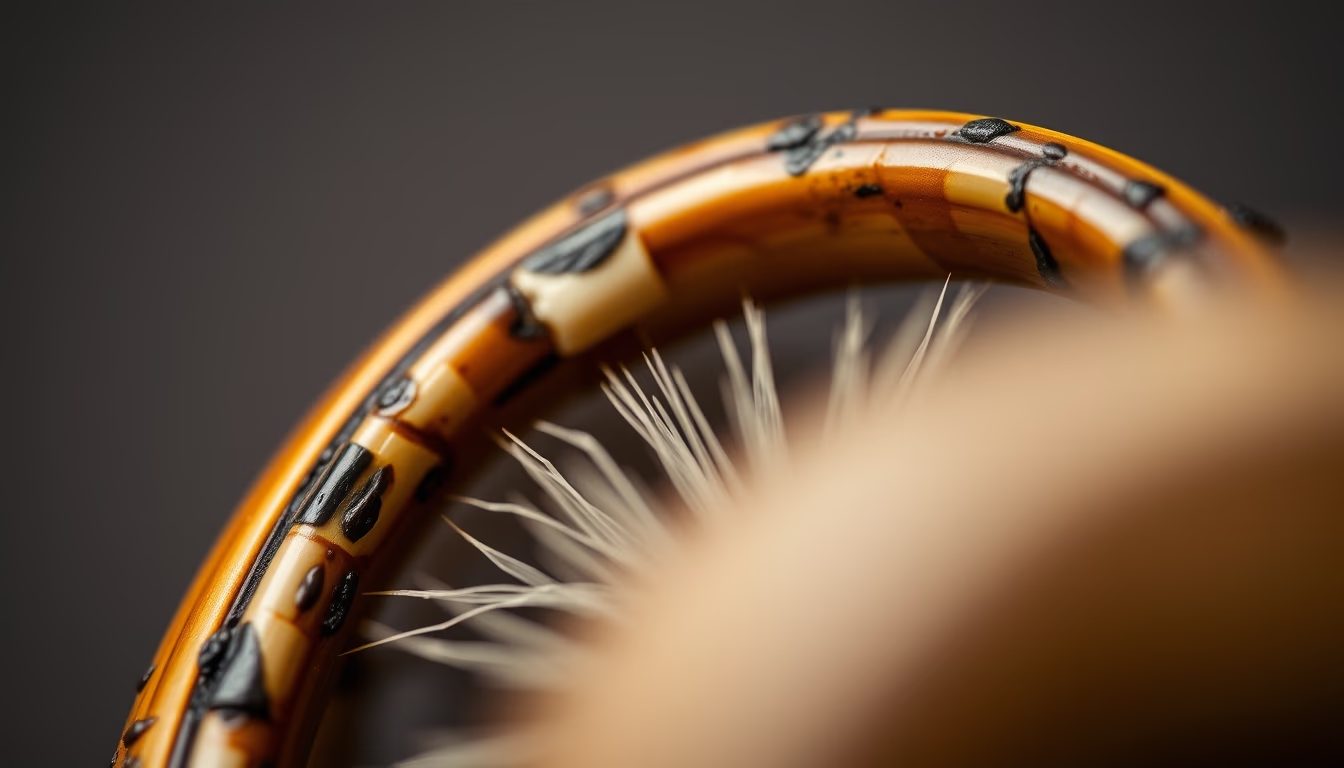
The English horn is a double-reed woodwind instrument known for its melancholic timbre and key role in orchestras.
About this subject
The English horn, also known as the cor anglais, is a double-reed woodwind instrument that belongs to the oboe family. Its defining feature is the double reed, which produces a deeper, more velvety sound than the standard oboe. The instrument is tuned a fifth below the oboe, in F, and has a slightly curved tube at the top, giving it a distinctive shape. Its origins date back to the 18th century, evolving from the oboe da caccia (hunting oboe), and it has since become a staple in film scores and orchestral works.
In the orchestra, the English horn often performs solos of a nostalgic or pastoral character. One of the most famous examples is in the second movement of Antonín Dvořák's New World Symphony, where the instrument plays a slow, expressive melody evoking the American landscape. Other notable works include Tchaikovsky's Swan Lake and César Franck's Symphony in D minor. Its versatility also makes it a frequent presence in film soundtracks, especially for scenes requiring melancholy or suspense.
Interestingly, the name "English" has no connection to England. It is believed to derive from the French term "cor anglé", meaning "angled horn", referring to the shape of its bell or upper tube. The traditional material for manufacturing is grenadilla wood (also used for clarinets), though modern versions may use synthetic resins. Musical notation for the English horn is written in the bass clef, and players require great embouchure control due to the resistance of the double reed.
Frequently Asked Questions
What is the difference between the English horn and the oboe?
The English horn is larger, tuned a fifth below the oboe (in F), and has a deeper, more melancholic timbre. Its tube is slightly curved, whereas the oboe is straight.
Why is it called 'English' if it does not come from England?
The name derives from the French term 'cor anglé' (angled horn), referring to the curved shape of its bell or tube. Over time, 'anglé' was corrupted to 'anglais' and then to 'English'.
In which famous orchestral works does the English horn appear?
It features prominently in the second movement of Dvořák's New World Symphony, Tchaikovsky's Swan Lake, and César Franck's Symphony in D minor. It is also used in film scores such as The Godfather.
Direct URL
https://pub-c7d6a6ea828543ac903a74a341ccb2e1.r2.dev/imagens/english-horn-rare-macro-closeup-p8.avifHow to credit
Include a visible link back to UtilizAí. Copy one of the snippets below:
<a href="https://xn--utiliza-eza.com/en/midia/imagens/english-horn-rare-macro-closeup-p8">English horn rare</a> by <a href="https://xn--utiliza-eza.com">UtilizAí</a>, licensed under <a href="https://creativecommons.org/licenses/by/4.0/">CC BY 4.0</a>.
[English horn rare](https://xn--utiliza-eza.com/en/midia/imagens/english-horn-rare-macro-closeup-p8) by [UtilizAí](https://xn--utiliza-eza.com), CC BY 4.0
License: CC-BY-4.0