English horn rare
1344×768 · AVIF · CC BY 4.0
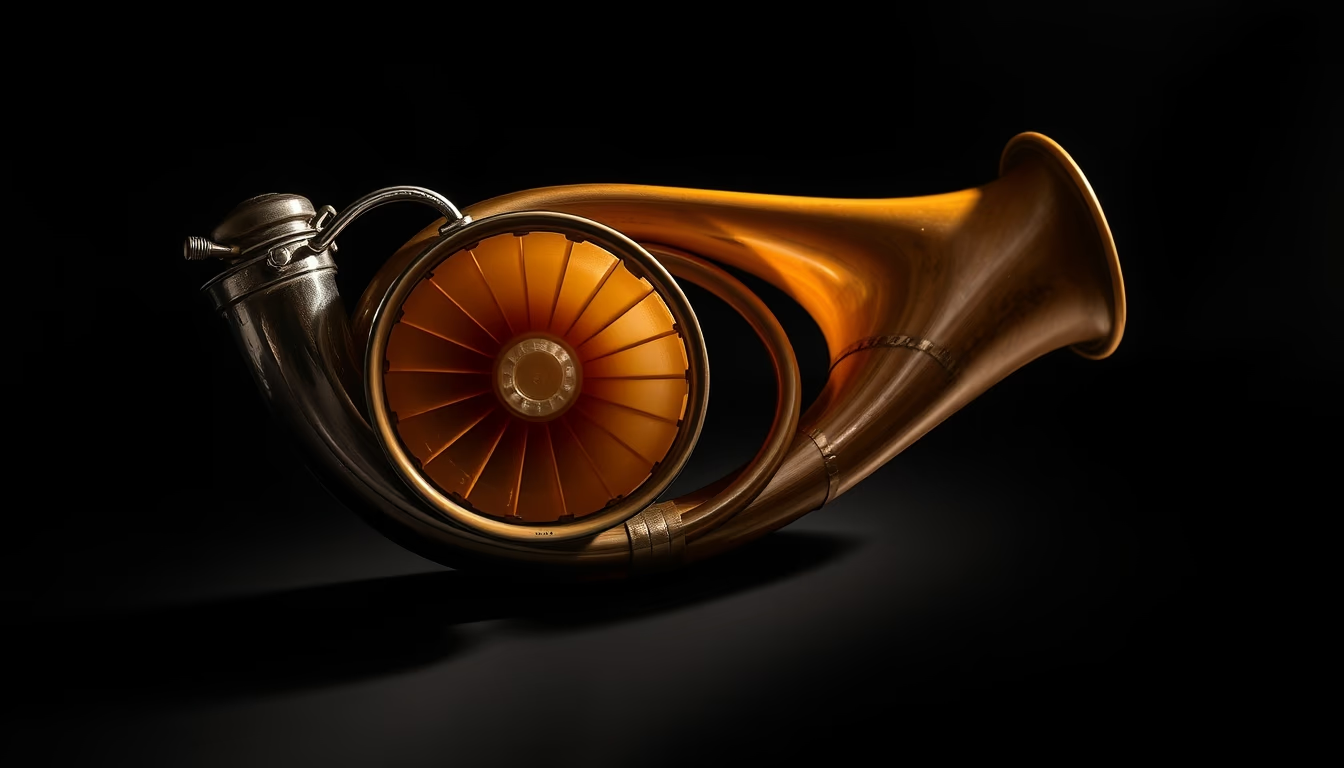
The English horn, also known as cor anglais, is a rare woodwind instrument with a rich, melancholic tone, often used in orchestras for poignant solos.
About this subject
The English horn, or cor anglais, is a woodwind instrument closely related to the oboe but larger and lower in pitch, producing a warm, melancholic tone. Despite its name, it is not English in origin; the term likely derives from the French 'cor anglé' (angled horn), referring to its slightly bent shape. It is a transposing instrument in F, sounding a perfect fifth below the oboe.
In symphony orchestras, the English horn is employed for solos that evoke nostalgia or pastoral scenes. Notable works featuring the instrument include Dvořák's Symphony No. 9 'From the New World', Sibelius's tone poem The Swan of Tuonela, and Rossini's William Tell Overture. Its timbre is often linked to rustic landscapes and introspective moods.
The rarity of the English horn stems from several factors: its production is largely handmade by a few specialized manufacturers. The double reed, made from Arundo donax cane, requires meticulous crafting and frequent replacement. Moreover, dedicated performers are fewer than oboists, making it a niche specialty within classical music.
Historically, the English horn evolved in the 18th century from the oboe da caccia and the tenor oboe. It became a staple of orchestral repertoire during the Romantic era, with composers like Berlioz and Wagner exploiting its expressive range. Today, it also appears in film scores, such as Howard Shore's work for The Lord of the Rings, perpetuating its reputation as a unique and evocative instrument.
Frequently Asked Questions
Is the English horn actually English?
No. Despite its name, it originated in France. The term 'cor anglais' comes from the French 'cor anglé' (angled horn), referring to the instrument's bent shape. It was mistranslated into English as 'English horn'.
What is the difference between an oboe and an English horn?
The English horn is larger, pitched in F (a fifth lower than the oboe), and has a pear-shaped bell that gives it a richer, more melancholic timbre. Its double reed is also slightly different.
In which famous compositions does the English horn appear?
Notable works include Dvořák's Symphony No. 9 'From the New World', Sibelius's The Swan of Tuonela, Rossini's William Tell Overture, and Ravel's Bolero. In film, it features prominently in Howard Shore's score for The Lord of the Rings.
Direct URL
https://pub-c7d6a6ea828543ac903a74a341ccb2e1.r2.dev/imagens/english-horn-rare-fine-art-photography-p10.avifHow to credit
Include a visible link back to UtilizAí. Copy one of the snippets below:
<a href="https://xn--utiliza-eza.com/en/midia/imagens/english-horn-rare-fine-art-photography-p10">English horn rare</a> by <a href="https://xn--utiliza-eza.com">UtilizAí</a>, licensed under <a href="https://creativecommons.org/licenses/by/4.0/">CC BY 4.0</a>.
[English horn rare](https://xn--utiliza-eza.com/en/midia/imagens/english-horn-rare-fine-art-photography-p10) by [UtilizAí](https://xn--utiliza-eza.com), CC BY 4.0
License: CC-BY-4.0