Electric organ hammond
1344×768 · AVIF · CC BY 4.0
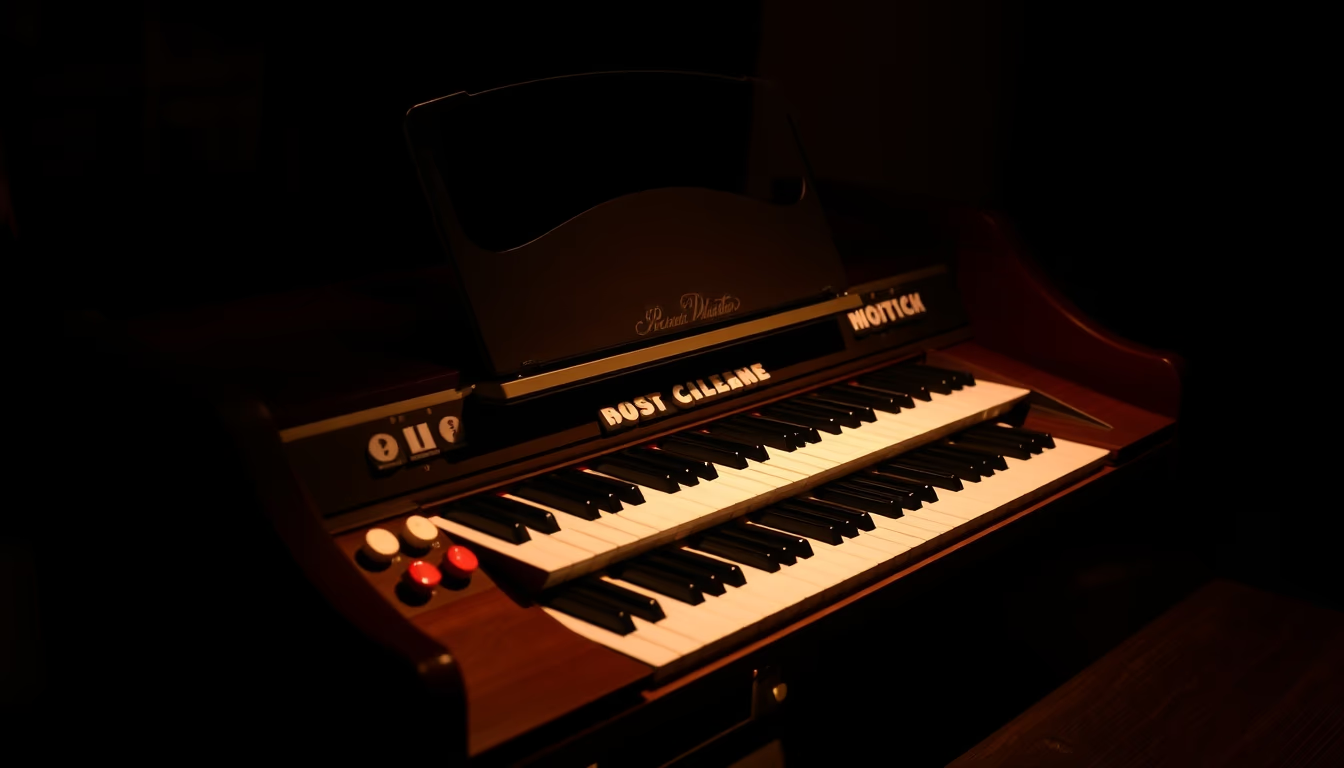
The Hammond organ revolutionized popular music in the 20th century with its unmistakable sound and innovative tonewheel system.
About this subject
The Hammond electric organ was invented by Laurens Hammond in 1935, originally designed as a cheaper and more portable alternative to the pipe organ. Its signature sound is produced by a set of tonewheels that generate sine waves, combined via drawbars to create complex timbres. This electromechanical mechanism, paired with the Leslie speaker (which rotated to simulate a Doppler effect), gave the instrument a unique sonic identity.
The Hammond became a cornerstone of African American music: in gospel with artists like Sister Rosetta Tharpe, and in jazz with the legendary Jimmy Smith, who elevated the organ to a lead solo instrument. In the 1960s and 1970s, the Hammond invaded rock and progressive rock, used by bands such as Deep Purple (Jon Lord), The Doors (Ray Manzarek), and Emerson, Lake & Palmer (Keith Emerson). The most famous model, the B-3, became a visual and sonic icon.
Production of classic tonewheel models ceased in the mid-1970s, but the Hammond sound continues to be recreated through digital emulators and synthesizers. The instrument remains an essential part of music history, representing the bridge between the acoustic and electronic eras, and is still revered by musicians across all genres.
Frequently Asked Questions
What is the difference between a Hammond organ and a pipe organ?
A pipe organ produces sound by forcing air through metal or wooden pipes, whereas a Hammond generates sound electrically via tonewheels. The Hammond is more compact and portable, with a distinctive timbre featuring unique sustain and attack.
How do the drawbars on a Hammond work?
Drawbars are sliding controls that adjust the volume of each harmonic in the overtone series. By pulling or pushing each drawbar, the musician combines sine waves to create timbres ranging from mellow to aggressive, allowing real-time tonal customization.
Why is the Leslie speaker so closely associated with the Hammond?
The Leslie speaker has a rotating drum and horn that spin, producing a vibrato and chorus effect. This effect became nearly inseparable from the Hammond sound, adding richness and depth, especially in jazz and rock recordings.
Direct URL
https://pub-c7d6a6ea828543ac903a74a341ccb2e1.r2.dev/imagens/electric-organ-hammond-fine-art-photography-p10.avifHow to credit
Include a visible link back to UtilizAí. Copy one of the snippets below:
<a href="https://xn--utiliza-eza.com/en/midia/imagens/electric-organ-hammond-fine-art-photography-p10">Electric organ hammond</a> by <a href="https://xn--utiliza-eza.com">UtilizAí</a>, licensed under <a href="https://creativecommons.org/licenses/by/4.0/">CC BY 4.0</a>.
[Electric organ hammond](https://xn--utiliza-eza.com/en/midia/imagens/electric-organ-hammond-fine-art-photography-p10) by [UtilizAí](https://xn--utiliza-eza.com), CC BY 4.0
License: CC-BY-4.0