Didgeridoo aboriginal
1344×768 · AVIF · CC BY 4.0
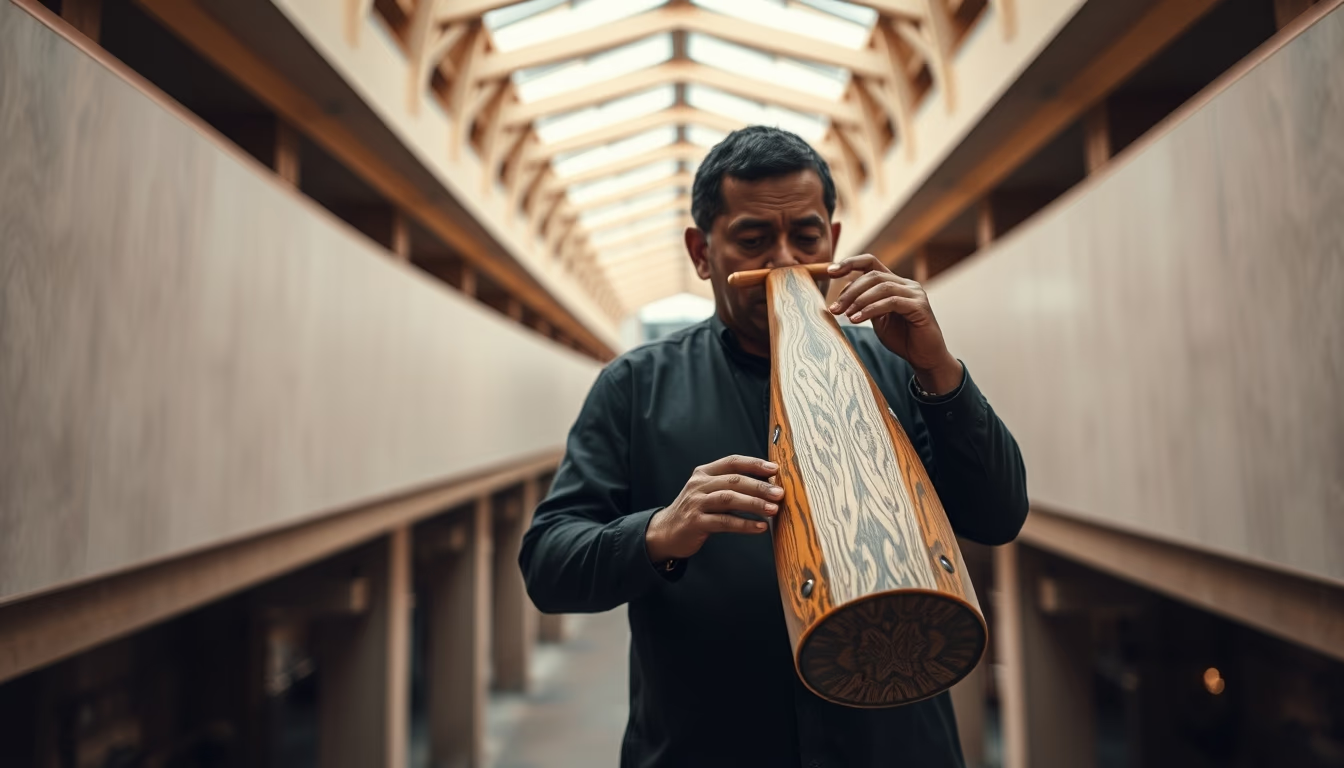
The didgeridoo is an ancient wind instrument of the Aboriginal Australians, with over 1,500 years of cultural and spiritual tradition.
About this subject
The didgeridoo, also known as yidaki or magu, is a wooden aerophone traditionally made from eucalyptus tree trunks hollowed out by termites. Originating in northern Australia, it is one of the world's oldest instruments, with archaeological evidence dating back around 1,500 years. In Aboriginal culture, the didgeridoo is used in ceremonies called corroborees, accompanying songs and dances that tell stories of the Dreamtime, the creation period. The instrument produces a deep, resonant drone, enhanced by circular breathing techniques that allow the player to sustain a note for long periods without pause. Each didgeridoo has a unique pitch, and its sound varies depending on internal shape, length, and wood thickness.
Traditionally, the didgeridoo is painted with symbolic motifs representing clans, totems, and ancestral landscapes. The colors and geometric patterns have spiritual meanings, connecting the instrument to the land and ancestors. Although primarily a male instrument, there are records of women playing it in some regions. Today, the didgeridoo has crossed Australian borders, being used in contemporary music genres such as world music, jazz, and even rock. Artists like Xavier Rudd and the group Gondwana Sounds helped popularize its global sound.
Modern manufacturing includes versions made of PVC, bamboo, or fiberglass, but traditional models are still handcrafted by Aboriginal people. Playing technique requires mastery of circular breathing: inhaling through the nose while exhaling through the mouth to maintain continuous airflow. Learners may take years to perfect this method. The didgeridoo is also used in relaxation and meditation therapies due to its low frequencies inducing calm states. UNESCO has recognized the instrument's cultural significance, and it remains a strong symbol of Aboriginal identity and cultural resilience.
Frequently Asked Questions
How is the didgeridoo played?
The didgeridoo is played by blowing with vibrating lips, like a trumpet. The key technique is circular breathing, which allows the player to inhale through the nose while exhaling through the mouth, sustaining the sound continuously.
What material is the traditional didgeridoo made from?
The traditional didgeridoo is made from eucalyptus tree trunks naturally hollowed out by termites. After selection, Aboriginal people clean the log, shape the mouthpiece, and often paint it with cultural symbols.
What is the spiritual significance of the didgeridoo for Aboriginal people?
The didgeridoo is a sacred instrument that connects the player to the Dreamtime, the creation period. Its sound mimics the voices of nature and ancestors, used in healing rituals and celebrations.
Direct URL
https://pub-c7d6a6ea828543ac903a74a341ccb2e1.r2.dev/imagens/didgeridoo-aboriginal-architectural-photography-p7.avifHow to credit
Include a visible link back to UtilizAí. Copy one of the snippets below:
<a href="https://xn--utiliza-eza.com/en/midia/imagens/didgeridoo-aboriginal-architectural-photography-p7">Didgeridoo aboriginal</a> by <a href="https://xn--utiliza-eza.com">UtilizAí</a>, licensed under <a href="https://creativecommons.org/licenses/by/4.0/">CC BY 4.0</a>.
[Didgeridoo aboriginal](https://xn--utiliza-eza.com/en/midia/imagens/didgeridoo-aboriginal-architectural-photography-p7) by [UtilizAí](https://xn--utiliza-eza.com), CC BY 4.0
License: CC-BY-4.0