Cuneiform sumerian tablet
1344×768 · AVIF · CC BY 4.0
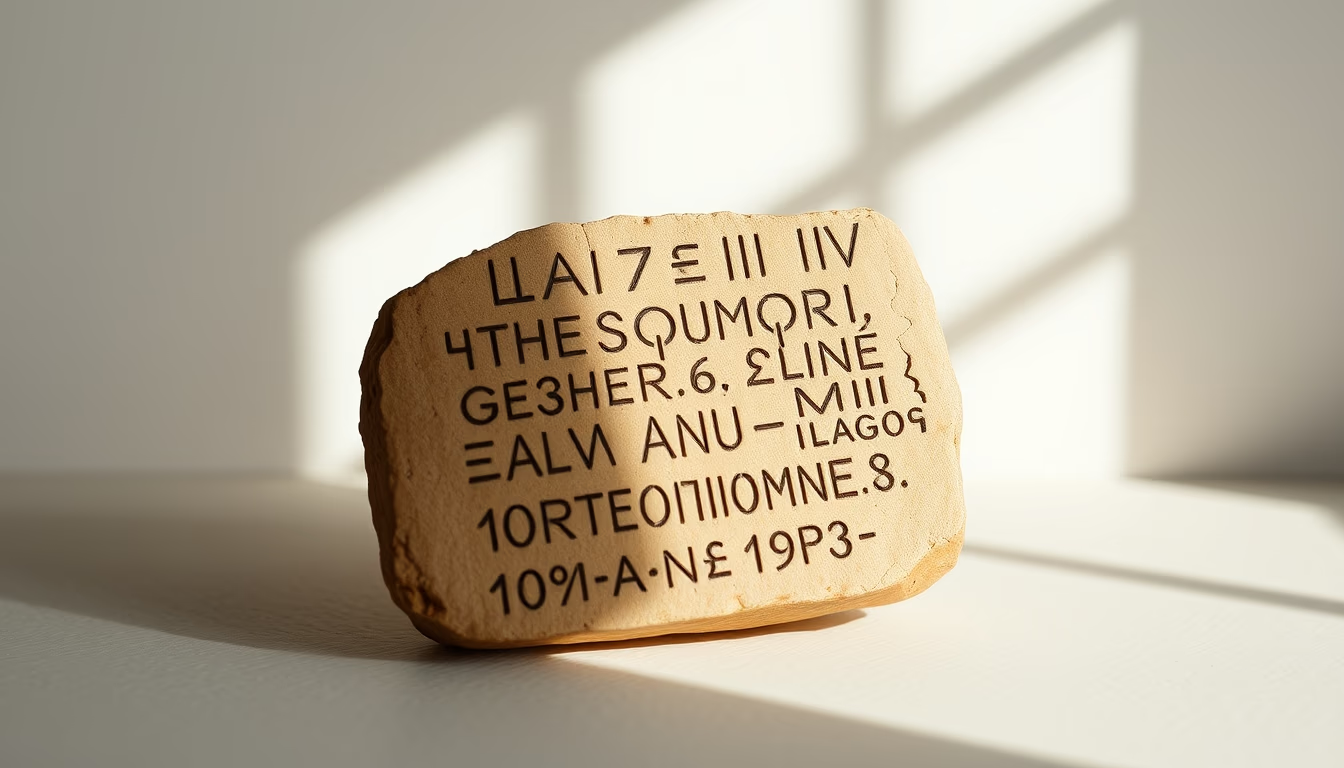
Clay tablet with Sumerian cuneiform script, one of the earliest writing systems in human history, emerging around 3400 BCE in Mesopotamia.
About this subject
Sumerian cuneiform is considered the oldest known writing system, developed by the Sumerians in Lower Mesopotamia, modern-day Iraq, around 3400 BCE. Initially used for administrative and commercial records, such as crop inventories and livestock transactions, it was written with a reed stylus on moist clay tablets, producing wedge-shaped marks, hence the name “cuneiform.”
Sumerians pioneered the evolution from simple pictograms to phonetic symbols, enabling the representation of syllables and abstract concepts. This system influenced later civilizations, including the Akkadians, Babylonians, and Assyrians, who adapted cuneiform for their own languages. Over 500,000 cuneiform tablets have been discovered, covering legal codes, literature, personal letters, and astronomical records.
A major breakthrough in deciphering cuneiform came in the 19th century, notably through Henry Rawlinson and the Behistun Inscription, which allowed comparison of Old Persian with Elamite and Akkadian versions. Today, the study of cuneiform reveals intricate details of Mesopotamian daily life, economy, and religion, essential for understanding ancient history.
Interestingly, Sumerian cuneiform fell out of use around the 1st century CE, yet its legacy endures in later alphabets and as a testament to human ingenuity in recording knowledge.
Frequently Asked Questions
How was cuneiform writing produced?
Cuneiform was written by pressing a reed stylus into moist clay tablets, creating wedge-shaped marks. The tablets were then left to dry or baked for preservation.
What did the Sumerians record with cuneiform?
Initially used for administrative and commercial records like food inventories and transactions, cuneiform later expanded to literary, legal, religious texts and personal letters, covering many aspects of life.
How was Sumerian cuneiform deciphered?
Deciphering progressed in the 19th century thanks to Henry Rawlinson, who studied the Behistun Inscription in Iran. It contained the same text in Old Persian, Elamite, and Akkadian, allowing comparison of cuneiform signs and their meanings.
Direct URL
https://pub-c7d6a6ea828543ac903a74a341ccb2e1.r2.dev/imagens/cuneiform-sumerian-tablet-minimalist-composition-fresh9.avifHow to credit
Include a visible link back to UtilizAí. Copy one of the snippets below:
<a href="https://xn--utiliza-eza.com/en/midia/imagens/cuneiform-sumerian-tablet-minimalist-composition-fresh9">Cuneiform sumerian tablet</a> by <a href="https://xn--utiliza-eza.com">UtilizAí</a>, licensed under <a href="https://creativecommons.org/licenses/by/4.0/">CC BY 4.0</a>.
[Cuneiform sumerian tablet](https://xn--utiliza-eza.com/en/midia/imagens/cuneiform-sumerian-tablet-minimalist-composition-fresh9) by [UtilizAí](https://xn--utiliza-eza.com), CC BY 4.0
License: CC-BY-4.0