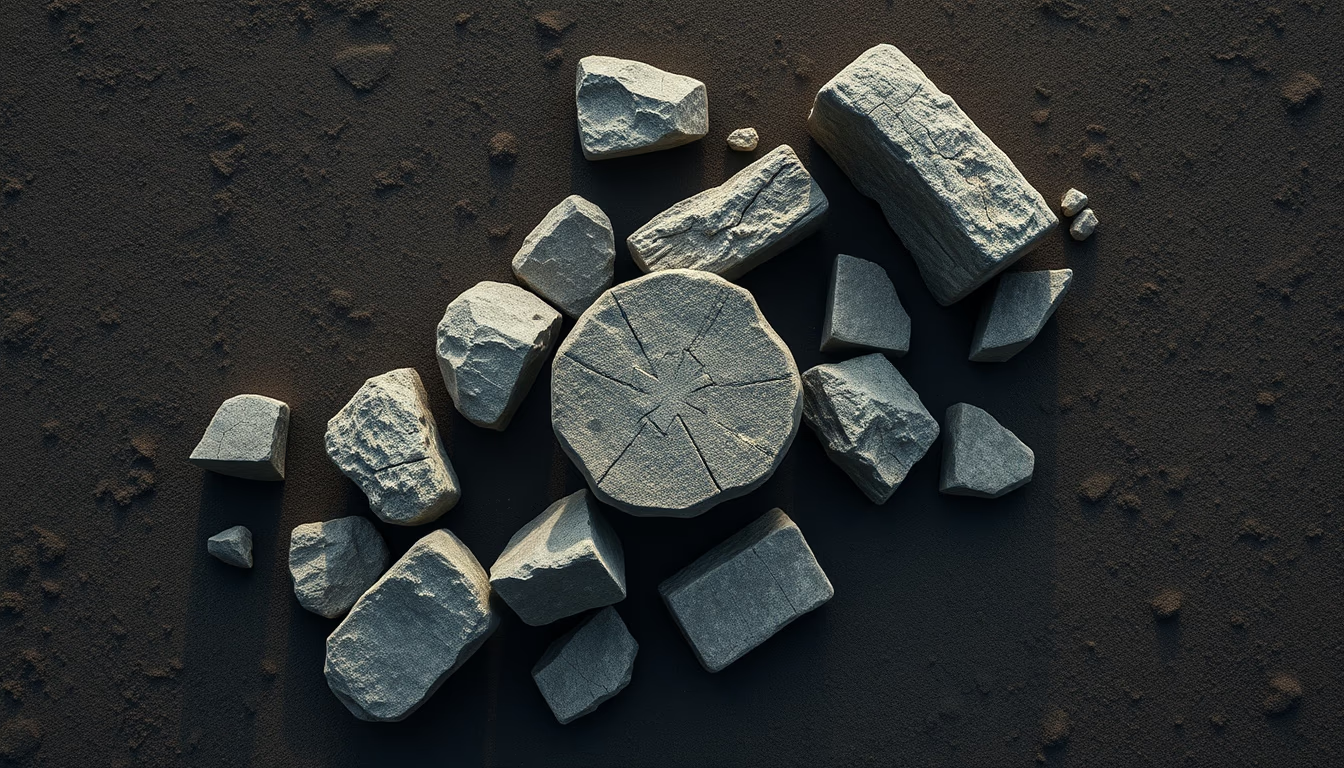
Cuneiform sumerian tablet
1344×768 · AVIF · CC BY 4.0
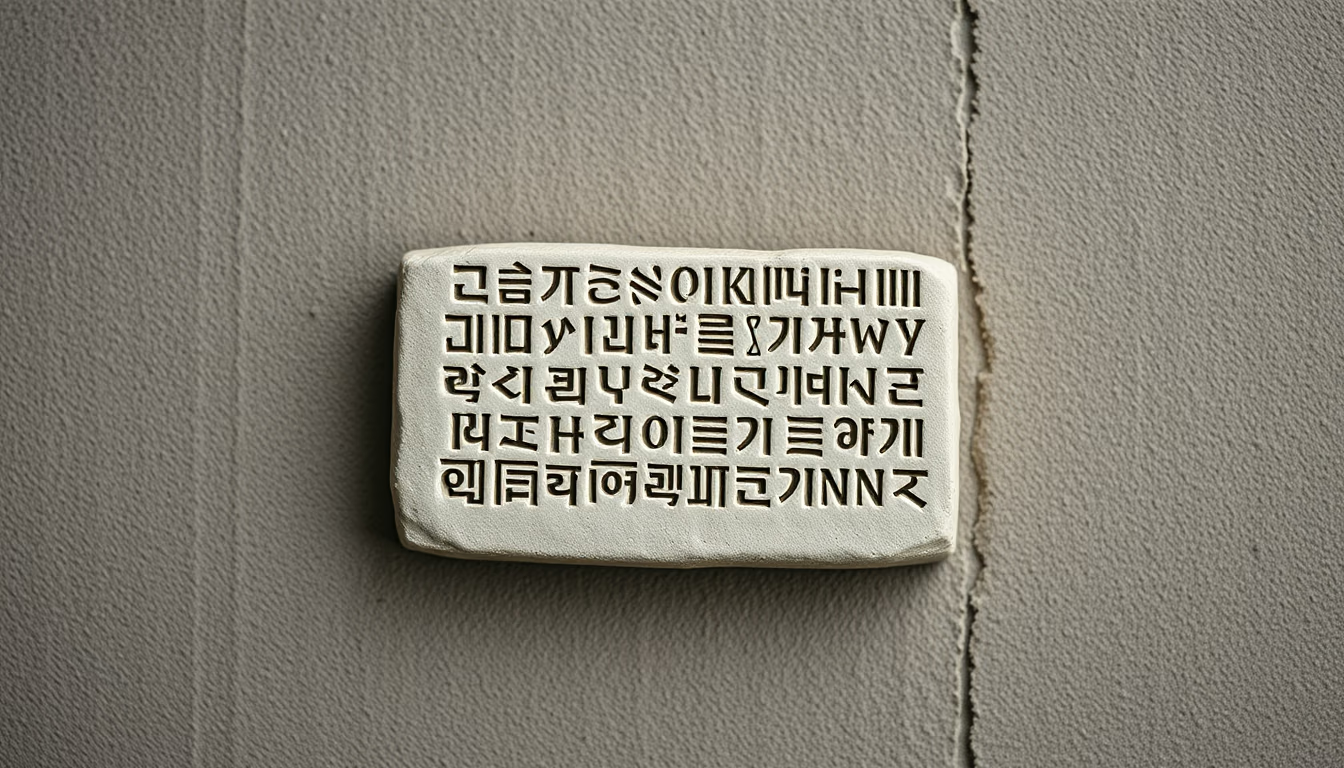
The Sumerian cuneiform clay tablet is one of the earliest known writing systems, dating back over 5,000 years.
About this subject
Cuneiform writing was developed by the Sumerians in Mesopotamia around 3400 BC, in what is now southern Iraq. Initially used for administrative and accounting records, it evolved into a complex system capable of expressing myths, laws, and literature. The tablets were made of fresh clay, into which a wedge-shaped stylus was pressed, hence the name 'cuneiform' (from Latin cuneus, 'wedge').
The importance of cuneiform goes beyond communication: it enabled the centralization of economic and political power in Sumerian city-states such as Uruk and Ur. The Epic of Gilgamesh, one of the oldest literary works, was recorded in this system. Cuneiform was adapted by many peoples of the region, including the Akkadians, Babylonians, Assyrians, and Hittites, and persisted for over three thousand years until replaced by simpler alphabets.
The decipherment of cuneiform was a challenge that intrigued scholars for centuries. In the 19th century, the work of Henry Rawlinson on the Behistun Inscription (trilingual in Old Persian, Elamite, and Babylonian) led to a breakthrough. Today, thousands of tablets are preserved in museums worldwide, offering a window into the life, economy, and religion of early civilizations. The technique of writing on clay also influenced the development of other writing media and systems in antiquity.
Frequently Asked Questions
What is the origin of the word 'cuneiform'?
The word comes from Latin 'cuneus', meaning 'wedge', due to the shape of the signs impressed into clay with a triangular stylus.
What was recorded on Sumerian clay tablets?
They contained administrative records, commercial contracts, laws, religious texts, literary works (such as the Epic of Gilgamesh), and school exercises.
How was cuneiform deciphered?
Decipherment progressed thanks to Henry Rawlinson and the Behistun Inscription, which presented the same text in three languages, enabling comparison and understanding of the system.
Direct URL
https://pub-c7d6a6ea828543ac903a74a341ccb2e1.r2.dev/imagens/cuneiform-sumerian-tablet-isometric-flat-lay-fresh0.avifHow to credit
Include a visible link back to UtilizAí. Copy one of the snippets below:
<a href="https://xn--utiliza-eza.com/en/midia/imagens/cuneiform-sumerian-tablet-isometric-flat-lay-fresh0">Cuneiform sumerian tablet</a> by <a href="https://xn--utiliza-eza.com">UtilizAí</a>, licensed under <a href="https://creativecommons.org/licenses/by/4.0/">CC BY 4.0</a>.
[Cuneiform sumerian tablet](https://xn--utiliza-eza.com/en/midia/imagens/cuneiform-sumerian-tablet-isometric-flat-lay-fresh0) by [UtilizAí](https://xn--utiliza-eza.com), CC BY 4.0
License: CC-BY-4.0