Concertina small
1344×768 · AVIF · CC BY 4.0
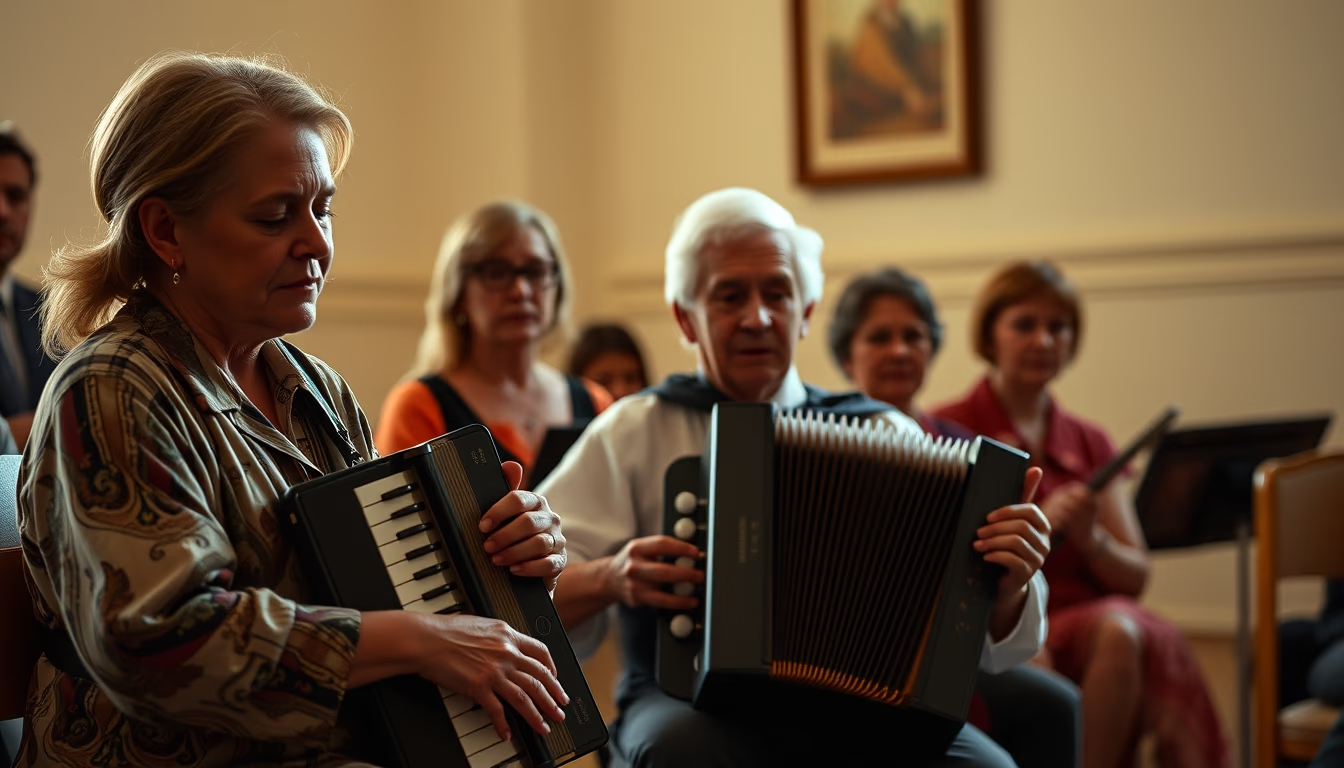
A concertina small é um instrumento musical de palhetas livres, popular em músicas folclóricas e tradicionais ao redor do mundo.
Sobre o tema
A concertina é um instrumento musical de palhetas livres, pertencente à família dos acordeões, mas com um design compacto e distinto. Inventada por Sir Charles Wheatstone na Inglaterra por volta de 1829, a concertina original possuía um sistema de botões dispostos em uma caixa hexagonal, produzindo som através do movimento do fole que força o ar através das palhetas. Diferente do acordeão, as notas são produzidas tanto no movimento de abrir quanto de fechar o fole, oferecendo uma dinâmica expressiva única.
Existem três tipos principais de concertina: a inglesa, a anglo-germânica e a duet. A concertina inglesa é totalmente cromática e cada botão produz a mesma nota independente da direção do fole, sendo muito utilizada na música clássica e folclórica britânica. A anglo-germânica, por sua vez, é diatônica e cada botão produz notas diferentes ao abrir e fechar o fole, o que a torna popular em músicas tradicionais irlandesas e no forró brasileiro. Já a duet combina características de ambas, permitindo melodias em uma mão e acordes na outra.
No Brasil, a concertina anglo-germânica é conhecida como “gaita de botão” e é um dos pilares do forró pé-de-serra, ao lado da zabumba e do triângulo. Instrumentistas como Luiz Gonzaga imortalizaram seu som, embora ele usasse mais a sanfona (acordeão). A concertina pequena, com menos botões, é especialmente ágil para melodias rápidas e ornamentações. Sua construção artesanal ainda é valorizada, com fabricantes tradicionais na Itália, Alemanha e Inglaterra.
Curiosamente, a concertina também foi usada em expedições polares no século XIX, como a de Ernest Shackleton, devido ao seu tamanho reduzido e resistência. O instrumento continua vivo em festivais de música folk pelo mundo, desde ceilidhs escoceses até rodas de choro no Brasil.
Perguntas frequentes
Qual a diferença entre concertina e acordeão?
A concertina é menor, geralmente hexagonal, e cada botão produz notas distintas ao abrir e fechar o fole (no modelo anglo). O acordeão tem teclado ou botões que produzem a mesma nota independentemente do movimento do fole, além de possuir botões de baixos pré-definidos.
Como a concertina é tocada?
O instrumento é segurado com as mãos nas laterais, e os dedos pressionam os botões enquanto os braços movem o fole para frente e para trás. A produção de som depende da combinação entre o botão pressionado e a direção do fole, permitindo variações rítmicas e melódicas.
Quais os principais tipos de concertina?
Os três tipos principais são: a inglesa (cromática e uníssona), a anglo-germânica (diatônica e bisonora) e a duet (que permite tocar melodia e acordes separadamente). Cada uma tem aplicações específicas em diferentes gêneros musicais.
URL direta
https://pub-c7d6a6ea828543ac903a74a341ccb2e1.r2.dev/imagens/concertina-small-documentary-photography-p8.avifComo creditar
Inclua um link visível de volta pro UtilizAí. Copie um dos snippets abaixo:
<a href="https://xn--utiliza-eza.com/midia/imagens/concertina-small-documentary-photography-p8">Concertina small</a> by <a href="https://xn--utiliza-eza.com">UtilizAí</a>, licensed under <a href="https://creativecommons.org/licenses/by/4.0/">CC BY 4.0</a>.
[Concertina small](https://xn--utiliza-eza.com/midia/imagens/concertina-small-documentary-photography-p8) by [UtilizAí](https://xn--utiliza-eza.com), CC BY 4.0
Licença: CC-BY-4.0