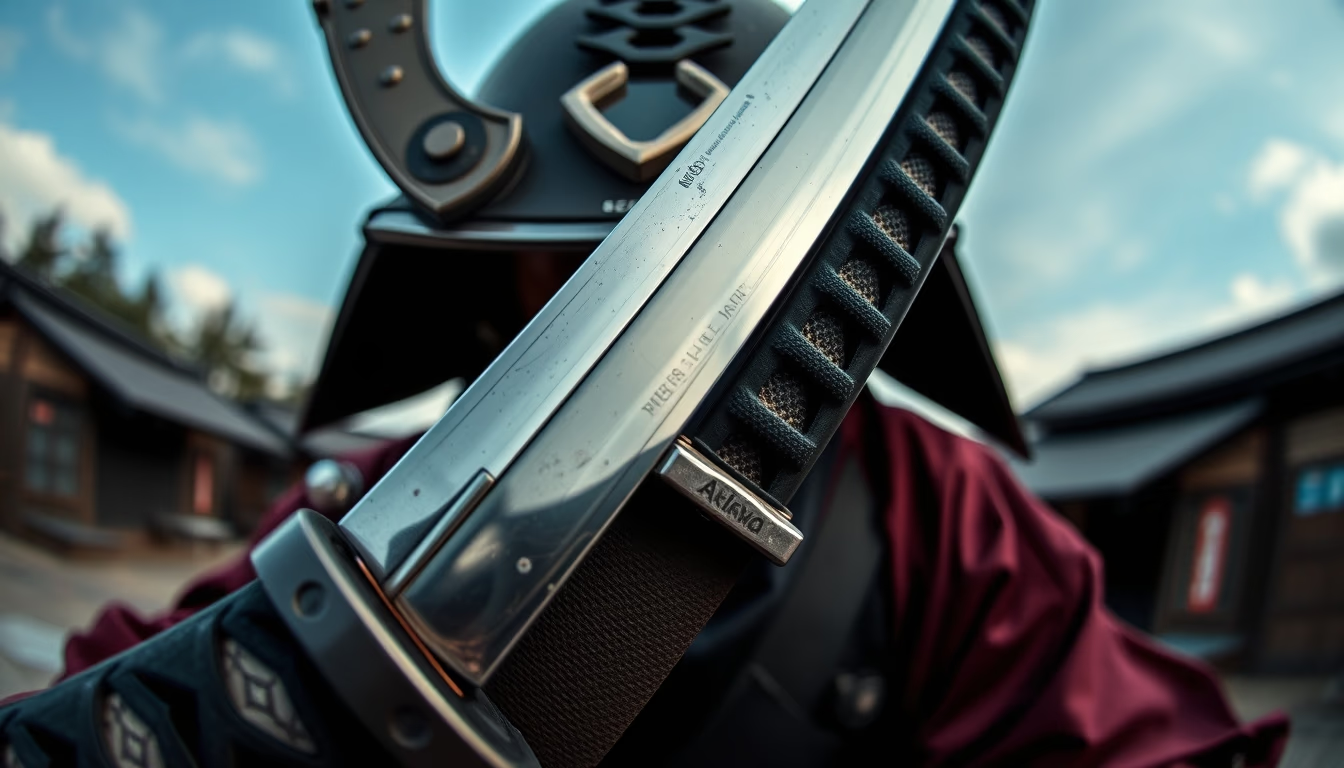
Compass brass nautical
1344×768 · AVIF · CC BY 4.0

The brass nautical compass is a historical navigation instrument that guided explorers for centuries, combining craftsmanship and precision.
About this subject
The brass nautical compass is a landmark in navigation history. Used since the 13th century, when it was introduced to Europe from China, it allowed sailors to orient themselves at sea regardless of sun or star visibility. Brass, an alloy of copper and zinc, was the preferred material due to its corrosion resistance and durability in saline environments. Traditional nautical compasses featured a detailed compass rose, often hand-painted, and were mounted in gimbals to remain level despite the ship's motion.
In Brazil, nautical compasses were essential during the Age of Discovery and colonization. The Portuguese, who arrived in Brazil in 1500, relied on these devices to cross the Atlantic. Accuracy varied; magnetic declination was a known challenge, leading to the development of nautical charts and compensation techniques. Many antique compasses, such as those crafted by master artisans in Portugal and England, are now collector's items, prized for their aesthetics and history.
Beyond maritime navigation, brass compasses were also used in land exploration and early aviation. They symbolize human ingenuity in mastering the environment. Today, antique nautical compasses are often displayed in naval museums, like the Museu Naval in Rio de Janeiro, or in private collections. The aged brass and ornamental details make each piece unique, telling stories of voyages and discoveries.
Frequently Asked Questions
How does a brass nautical compass work?
It uses a magnetized needle that aligns with Earth's magnetic field, pointing to magnetic north. The surrounding compass rose allows reading directions.
What is the difference between a nautical compass and a regular compass?
A nautical compass is designed for ships, with a gimbal mount to compensate for rocking and a more detailed compass rose, typically made of brass for corrosion resistance.
Why is brass used in old compasses?
Brass resists corrosion from saltwater, is durable, and is easy to work with for ornamental details. It does not rust like iron.
Direct URL
https://pub-c7d6a6ea828543ac903a74a341ccb2e1.r2.dev/imagens/compass-brass-nautical-travel-photography-p0.avifHow to credit
Include a visible link back to UtilizAí. Copy one of the snippets below:
<a href="https://xn--utiliza-eza.com/en/midia/imagens/compass-brass-nautical-travel-photography-p0">Compass brass nautical</a> by <a href="https://xn--utiliza-eza.com">UtilizAí</a>, licensed under <a href="https://creativecommons.org/licenses/by/4.0/">CC BY 4.0</a>.
[Compass brass nautical](https://xn--utiliza-eza.com/en/midia/imagens/compass-brass-nautical-travel-photography-p0) by [UtilizAí](https://xn--utiliza-eza.com), CC BY 4.0
License: CC-BY-4.0