Comic books silver age
1344×768 · AVIF · CC BY 4.0
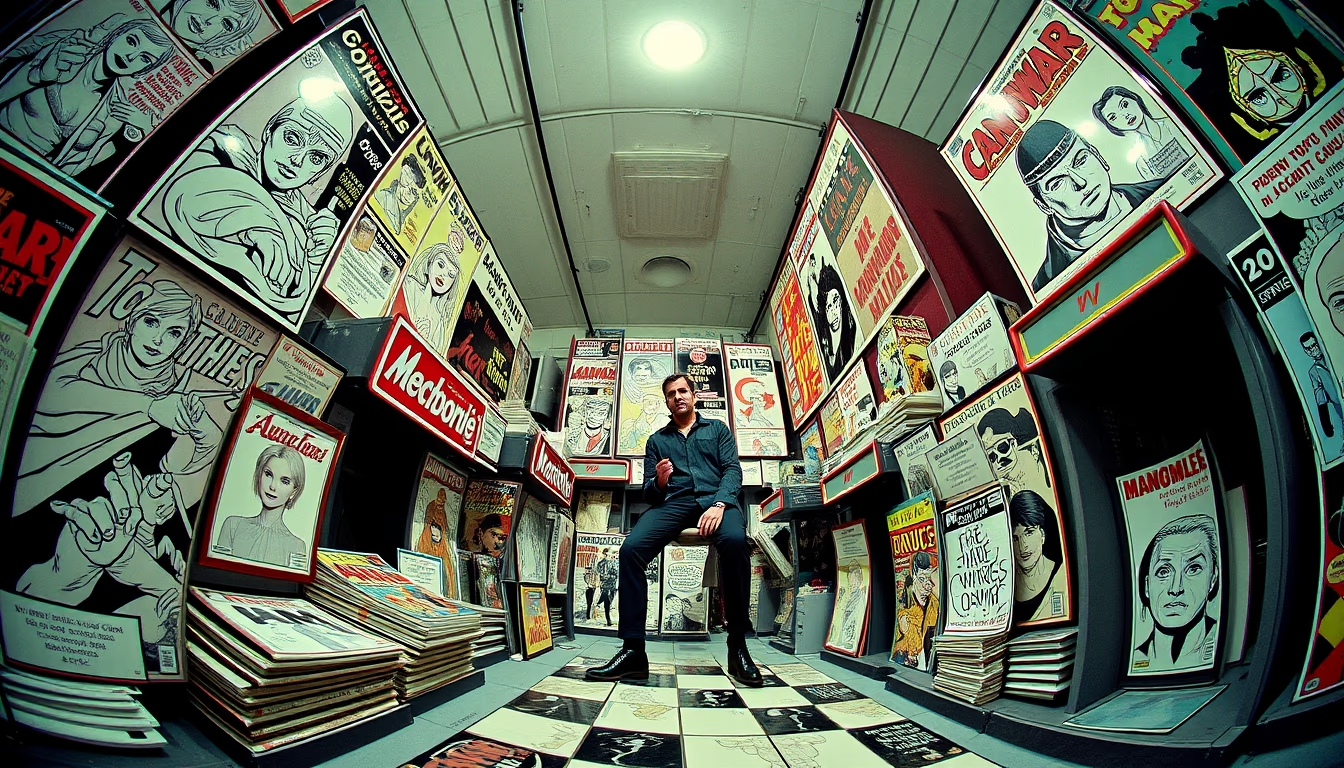
The Silver Age of comic books, spanning 1956 to 1970, redefined the superhero genre and launched enduring icons from Marvel and DC.
About this subject
The Silver Age of American comic books began in 1956 with the debut of the reinvented Flash in DC Comics' Showcase #4. This period lasted until around 1970, when darker themes and more complex stories started to emerge. It was a golden era of creativity, introducing iconic characters such as Spider-Man, the X-Men, the Avengers, and the Fantastic Four from Marvel Comics, under the guidance of Stan Lee, Jack Kirby, and Steve Ditko. DC, in turn, relaunched Batman, Superman, and Wonder Woman with updated origins and established the Justice League of America.
A defining trait of the Silver Age was its optimism and science fiction flavor. Heroes faced alien invasions, radioactive mutations, and scientific experiments, reflecting the post-war fascination with technology and the space race. Stories were lighter and more colorful compared to the Golden Age, with scripts emphasizing humor and family-friendly morality. The Comics Code Authority, implemented in 1954, restricted adult themes, forcing publishers to avoid explicit violence and sexual content, which shaped the era's innocent tone.
Many Silver Age comic books have become highly valuable collectibles. Spider-Man's first appearance in Amazing Fantasy #15 (1962) is a prime example, with near-mint copies fetching millions of dollars at auctions. Other key issues include The Flash #105 (first appearance of Barry Allen as the Flash), The Brave and the Bold #28 (first Justice League appearance), and X-Men #1 (1963). The back-issue market boomed during this time, with specialized comic shops and conventions like San Diego Comic-Con growing alongside.
The Silver Age's legacy is immense: it laid the groundwork for contemporary superhero cinema and global pop culture. Many plots and characters from this period continue to be adapted and reimagined today. The dynamic visual style, striking covers, and accessible narratives captivated generations of readers and solidified comics as a popular and influential art form.
Frequently Asked Questions
What defines the Silver Age of comic books?
The Silver Age (1956-1970) is defined by the revival of superheroes, lighter stories, a focus on science fiction, and the creation of classic characters like Spider-Man and the Fantastic Four. The Comics Code Authority restricted adult content, resulting in an innocent and optimistic tone.
What are the most valuable Silver Age comic books?
Some of the most valuable include Amazing Fantasy #15 (first Spider-Man), Showcase #4 (first Silver Age Flash), The Brave and the Bold #28 (first Justice League), and X-Men #1. High-grade copies can sell for millions of dollars.
How did the Silver Age influence modern superhero movies?
Many Marvel Cinematic Universe and DC films draw from Silver Age stories and characters. The adventurous tone and scientific concepts of the era were adapted for cinema, and the popularity of these heroes laid the foundation for the blockbuster genre.
Direct URL
https://pub-c7d6a6ea828543ac903a74a341ccb2e1.r2.dev/imagens/comic-books-silver-age-fish-eye-wide-angle-fresh12.avifHow to credit
Include a visible link back to UtilizAí. Copy one of the snippets below:
<a href="https://xn--utiliza-eza.com/en/midia/imagens/comic-books-silver-age-fish-eye-wide-angle-fresh12">Comic books silver age</a> by <a href="https://xn--utiliza-eza.com">UtilizAí</a>, licensed under <a href="https://creativecommons.org/licenses/by/4.0/">CC BY 4.0</a>.
[Comic books silver age](https://xn--utiliza-eza.com/en/midia/imagens/comic-books-silver-age-fish-eye-wide-angle-fresh12) by [UtilizAí](https://xn--utiliza-eza.com), CC BY 4.0
License: CC-BY-4.0