Cell animation paper
1344×768 · AVIF · CC BY 4.0
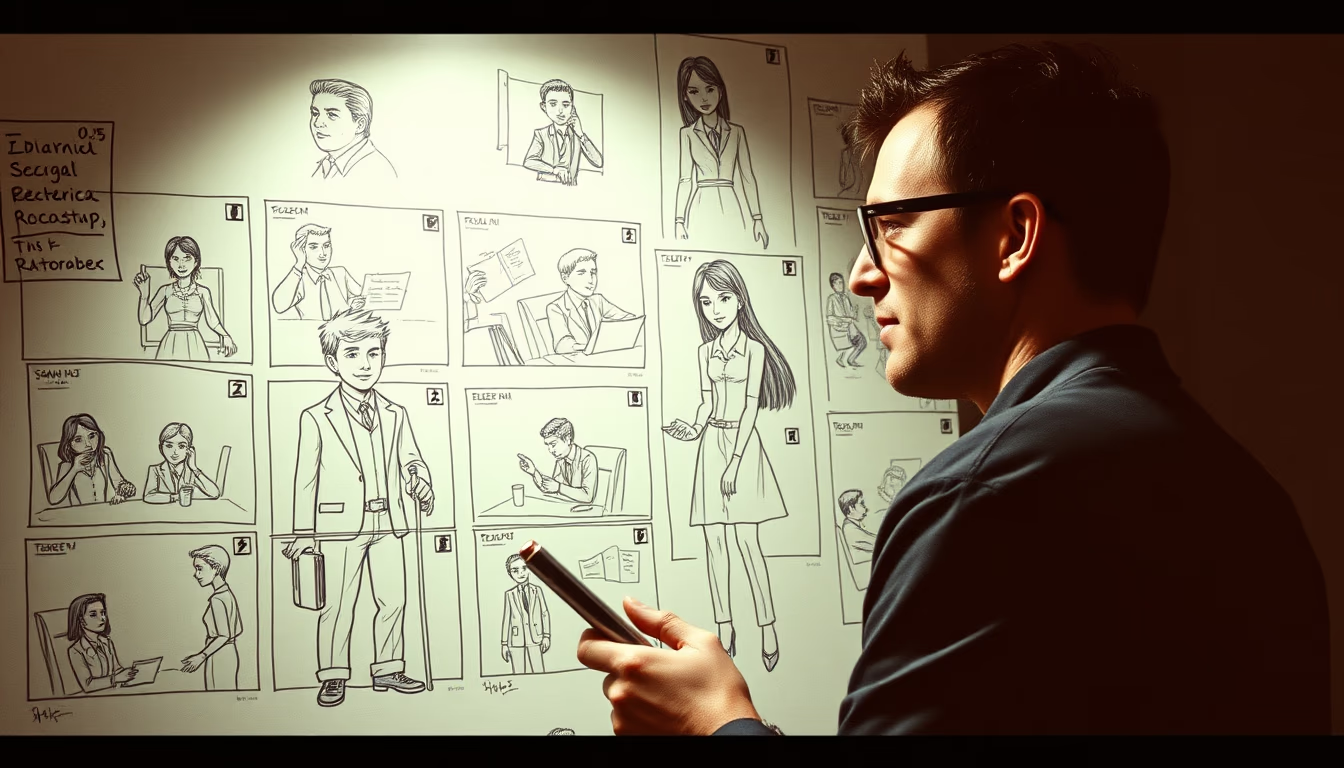
Sheet of paper with traditional animation drawings, showing sequential scenes of a character in motion.
About this subject
Cell animation paper, also known as animation paper, is the foundation of traditional hand-drawn animation. Each sheet contains an individual frame of a sequence, usually drawn in pencil or ink on translucent paper, allowing animators to layer frames to create fluid motion. This technique was widely used in animation studios from the early 20th century, especially during the Golden Age of American Animation, with studios like Disney, Warner Bros., and Fleischer Studios.
Each sheet of animation paper represents a frame, and the sequence of frames creates the illusion of movement when projected at the standard speed of 24 frames per second. Animators use perforated paper sheets that fit on registration pegs, ensuring all drawings are properly aligned. This registration process is crucial to avoid jitter or misalignment in the final animation.
The production of an animation scene involves several steps: first, the lead animator draws the keyframes, which define the extremes of movement. Then, assistants fill in the inbetweens to smooth the action. Each drawing is transferred to acetate sheets (cels) for coloring and filming. Original animation paper, often yellowed and fragile, is a valuable artifact for collectors and historians, as it documents the meticulous handcrafted work predating the digital era.
Today, with the dominance of digital animation, the use of animation paper has declined, but it is still practiced in independent studios and art education. Cell animation paper represents an important cultural heritage, connecting viewers to the manual process that defined classics like 'Snow White and the Seven Dwarfs' (1937) and 'The Lion King' (1994). Its preservation is essential for studying the evolution of animation as an art form.
Frequently Asked Questions
What is cell animation paper?
It is a type of translucent paper used by animators to draw individual frames of an animation. Each sheet contains a drawing that, when combined in sequence, creates movement.
Why does animation paper have holes?
The holes on the edges fit onto registration pegs, ensuring all drawings are perfectly aligned, preventing jitter and misalignment in the final animation.
Is animation paper still used today?
Although digital animation is dominant, animation paper is still used in independent studios and traditional animation courses to teach the fundamentals of movement.
Direct URL
https://pub-c7d6a6ea828543ac903a74a341ccb2e1.r2.dev/imagens/cell-animation-paper-documentary-photography-fresh3.avifHow to credit
Include a visible link back to UtilizAí. Copy one of the snippets below:
<a href="https://xn--utiliza-eza.com/en/midia/imagens/cell-animation-paper-documentary-photography-fresh3">Cell animation paper</a> by <a href="https://xn--utiliza-eza.com">UtilizAí</a>, licensed under <a href="https://creativecommons.org/licenses/by/4.0/">CC BY 4.0</a>.
[Cell animation paper](https://xn--utiliza-eza.com/en/midia/imagens/cell-animation-paper-documentary-photography-fresh3) by [UtilizAí](https://xn--utiliza-eza.com), CC BY 4.0
License: CC-BY-4.0