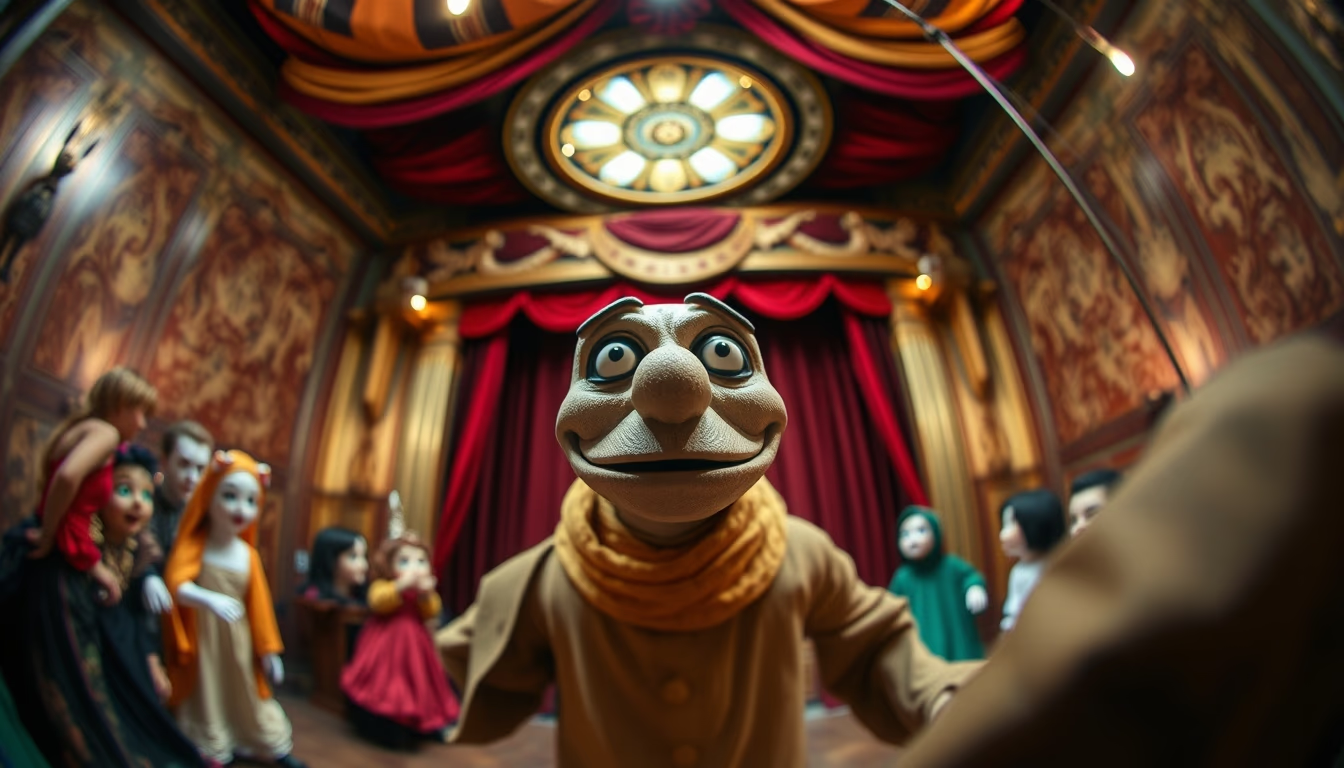
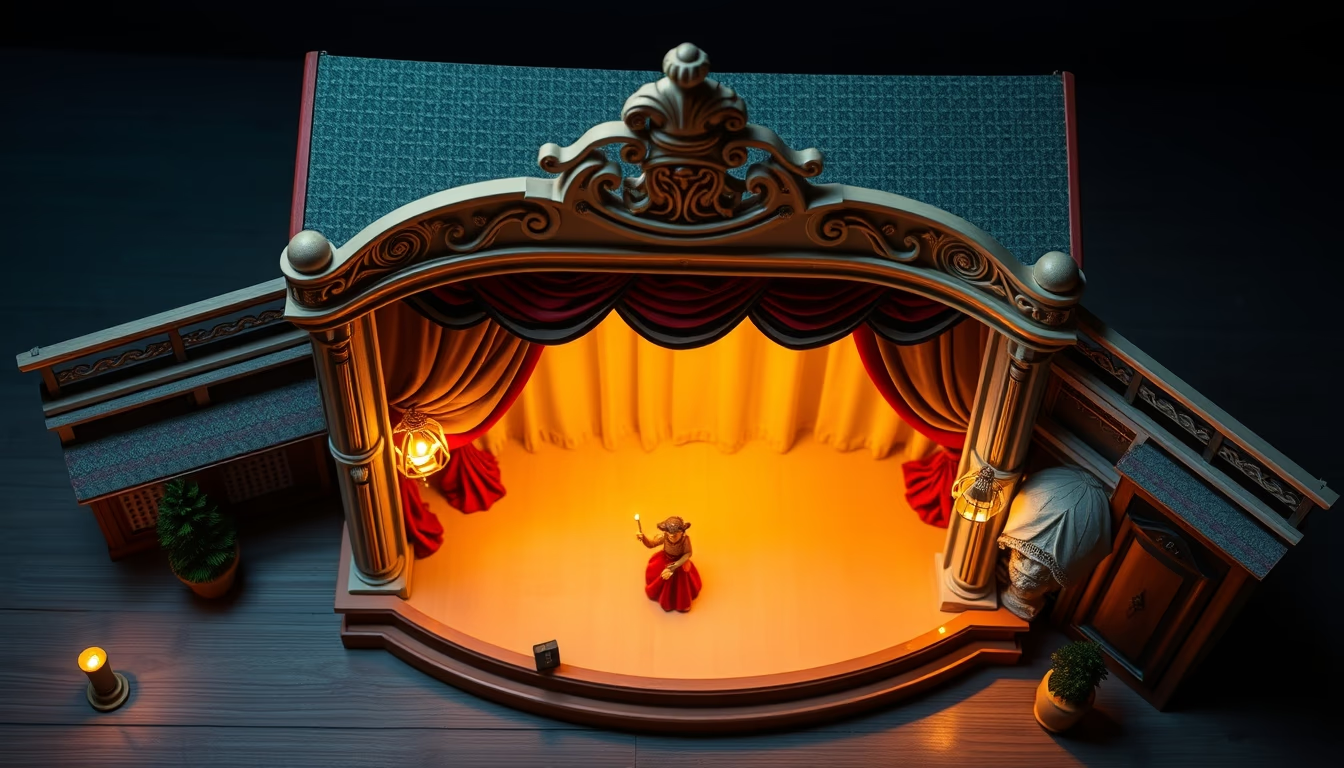
Broadway theater empty seats
1344×768 · AVIF · CC BY 4.0

Empty seats in a Broadway theater reflect complex dynamics of ticketing, tourism, and production in New York City.
About this subject
Broadway, located in the heart of Manhattan, is the epicenter of commercial theater in the United States. With 41 professional theaters, each seating between 500 and 1,900 people, the district attracts millions of spectators annually. However, even in the most popular shows, empty seats are common due to high ticket prices (often exceeding $300), last-minute cancellations, and strategies like discounted same-day tickets. Seasonal programming and competition with other New York attractions also affect occupancy.
Historically, Broadway became a global cultural icon in the early 20th century, with theaters like the New Amsterdam (1903) and Lyceum (1903). Today, average occupancy rates range from 70% to 90% depending on the season. During holidays or blockbuster premieres, tickets may sell out months in advance. Conversely, in the low season (January to March), empty seats are more frequent, prompting producers to offer promotions.
A lesser-known fact is that Broadway theaters are not owned by productions; they are rented. Each show bears high fixed costs such as rent, technical crew, and cast. To avoid losses, productions need a minimum occupancy of about 60% to 70%. Empty seats thus represent lost revenue but also reflect the unpredictability of the theater market. In recent years, online sales and lottery programs (like 'digital rush') aim to reduce vacancies.
Interestingly, empty seats can be a positive indicator for tourists seeking last-minute tickets. Many theaters release tickets at up to 50% off on the day of performance. Additionally, 'rush tickets' and 'standing room only' are Broadway traditions, allowing budget-conscious fans to see acclaimed shows. Understanding this dynamic helps dispel the myth that all Broadway performances are always sold out.
Frequently Asked Questions
Why are there empty seats on Broadway if shows are so popular?
Empty seats can result from high prices, cancellations, or last-minute ticketing strategies. Occupancy varies by season and demand, not necessarily indicating a lack of popularity.
How can I get discounted Broadway tickets?
Discounted tickets are available through day-of box office rush tickets, online lotteries (digital rush), or TKTS booths, offering up to 50% off for same-day performances.
What is the average seating capacity of Broadway theaters?
Capacity ranges from 500 to 1,900 seats, averaging around 1,000 to 1,200. The largest is the Gershwin Theatre (1,933 seats) and the smallest is the Hayes Theatre (597 seats).
Direct URL
https://pub-c7d6a6ea828543ac903a74a341ccb2e1.r2.dev/imagens/broadway-theater-empty-seats-documentary-nature-style-fresh13.avifHow to credit
Include a visible link back to UtilizAí. Copy one of the snippets below:
<a href="https://xn--utiliza-eza.com/en/midia/imagens/broadway-theater-empty-seats-documentary-nature-style-fresh13">Broadway theater empty seats</a> by <a href="https://xn--utiliza-eza.com">UtilizAí</a>, licensed under <a href="https://creativecommons.org/licenses/by/4.0/">CC BY 4.0</a>.
[Broadway theater empty seats](https://xn--utiliza-eza.com/en/midia/imagens/broadway-theater-empty-seats-documentary-nature-style-fresh13) by [UtilizAí](https://xn--utiliza-eza.com), CC BY 4.0
License: CC-BY-4.0