Blockchain network visualization glowing nodes connected by lines on dark background
1344×768 · AVIF · CC BY 4.0

Blockchain network visualization with glowing nodes and luminous connections on a dark background, representing decentralized cryptocurrency infrastructure and smart contracts.
About this subject
Blockchain is a distributed ledger technology that enables secure, transparent, and immutable transactions without intermediaries. Each block contains a set of transactions, and blocks are cryptographically chained together. The visualization of glowing nodes connected by lines represents network participants, called nodes, which maintain identical copies of the ledger and validate new transactions through consensus mechanisms like Proof of Work (PoW) or Proof of Stake (PoS).
The first practical application of blockchain was Bitcoin, created in 2008 by Satoshi Nakamoto. Since then, the technology has evolved to support smart contracts, non-fungible tokens (NFTs), and decentralized applications (dApps), primarily on the Ethereum platform. Blockchains can be public, like Bitcoin and Ethereum, or private, used by enterprises for supply chain tracking and identity management.
Blockchain security relies on advanced cryptography and decentralization: altering a block would require modifying all subsequent blocks on more than half of the nodes, which is computationally infeasible on large networks. However, challenges such as scalability, energy consumption (in PoW), and regulation remain debated. Brazil has seen growing blockchain adoption, with initiatives like the Digital Real and blockchain-based digital certification projects.
Frequently Asked Questions
What is a node in a blockchain network?
A node is a computer that maintains a copy of the blockchain ledger and participates in transaction validation. Nodes can be full (store the entire blockchain) or light (only block headers).
How does blockchain ensure transaction security?
Through cryptographic hashing and distributed consensus. Each block contains the hash of the previous block, forming an immutable chain. Altering data would require re-mining all subsequent blocks, which is infeasible on large networks.
What is the difference between public and private blockchain?
Public blockchain is open to anyone, like Bitcoin and Ethereum. Private blockchain is controlled by a single entity, allowing restricted access and higher speed, used in enterprise consortia.
Direct URL
https://pub-c7d6a6ea828543ac903a74a341ccb2e1.r2.dev/imagens/blockchain-network-visualization-glowing-nodes-connected-by-lines-on-dark-backgr-cinematic-wide-shot-twilight-blue-hour.avifHow to credit
Include a visible link back to UtilizAí. Copy one of the snippets below:
<a href="https://xn--utiliza-eza.com/en/midia/imagens/blockchain-network-visualization-glowing-nodes-connected-by-lines-on-dark-backgr-cinematic-wide-shot-twilight-blue-hour">Blockchain network visualization glowing nodes connected by lines on dark background</a> by <a href="https://xn--utiliza-eza.com">UtilizAí</a>, licensed under <a href="https://creativecommons.org/licenses/by/4.0/">CC BY 4.0</a>.
[Blockchain network visualization glowing nodes connected by lines on dark background](https://xn--utiliza-eza.com/en/midia/imagens/blockchain-network-visualization-glowing-nodes-connected-by-lines-on-dark-backgr-cinematic-wide-shot-twilight-blue-hour) by [UtilizAí](https://xn--utiliza-eza.com), CC BY 4.0
License: CC-BY-4.0
Tags
Related images
 Smart contract code on monitor with solidity syntax highlighted
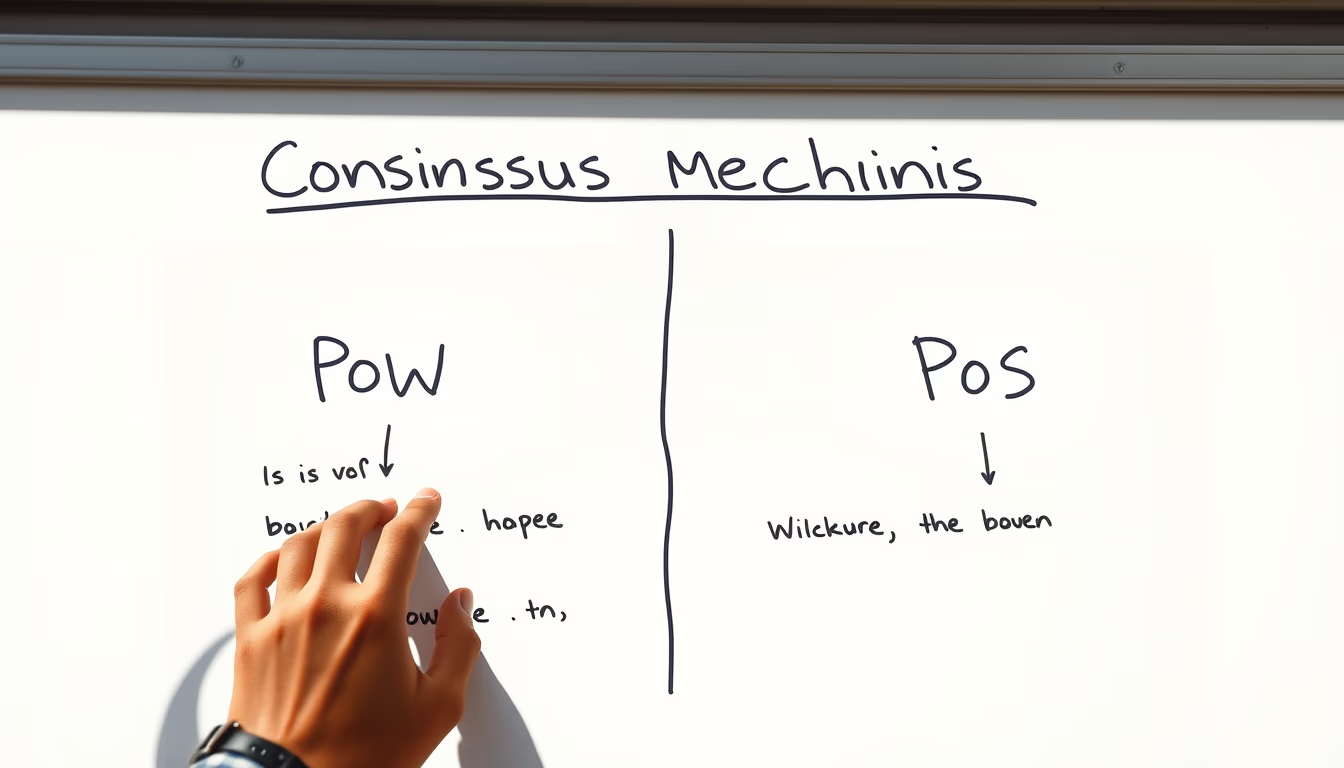 Consensus mechanism diagram on whiteboard showing PoW vs PoS
 Distributed ledger multiple servers in data center
 Hash function visualization cryptographic equations on glass screen
 Hash function visualization cryptographic equations on glass screen
 Hash function visualization cryptographic equations on glass screen