Aztec calendar stone
1344×768 · AVIF · CC BY 4.0
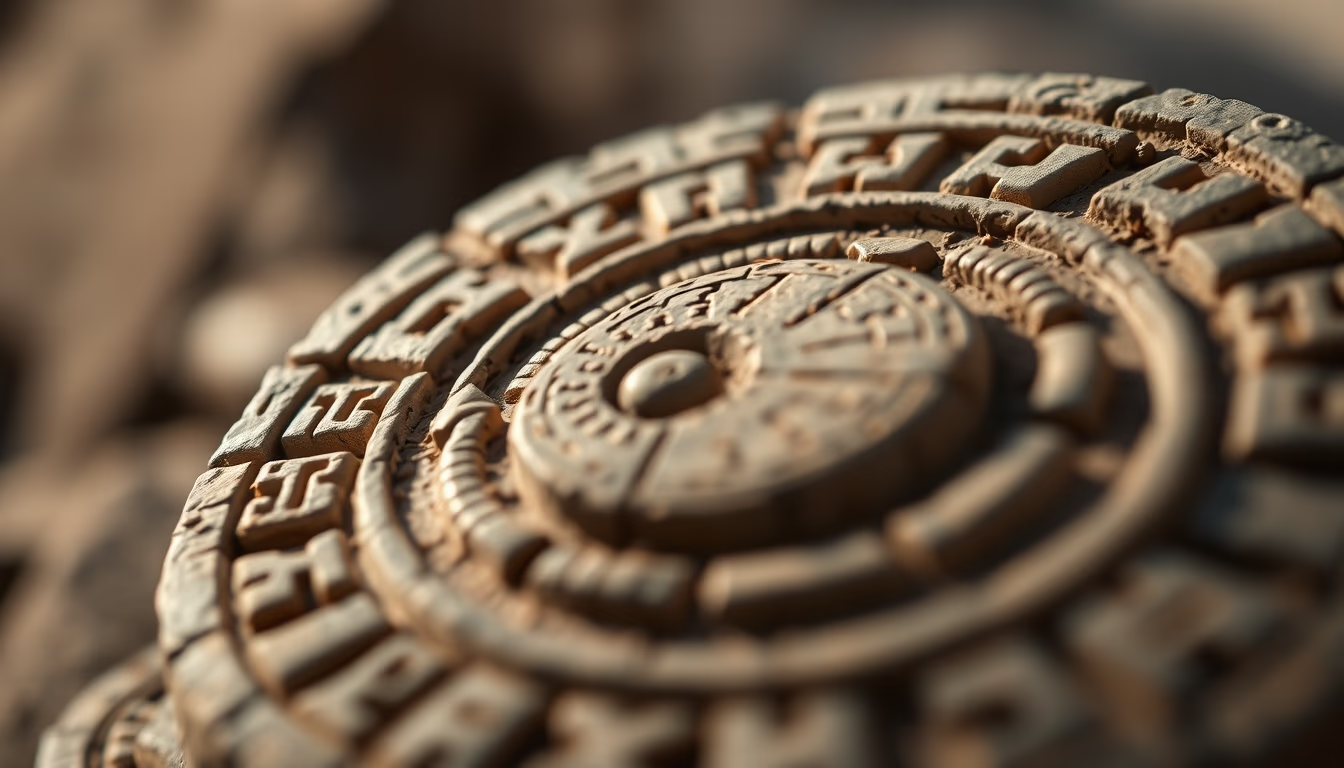
A Pedra do Sol Asteca, também conhecida como Calendário Asteca, é um monolito de basalto esculpido no século XV que representa a cosmologia mexica.
Sobre o tema
A Pedra do Sol Asteca, descoberta em 1790 na Cidade do México durante obras na Praça da Constituição (Zócalo), é um dos artefatos mais emblemáticos da civilização mexica. Com aproximadamente 3,6 metros de diâmetro e 24 toneladas, o monolito foi esculpido em basalto vulcânico durante o reinado de Axayácatl (1469, 1481) ou possivelmente de Motecuhzoma II (1502, 1520). Diferente do que muitos pensam, a peça não funcionava como um calendário prático para o dia a dia, mas sim como um altar cerimonial dedicado ao deus do sol Tonatiuh, representado no centro com uma faca de obsidiana (tecpatl) saindo da boca.
A superfície do disco exibe complexos glifos que narram as cinco eras cósmicas (sóis) da mitologia asteca, cada uma terminando em catástrofes. O quarto sol, por exemplo, foi destruído por um dilúvio. O quinto sol, o atual, é regido por Tonatiuh e requer sacrifícios humanos para se manter em movimento. Ao redor do deus, quatro quadrados representam as eras anteriores, enquanto anéis concêntricos mostram os 20 dias do calendário ritual (tonalpohualli) e serpentes de fogo (xiuhcóatl) que carregam o sol pelo céu. Estudos arqueológicos indicam que a pedra originalmente ficava no Templo Mayor de Tenochtitlán, pintada em cores vivas, e foi enterrada após a conquista espanhola para evitar destruição.
Hoje, a Pedra do Sol está exposta no Museu Nacional de Antropologia da Cidade do México, sendo um símbolo nacional e objeto de estudo contínuo. Sua iconografia influencia desde a arte moderna até a cultura pop, aparecendo em logotipos, moedas e filmes. Apesar de frequentemente chamada de “calendário asteca”, especialistas como Eduardo Matos Moctezuma ressaltam que sua função principal era religiosa e política: legitimar o poder do imperador como representante do sol na Terra.
Perguntas frequentes
Onde foi encontrada a Pedra do Sol Asteca?
Foi descoberta em 17 de dezembro de 1790 na Praça da Constituição (Zócalo), na Cidade do México, durante obras de nivelamento da praça principal.
A Pedra do Sol realmente funcionava como calendário?
Não. Embora contenha símbolos do calendário ritual, sua função principal era cerimonial e política, representando a cosmologia e a legitimidade do imperador.
Quantas eras cósmicas estão representadas na pedra?
Cinco eras, conhecidas como sóis. O quinto sol, o atual, é o centro da pedra, enquanto os quatro anteriores estão nos quadrantes ao redor.
URL direta
https://pub-c7d6a6ea828543ac903a74a341ccb2e1.r2.dev/imagens/aztec-calendar-stone-macro-closeup-p11.avifComo creditar
Inclua um link visível de volta pro UtilizAí. Copie um dos snippets abaixo:
<a href="https://xn--utiliza-eza.com/midia/imagens/aztec-calendar-stone-macro-closeup-p11">Aztec calendar stone</a> by <a href="https://xn--utiliza-eza.com">UtilizAí</a>, licensed under <a href="https://creativecommons.org/licenses/by/4.0/">CC BY 4.0</a>.
[Aztec calendar stone](https://xn--utiliza-eza.com/midia/imagens/aztec-calendar-stone-macro-closeup-p11) by [UtilizAí](https://xn--utiliza-eza.com), CC BY 4.0
Licença: CC-BY-4.0