Aztec calendar stone
1344×768 · AVIF · CC BY 4.0
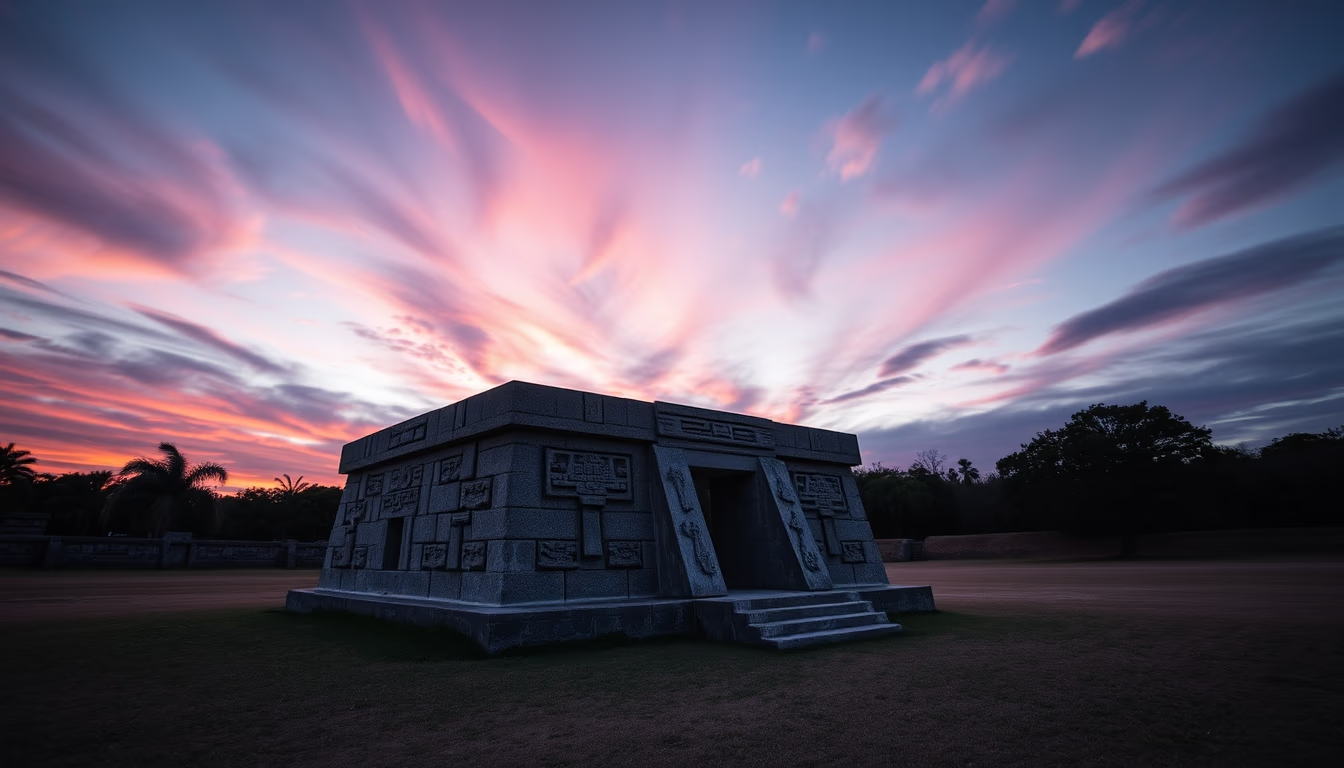
A Pedra do Sol Asteca, também conhecida como Calendário Asteca, é um monólito basáltico com esculturas complexas que representam a cosmologia mexica.
Sobre o tema
A Pedra do Sol Asteca, oficialmente chamada de Pedra do Sol, é um dos artefatos mais emblemáticos da civilização mexica (asteca). Esculpida em basalto olivínico, mede 3,6 metros de diâmetro e pesa cerca de 24 toneladas. Foi provavelmente concluída durante o reinado de Moctezuma II (1502-1520), mas sua criação pode ter começado antes. A face superior contém um disco esculpido com um rosto central que representa Tonatiuh, o deus do sol, cercado por símbolos das eras anteriores e anéis calendáricos.
A peça foi descoberta em 17 de dezembro de 1790 durante obras de nivelamento na Praça Principal da Cidade do México, enterrada a pouca profundidade. Após a Conquista, os espanhóis a haviam colocado de face para baixo para apagar seu significado religioso. Ficou exposta na base da torre ocidental da Catedral Metropolitana até 1885, quando foi transferida para o Museu Nacional de Antropologia, onde permanece hoje como uma das principais atrações.
O disco não é um calendário funcional, mas uma representação simbólica do tempo e do cosmos mexica. Seus anéis concêntricos registram os 20 dias do mês asteca, os 365 dias do ano solar, e as cinco eras cósmicas que teriam existido. Cada era terminou em catástrofe, e a quinta era, a atual, seria destruída por terremotos. A iconografia também inclui serpentes de fogo, símbolos de guerreiros e oferendas.
Curiosamente, a pedra já foi alvo de controvérsias. Alguns pesquisadores sugerem que ela serviu como um altar para sacrifícios gladiatoriais, enquanto outros a veem como um monumento à legitimidade do poder mexica. Em 2020, o Instituto Nacional de Antropologia e História realizou um escaneamento 3D da peça para preservação digital, revelando detalhes nunca antes vistos.
Perguntas frequentes
Qual é o verdadeiro nome da Pedra do Sol?
O nome oficial é Pedra do Sol (em espanhol: Piedra del Sol). Apesar de ser popularmente chamada de Calendário Asteca, os especialistas preferem o nome original, pois ela não funcionava como um calendário prático.
Onde posso ver a Pedra do Sol atualmente?
Ela está em exposição no Museu Nacional de Antropologia, na Cidade do México, na sala Mexica. O museu fica no Parque Chapultepec e é acessível ao público.
A Pedra do Sol é realmente um calendário?
Não no sentido funcional. Ela representa o ciclo do tempo e a cosmologia mexica, incluindo os 20 dias do mês, os 365 dias do ano e as cinco eras cósmicas. Servia mais como um monumento religioso e político.
URL direta
https://pub-c7d6a6ea828543ac903a74a341ccb2e1.r2.dev/imagens/aztec-calendar-stone-long-exposure-p3.avifComo creditar
Inclua um link visível de volta pro UtilizAí. Copie um dos snippets abaixo:
<a href="https://xn--utiliza-eza.com/midia/imagens/aztec-calendar-stone-long-exposure-p3">Aztec calendar stone</a> by <a href="https://xn--utiliza-eza.com">UtilizAí</a>, licensed under <a href="https://creativecommons.org/licenses/by/4.0/">CC BY 4.0</a>.
[Aztec calendar stone](https://xn--utiliza-eza.com/midia/imagens/aztec-calendar-stone-long-exposure-p3) by [UtilizAí](https://xn--utiliza-eza.com), CC BY 4.0
Licença: CC-BY-4.0