Aztec calendar stone
1344×768 · AVIF · CC BY 4.0
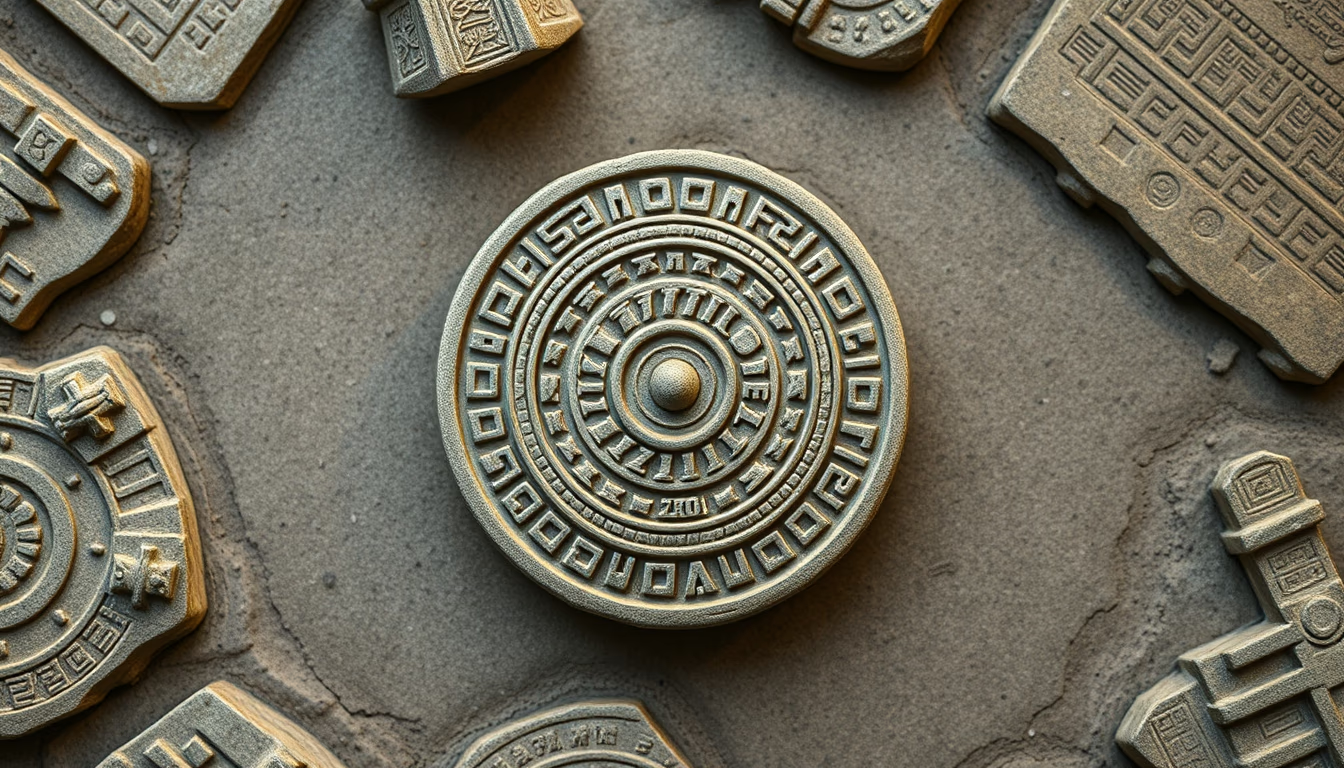
The Aztec Sun Stone, also known as the Aztec Calendar Stone, is a basalt monolith carved in the 15th century representing Mexica cosmology.
About this subject
The Aztec Sun Stone is one of the most iconic artifacts of the Mexica (Aztec) civilization, carved from volcanic basalt around 1502, 1521 during the reign of Moctezuma II. The monolith measures 3.6 meters in diameter and weighs approximately 24 tons. Originally placed at the Templo Mayor of Tenochtitlan (modern-day Mexico City), it was discovered in 1790 during leveling works of the main square, the Plaza de la Constitución (Zócalo).
Despite its popular name, the Sun Stone was not a functional calendar but a ceremonial monument dedicated to the sun god Tonatiuh. The central disk depicts Tonatiuh's face with an obsidian knife protruding from his tongue, surrounded by glyphs recording the four previous world ages according to Mexica mythology. A ring of twenty day signs and another of fifty-two years complete the 52-year cycle of the Mesoamerican calendar. Archaeological studies indicate the stone also served as an altar for human sacrifices during the festival of Xócotl Huetzi.
Today, the Sun Stone is housed at the National Museum of Anthropology in Mexico City, one of its most visited pieces. Its complex iconography has influenced modern symbols, such as the logo of the Mexican beer brand Corona. In 2020, a full-scale replica was installed at the Chapultepec Castle Museum to allow touch and access for visually impaired visitors. Although well preserved, the monolith suffered damage during the 1985 earthquake, when a crack opened on the lower edge.
Frequently Asked Questions
What does the face in the center of the Sun Stone represent?
The central face represents Tonatiuh, the Aztec sun god. Its tongue shaped as an obsidian knife symbolizes the sacrifice needed to keep the sun moving.
Why is the Sun Stone not an accurate calendar?
Although it contains symbols of days and eras, the stone was used for ritual and cosmological purposes, not for tracking days or seasons. The Aztecs used other systems for practical timekeeping.
Where is the Sun Stone currently located?
It is on display at the National Museum of Anthropology in Mexico City, in the Mexica room, since 1964.
Direct URL
https://pub-c7d6a6ea828543ac903a74a341ccb2e1.r2.dev/imagens/aztec-calendar-stone-isometric-flat-lay-p4.avifHow to credit
Include a visible link back to UtilizAí. Copy one of the snippets below:
<a href="https://xn--utiliza-eza.com/en/midia/imagens/aztec-calendar-stone-isometric-flat-lay-p4">Aztec calendar stone</a> by <a href="https://xn--utiliza-eza.com">UtilizAí</a>, licensed under <a href="https://creativecommons.org/licenses/by/4.0/">CC BY 4.0</a>.
[Aztec calendar stone](https://xn--utiliza-eza.com/en/midia/imagens/aztec-calendar-stone-isometric-flat-lay-p4) by [UtilizAí](https://xn--utiliza-eza.com), CC BY 4.0
License: CC-BY-4.0