Analytical balance closeup
1344×768 · AVIF · CC BY 4.0

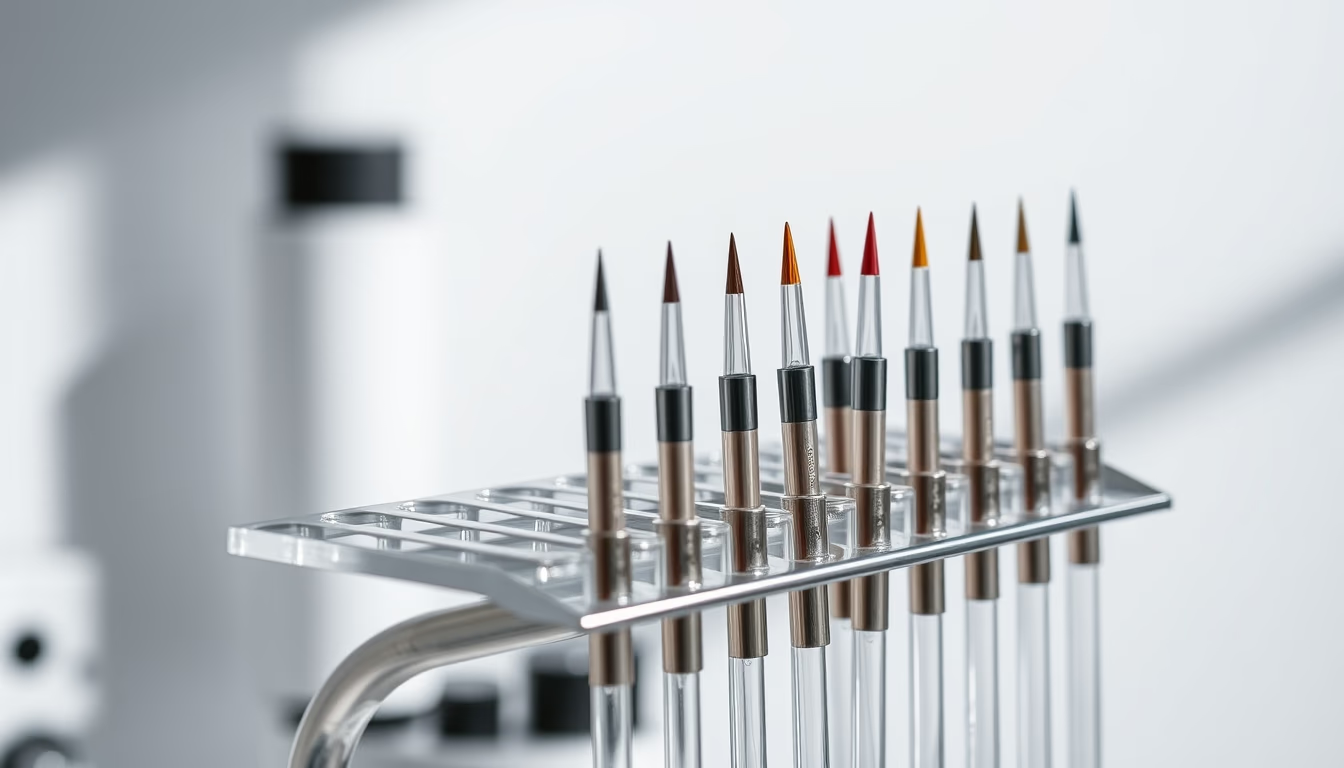
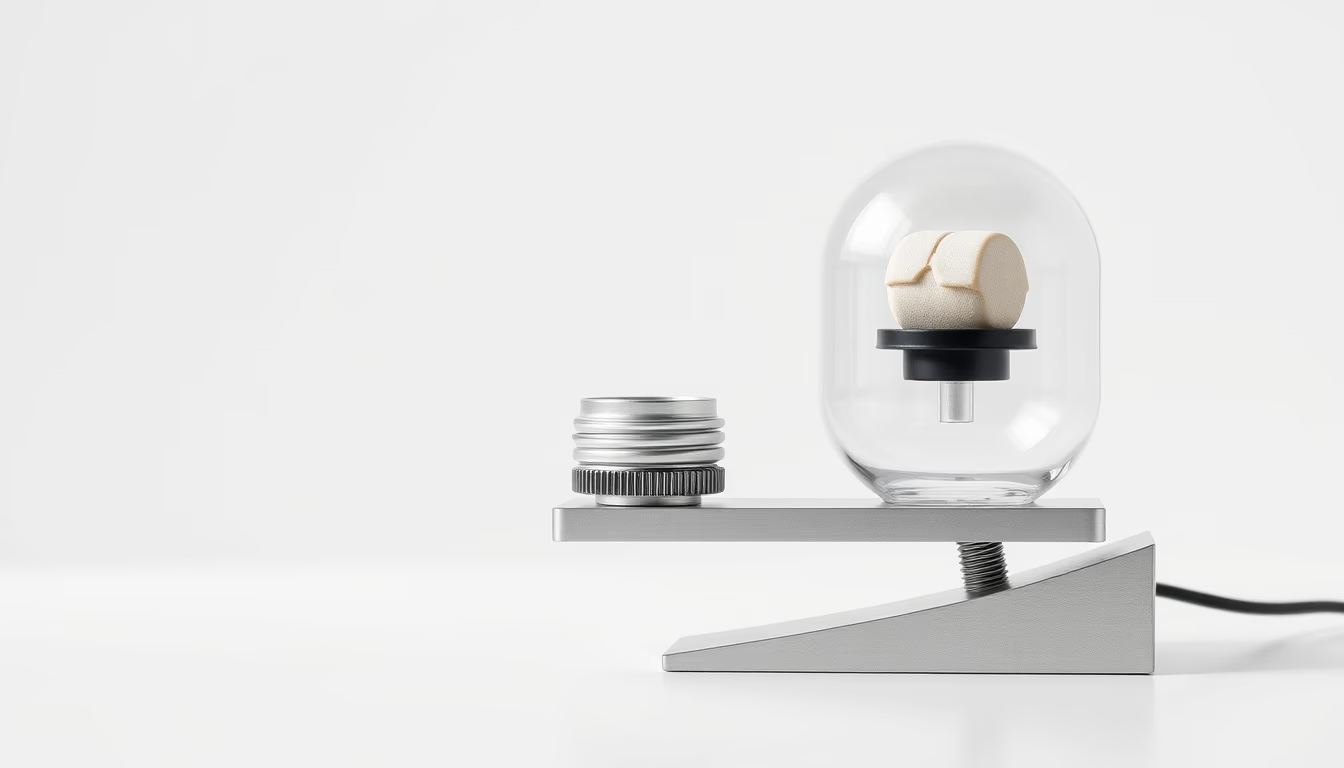
The analytical balance is a precision instrument essential in laboratories, capable of measuring masses with accuracy up to 0.0001 gram.
About this subject
The analytical balance is one of the most precise instruments found in chemistry, pharmacy, and biology laboratories. Unlike common scales, it uses an electromagnetic compensation system or high-sensitivity load cells to determine masses with a resolution of up to 0.1 mg (0.0001 g). This precision is crucial for experiments requiring exact amounts of reagents, such as organic syntheses, preparation of standard solutions, and pharmaceutical analyses.
The modern operating principle relies on a load cell that generates an electrical signal proportional to the applied mass. To ensure accuracy, the analytical balance must be regularly calibrated with certified standard masses and operated in a controlled environment free from drafts, vibrations, and temperature variations. Most models feature a glass chamber (draft shield) that isolates the weighing pan, minimizing external interferences.
Historically, analytical balances evolved from the two-pan balances used by Lavoisier in the 18th century to today's electronic digital devices. The introduction of microprocessors and capacitive sensors allowed greater stability and speed in measurements. Current high-end models offer Bluetooth connectivity and data tracking software to meet Good Laboratory Practice (GLP) requirements.
A technical curiosity is that most analytical balances use a timing system and digital filters to compensate for inherent environmental fluctuations. Additionally, the weighing pan is typically made of stainless steel or anodized aluminum to resist chemical corrosion. Proper use includes never exceeding the maximum capacity (commonly 200 g) and avoiding impacts that could damage the internal mechanism.
Frequently Asked Questions
What is the difference between an analytical balance and a semi-analytical balance?
An analytical balance has a precision of 0.1 mg (0.0001 g), while a semi-analytical balance has 1 mg (0.001 g). The analytical balance also features a glass draft shield that the semi-analytical usually lacks.
Why must an analytical balance be calibrated before use?
Calibration with standard masses ensures readings are accurate and traceable to international standards. Thermal and environmental variations can shift calibration, so it is recommended to calibrate daily or whenever the location is changed.
How can weighing errors be avoided on an analytical balance?
Always close the glass draft shield, wait for the reading to stabilize (indicated by a symbol), never touch the pan with hands, and use tweezers or spatulas to transfer samples. Avoid drafts and vibrations near the equipment.
Direct URL
https://pub-c7d6a6ea828543ac903a74a341ccb2e1.r2.dev/imagens/analytical-balance-closeup-high-fashion-editorial-fresh0.avifHow to credit
Include a visible link back to UtilizAí. Copy one of the snippets below:
<a href="https://xn--utiliza-eza.com/en/midia/imagens/analytical-balance-closeup-high-fashion-editorial-fresh0">Analytical balance closeup</a> by <a href="https://xn--utiliza-eza.com">UtilizAí</a>, licensed under <a href="https://creativecommons.org/licenses/by/4.0/">CC BY 4.0</a>.
[Analytical balance closeup](https://xn--utiliza-eza.com/en/midia/imagens/analytical-balance-closeup-high-fashion-editorial-fresh0) by [UtilizAí](https://xn--utiliza-eza.com), CC BY 4.0
License: CC-BY-4.0