Analytical balance closeup
1344×768 · AVIF · CC BY 4.0

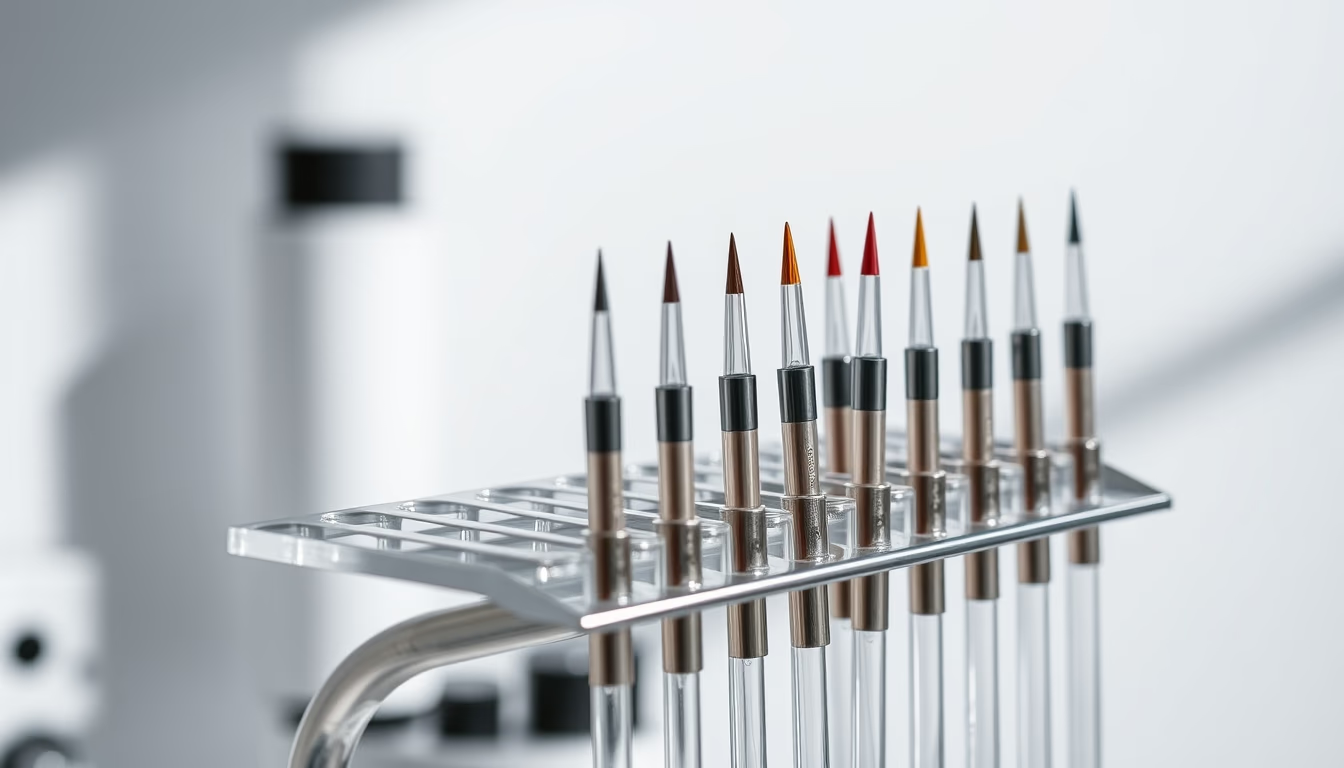
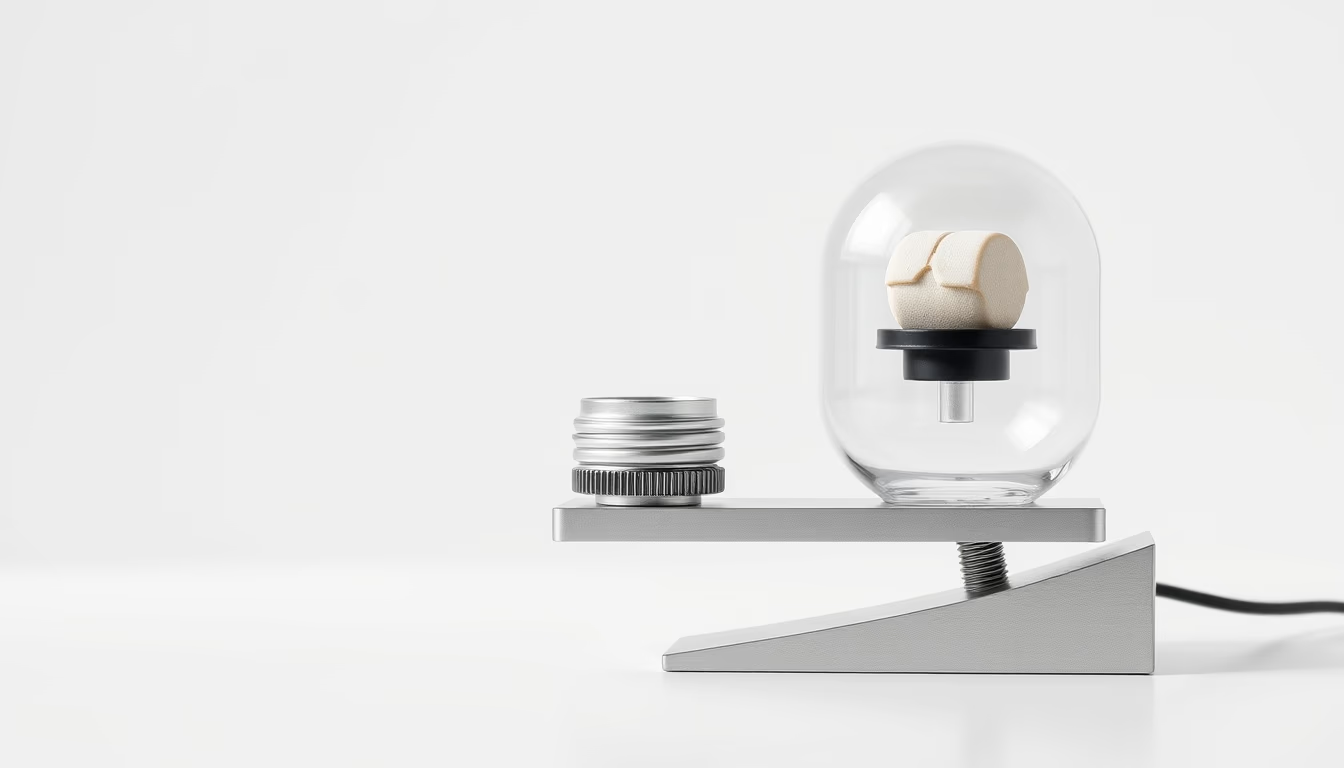
Close-up of an analytical balance, a precision instrument essential in laboratories for mass measurements with accuracy in the microgram range.
About this subject
An analytical balance is a fundamental instrument in chemistry, pharmacy, and biology laboratories, capable of measuring mass with precision up to 0.0001 grams (0.1 mg). Unlike semi-analytical or precision balances, analytical balances feature a draft shield glass chamber to protect the pan from air currents and temperature variations that could affect readings. They operate using load cells or electromagnetic force compensation mechanisms, ensuring high accuracy.
Using an analytical balance requires special care, such as periodic calibration with certified weights, leveling the equipment, and maintaining stable ambient temperature. In many labs, it is connected to automated data recording systems for traceability, complying with standards like ISO 17025. Cleaning the pan and chamber is essential to avoid cross-contamination between samples.
Historically, the first modern analytical balances emerged in the 18th century with two-pan designs, but digital electronic balances became standard from the 1970s onward. Advanced models now feature automatic temperature compensation, antistatic elements, and even Bluetooth connectivity for data transfer. Choosing the right balance depends on the mass range and required precision, with analytical balances ideal for measurements under 200 grams.
In Brazil, ANVISA requires that balances used in quality control analyses be calibrated annually. The analytical balance is key in preparing standard solutions, determining ash content, and performing gravimetric analysis, common procedures in university and pharmaceutical industry labs.
Frequently Asked Questions
What is the difference between an analytical balance and a precision balance?
An analytical balance has a precision of 0.1 mg (0.0001 g), while a precision balance typically measures to 0.001 g or 0.01 g. Analytical balances have a draft shield to prevent environmental interference.
How to properly calibrate an analytical balance?
Use a certified weight of known value, level the balance, turn it on and wait for stabilization. Place the weight in the center of the pan and adjust calibration according to the manual.
Why does an analytical balance need a glass chamber?
To isolate the pan from air drafts, temperature fluctuations, and dust, which could affect the measurement due to the instrument's high sensitivity.
Direct URL
https://pub-c7d6a6ea828543ac903a74a341ccb2e1.r2.dev/imagens/analytical-balance-closeup-documentary-photography-fresh10.avifHow to credit
Include a visible link back to UtilizAí. Copy one of the snippets below:
<a href="https://xn--utiliza-eza.com/en/midia/imagens/analytical-balance-closeup-documentary-photography-fresh10">Analytical balance closeup</a> by <a href="https://xn--utiliza-eza.com">UtilizAí</a>, licensed under <a href="https://creativecommons.org/licenses/by/4.0/">CC BY 4.0</a>.
[Analytical balance closeup](https://xn--utiliza-eza.com/en/midia/imagens/analytical-balance-closeup-documentary-photography-fresh10) by [UtilizAí](https://xn--utiliza-eza.com), CC BY 4.0
License: CC-BY-4.0