Amplifier vintage knobs
1344×768 · AVIF · CC BY 4.0
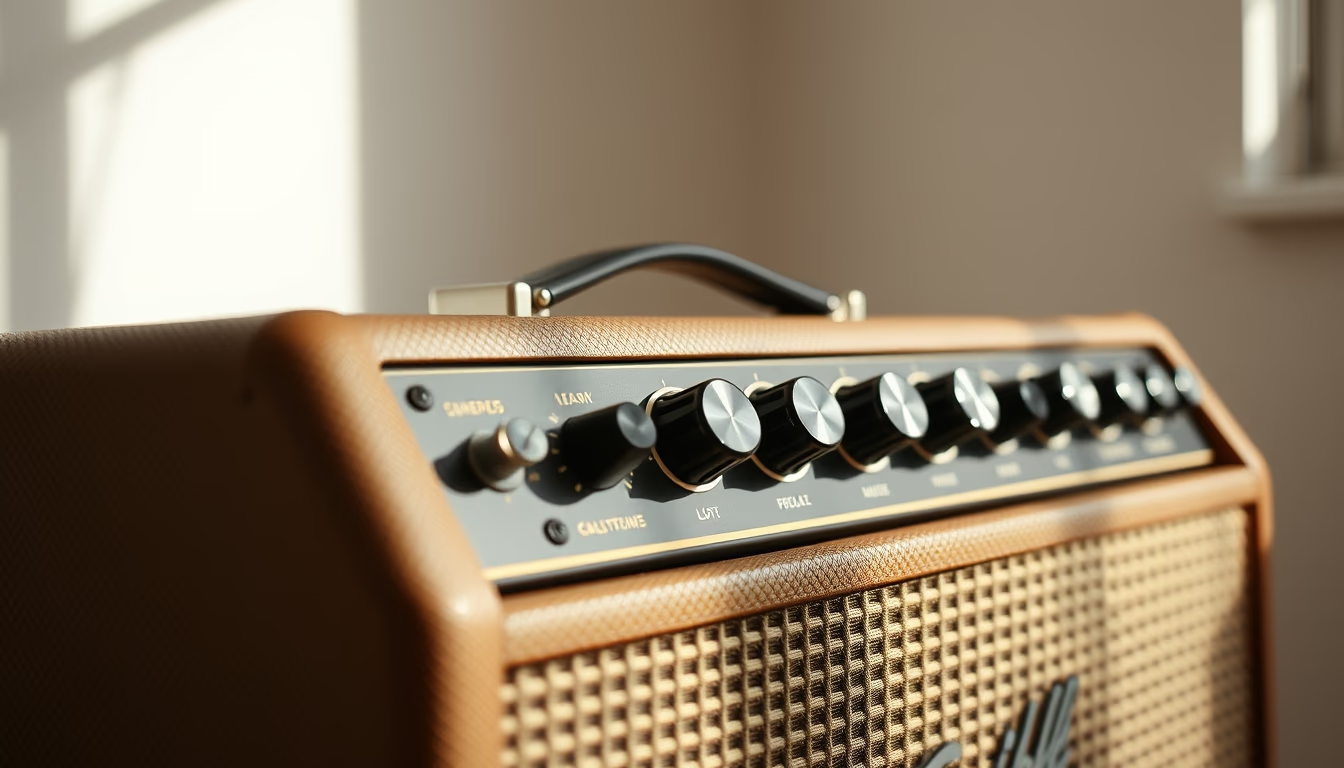
Vintage amplifier knobs are iconic audio design elements, blending functionality with retro aesthetics.
About this subject
Vintage amplifier knobs are components that go beyond mere sound control. They represent a golden era of audio between the 1950s and 1970s, when tube amplifiers dominated the market. Made from materials like Bakelite, phenolic, and chrome-plated metal, these knobs featured robust construction and superior durability. Each knob controlled essential functions: volume, bass, treble, gain, and presence. Brands such as Fender, Marshall, Vox, and Ampeg stood out, creating knobs with unique visual identities, like the "chicken head" or "barrel" models.
Material and shape choice directly influenced tactile experience and adjustment precision. Logarithmic potentiometers were common for volume, while linear ones were used for tone. Original vintage knobs are now highly sought after by musicians and collectors, as they ensure the sonic and visual authenticity of the equipment. Restoring classic amplifiers often depends on replacing knobs with period-correct parts, since replicas do not always reproduce the same feel.
Culturally, these knobs are associated with rock, blues, and psychedelic music. The retro aesthetic they provide is a valued stylistic element in studios and on stage. The contemporary minimalist trend, which appreciates clean compositions and objects with history, reinforces the fascination with pieces that unite form and function. Vintage knobs are mere accessories: they are testimonies to the audio engineering of the mid-20th century, when sound quality went hand in hand with industrial design.
Frequently Asked Questions
Why are vintage knobs so valued by musicians and collectors?
They are valued for their historical authenticity, build quality, and influence on tone. Original knobs ensure that the amplifier retains its characteristic sound and period appearance, being essential in restorations and to preserve the equipment's value.
What materials were commonly used in vintage knob manufacturing?
The most common materials were Bakelite (a thermosetting plastic), phenolic (resin with fabric), and chrome or nickel-plated metal. Each material offered specific durability and texture, with Bakelite particularly associated with the 1950s and 1960s.
How can you tell if a knob is truly vintage or a modern replica?
Examine details such as mold marks, natural wear, color, and material. Original knobs often exhibit patina, metal screws with rust or wear, and specific measurements. Comparing with period catalogs or consulting amplifier experts can help.
Direct URL
https://pub-c7d6a6ea828543ac903a74a341ccb2e1.r2.dev/imagens/amplifier-vintage-knobs-minimalist-composition-p4.avifHow to credit
Include a visible link back to UtilizAí. Copy one of the snippets below:
<a href="https://xn--utiliza-eza.com/en/midia/imagens/amplifier-vintage-knobs-minimalist-composition-p4">Amplifier vintage knobs</a> by <a href="https://xn--utiliza-eza.com">UtilizAí</a>, licensed under <a href="https://creativecommons.org/licenses/by/4.0/">CC BY 4.0</a>.
[Amplifier vintage knobs](https://xn--utiliza-eza.com/en/midia/imagens/amplifier-vintage-knobs-minimalist-composition-p4) by [UtilizAí](https://xn--utiliza-eza.com), CC BY 4.0
License: CC-BY-4.0