Amplifier vintage knobs
1344×768 · AVIF · CC BY 4.0
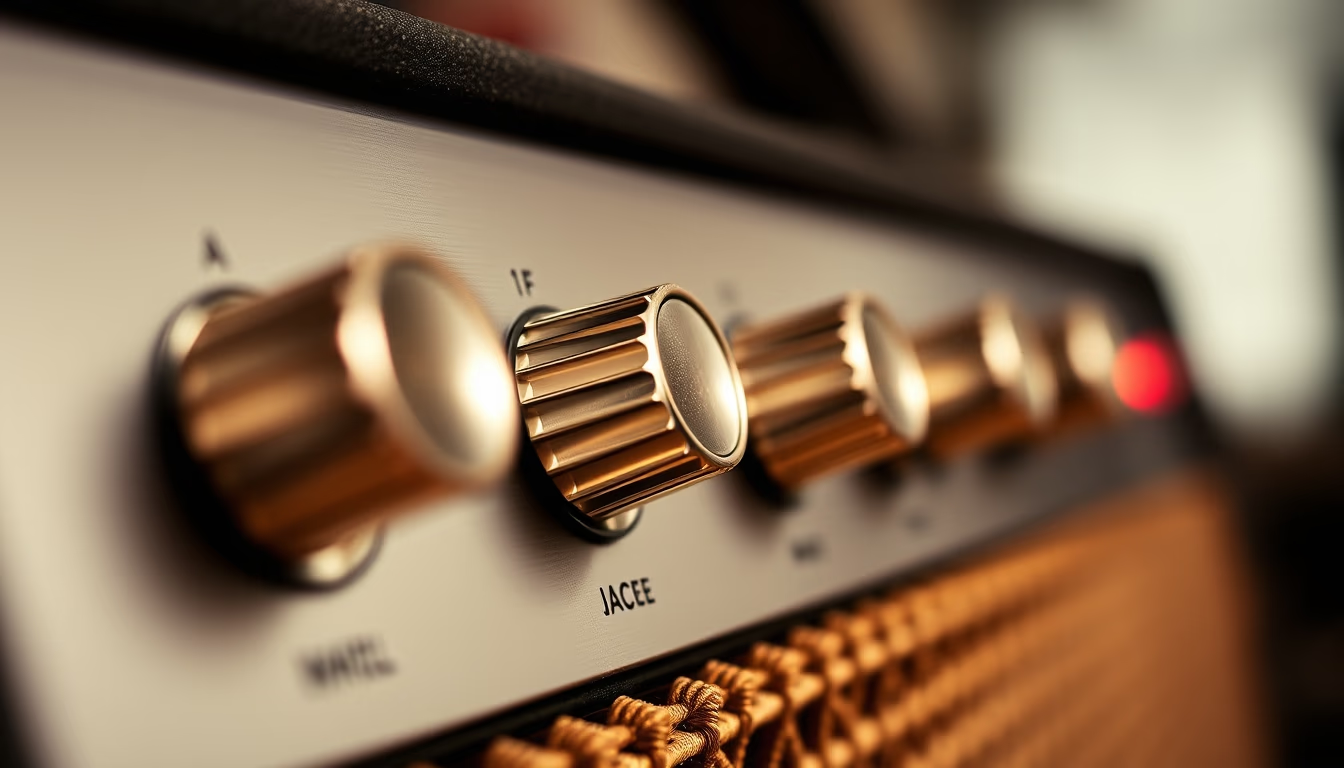
Vintage amplifier knobs are icons of analog design, blending retro aesthetics with precise functionality.
About this subject
Vintage amplifier knobs, such as those found on classic Fender, Marshall and Vox amps, are far more than simple controls. Originally made from Bakelite (one of the first synthetic resins) or phenolic plastic, these components were designed to withstand high heat and provide a firm grip. Designs varied by manufacturer: the "chicken head" knobs of the 1950s, with their pointed shape and white marker, allowed quick adjustments on dark stages; Fender's skirted knobs, used on Tweed and Blackface amps, featured a wide base with silkscreened numbers.
Their importance extends beyond looks. Each shape influenced the musician's tactile experience: knurled knobs offered better traction for sweaty fingers, while smooth ones demanded more precision. Collectors and luthiers seek original parts, as modern ABS plastic replicas lack the natural crazing of aged Bakelite. In tube amplifiers, turning a knob varied the resistance of carbon potentiometers, directly shaping the tone.
Interestingly, numbers on these knobs often didn't follow a linear scale. On a Marshall Plexi, volume marks 0 to 10, but the actual logarithmic response concentrates most change in the first few numbers. Fender Bassman's tone knobs used a special taper to smooth frequency cuts. These quirks add to the charm of vintage gear, whose market value increases with the authenticity of each part.
With the resurgence of lo-fi music and retro aesthetics, vintage amplifiers and their original knobs have become coveted items. Restorers often document different knob series: Gibson's "mushroom" knobs, Ampeg's "barrel" knobs, and Sunn's "bullet" knobs. Each tells a story of 20th-century audio engineering, where form and function met in objects just a few centimeters wide.
Frequently Asked Questions
What is the difference between Bakelite and modern plastic knobs?
Bakelite is a thermosetting phenolic resin, harder and more heat-resistant than modern ABS plastic. Over time, it develops a characteristic crazed patina prized by collectors, while ABS fades or melts more easily.
Why do vintage knobs have numbering different from actual values?
Numbering on classic amps often doesn't match the linear response of the potentiometer. Manufacturers like Marshall and Fender used logarithmic tapers to give a feeling of gradual change at the start of rotation, though this varied by model and function.
Do original knobs affect the amplifier's sound?
Indirectly, yes. Original knobs fit the potentiometer shaft perfectly without slipping, ensuring precise adjustments. Material and weight can influence tactile feel, but actual sound depends more on the potentiometer and circuit than the knob itself.
Direct URL
https://pub-c7d6a6ea828543ac903a74a341ccb2e1.r2.dev/imagens/amplifier-vintage-knobs-macro-closeup-p3.avifHow to credit
Include a visible link back to UtilizAí. Copy one of the snippets below:
<a href="https://xn--utiliza-eza.com/en/midia/imagens/amplifier-vintage-knobs-macro-closeup-p3">Amplifier vintage knobs</a> by <a href="https://xn--utiliza-eza.com">UtilizAí</a>, licensed under <a href="https://creativecommons.org/licenses/by/4.0/">CC BY 4.0</a>.
[Amplifier vintage knobs](https://xn--utiliza-eza.com/en/midia/imagens/amplifier-vintage-knobs-macro-closeup-p3) by [UtilizAí](https://xn--utiliza-eza.com), CC BY 4.0
License: CC-BY-4.0