Tuba large brass
1344×768 · AVIF · CC BY 4.0
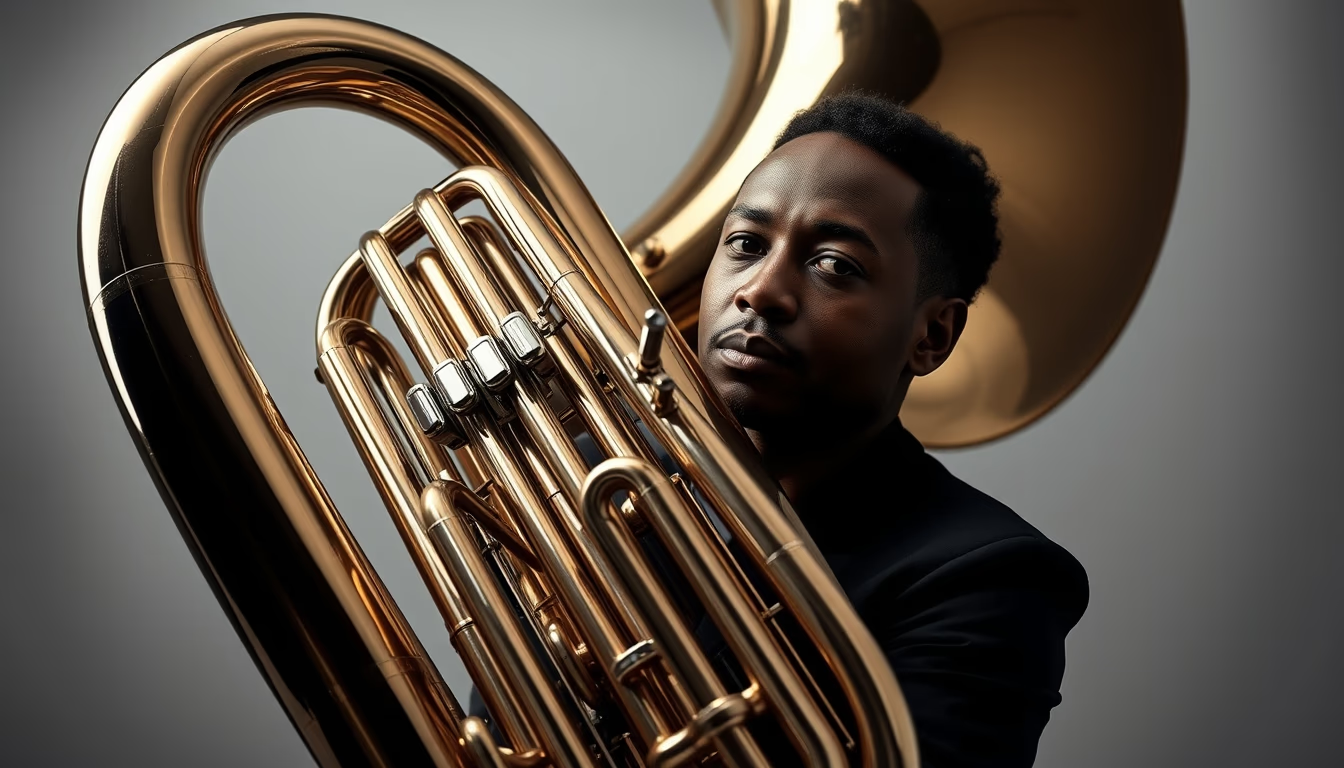
The tuba is the largest and lowest-pitched brass instrument, essential in symphony orchestras and bands.
About this subject
The tuba is the lowest-pitched member of the brass family, with a deep, resonant sound that provides the harmonic foundation in various musical ensembles. Invented in 1835 by Prussian musician Wilhelm Wieprecht and instrument maker Johann Gottfried Moritz, the tuba was designed to meet the need for a wind instrument with a sufficiently low range to match the emerging symphony orchestras of the 19th century. Since then, it has become a staple in orchestras, military bands, jazz bands, and even popular music groups.
There are several types of tuba, including the tenor tuba (or euphonium), bass tuba, and contrabass tuba, as well as variations like the sousaphone, developed by John Philip Sousa for use in marching bands. The tuba is typically made of brass and has between 3 and 6 valves, which allow the player to alter the length of the tubing to produce different notes. The instrument can measure over 2 meters in length when uncoiled, and its weight ranges from 9 to 18 kg, requiring significant physical strength from the musician.
In classical music, the tuba is often used to play bass lines and reinforce the brass section. Composers such as Richard Wagner and Gustav Mahler wrote iconic tuba parts in their symphonies. In jazz, the tuba was one of the first wind instruments to provide the bass line, before being replaced by the double bass in many ensembles. Musicians like Howard Johnson and Brazilian Zé Nogueira (though better known for saxophone) are examples of tubists who expanded the instrument's possibilities.
Interestingly, the tuba is one of the most difficult instruments to play due to the large volume of air required and the precision of the embouchure. Despite its imposing size, it can produce soft, lyrical sounds when played by skilled musicians. In marching bands, the tuba is often called the 'heart of the band' for its rhythmic and harmonic role.
Frequently Asked Questions
How many valves does a tuba have?
Most tubas have between 3 and 5 valves, but some may have 6. The valves allow the musician to divert air through different tubing paths, changing the pitch.
What is the difference between a tuba and a sousaphone?
The sousaphone was designed for marching bands, with a circular shape that wraps around the player's body for easier transport. The traditional tuba has a more upright form and is mainly used in orchestras and chamber ensembles.
Which famous orchestras use the tuba?
Virtually all modern symphony orchestras include the tuba, such as the Berlin Philharmonic, the Chicago Symphony Orchestra, and the São Paulo State Symphony Orchestra. The tuba is essential for the low brass section.
Direct URL
https://pub-c7d6a6ea828543ac903a74a341ccb2e1.r2.dev/imagens/tuba-large-brass-studio-editorial-portrait-p12.avifHow to credit
Include a visible link back to UtilizAí. Copy one of the snippets below:
<a href="https://xn--utiliza-eza.com/en/midia/imagens/tuba-large-brass-studio-editorial-portrait-p12">Tuba large brass</a> by <a href="https://xn--utiliza-eza.com">UtilizAí</a>, licensed under <a href="https://creativecommons.org/licenses/by/4.0/">CC BY 4.0</a>.
[Tuba large brass](https://xn--utiliza-eza.com/en/midia/imagens/tuba-large-brass-studio-editorial-portrait-p12) by [UtilizAí](https://xn--utiliza-eza.com), CC BY 4.0
License: CC-BY-4.0