Spectrophotometer cuvettes
1344×768 · AVIF · CC BY 4.0
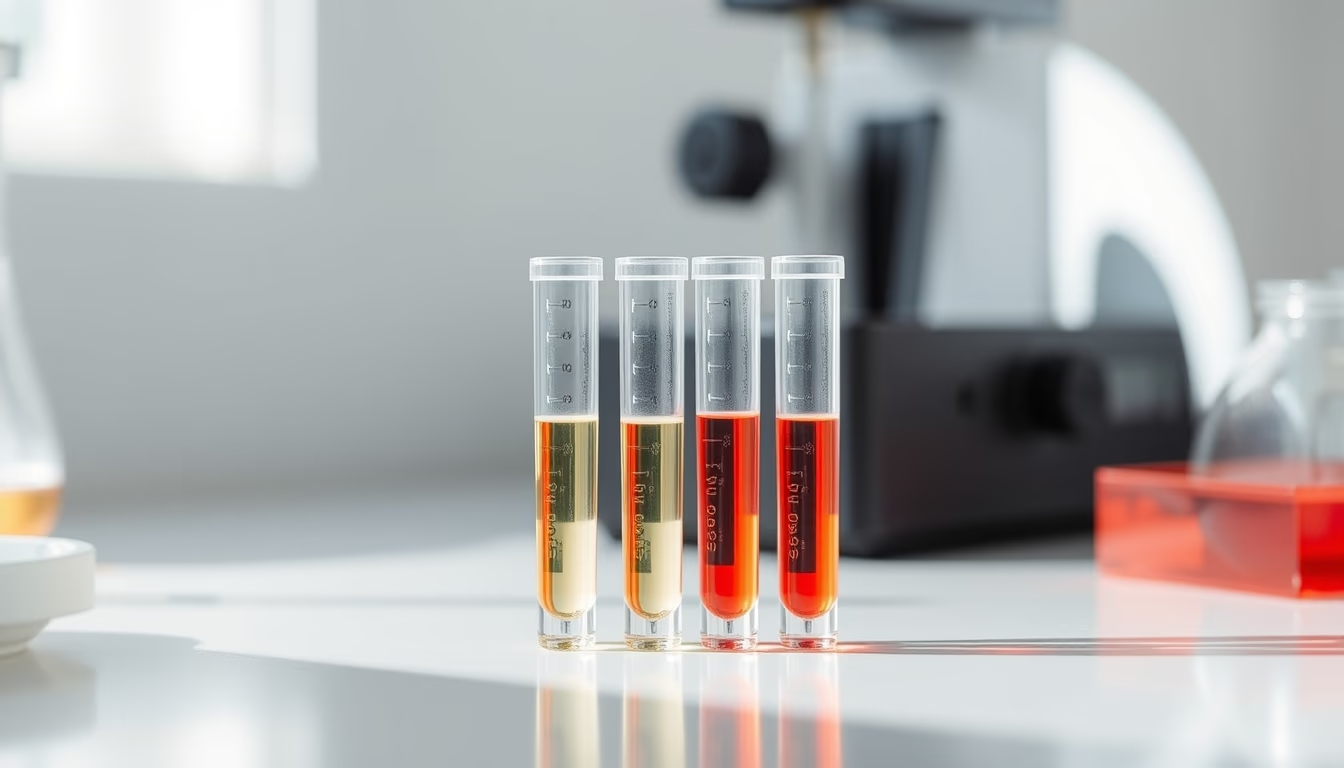
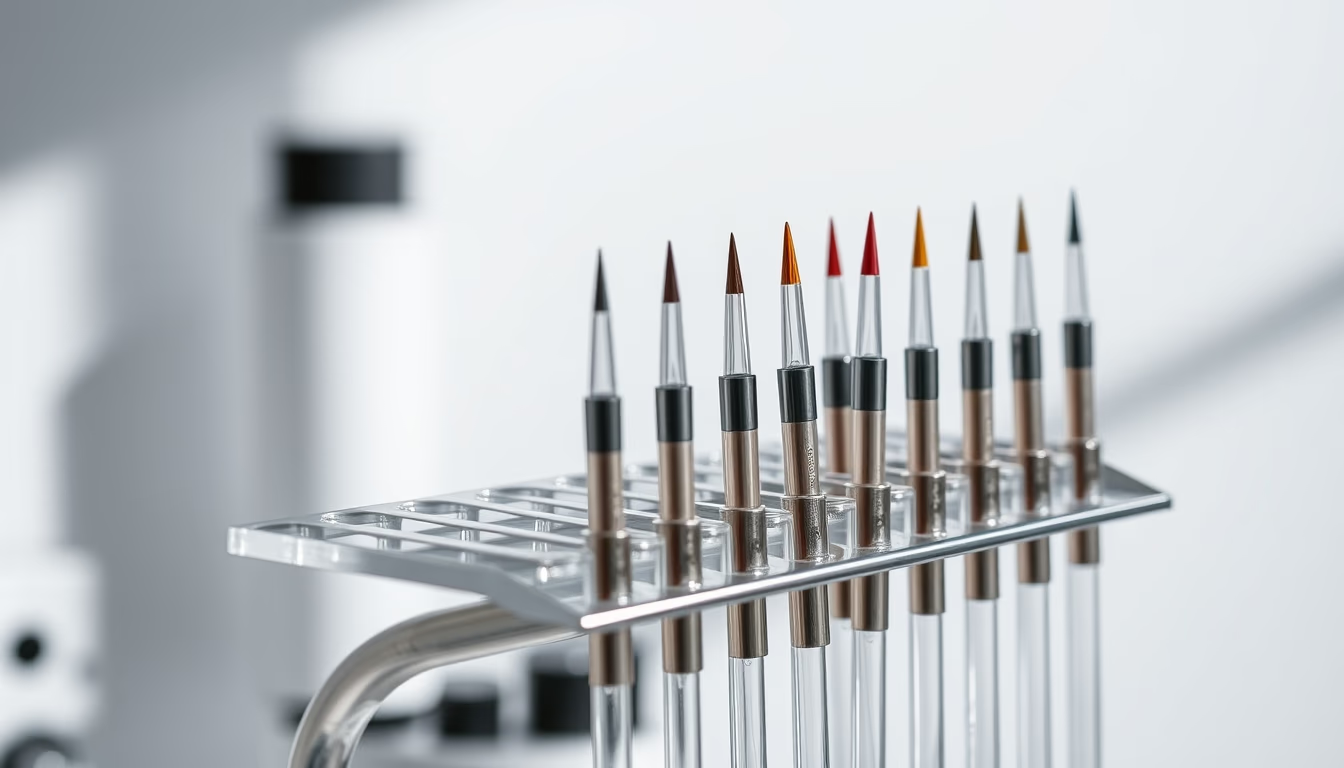
Spectrophotometer cuvettes are precision containers made of glass, quartz, or plastic, used to measure light absorbance or transmittance in liquid samples during scientific analysis.
About this subject
Spectrophotometer cuvettes are essential components in chemistry, biochemistry, and molecular biology laboratories. They serve as optical containers to hold the liquid sample while the instrument measures the intensity of light passing through it. The operating principle is based on the Beer-Lambert law, which relates absorbance to analyte concentration and optical path length. The most common cuvettes have a 1 cm path length, but variations with shorter or longer paths exist for different concentration ranges.
The choice of cuvette material is critical for analysis success. Glass or plastic (polystyrene, PMMA) cuvettes are suitable for measurements in the visible range (380-780 nm), while quartz cuvettes are indispensable for work in the ultraviolet range (190-380 nm) because ordinary glass absorbs UV light. Quartz cuvettes are also used in near-infrared spectroscopy. Additionally, disposable plastic cuvettes are often used in high-throughput assays to avoid cross-contamination and save washing time.
Proper cleaning and handling of cuvettes are fundamental for result accuracy. Reusable cuvettes should be washed with neutral detergent, rinsed with distilled water, and if necessary with organic solvents such as ethanol or acetone. Scratches or dirt on the optical surfaces can cause light scattering and measurement errors. Quartz cuvettes require special care, avoiding contact with hydrofluoric acid which damages the material. The orientation of the cuvette in the spectrophotometer must also be consistent, generally with the mark facing the light source.
Cuvettes are available in different shapes, including rectangular, cylindrical, and microcuvettes for reduced volumes (down to a few microliters). Models with caps are used to prevent evaporation or contamination of volatile solvents. In double-beam spectrophotometers, two identical cuvettes are used, one with the reference solution (blank) and the other with the sample. Standardization of optical path and optical quality is ensured by norms such as ISO 9000, guaranteeing reproducibility across batches and manufacturers.
Frequently Asked Questions
What cuvette material is ideal for measurements in the ultraviolet region?
For UV measurements (190-380 nm), quartz cuvettes are ideal because ordinary glass and plastic absorb this light range. Quartz has high UV transmittance, enabling accurate readings.
How to clean reusable spectrophotometer cuvettes?
Wash with neutral detergent, rinse thoroughly with distilled water, and air dry or use compressed air. For organic residues, use ethanol or acetone. Avoid solvents that damage the material, such as hydrofluoric acid for quartz.
Why is the standard optical path of cuvettes 1 cm?
The 1 cm optical path is an international standard (per Beer-Lambert law) because it offers adequate sensitivity for most applications. Shorter or longer paths are used for very high or very low concentrations, respectively.
Direct URL
https://pub-c7d6a6ea828543ac903a74a341ccb2e1.r2.dev/imagens/spectrophotometer-cuvettes-minimalist-composition-fresh13.avifHow to credit
Include a visible link back to UtilizAí. Copy one of the snippets below:
<a href="https://xn--utiliza-eza.com/en/midia/imagens/spectrophotometer-cuvettes-minimalist-composition-fresh13">Spectrophotometer cuvettes</a> by <a href="https://xn--utiliza-eza.com">UtilizAí</a>, licensed under <a href="https://creativecommons.org/licenses/by/4.0/">CC BY 4.0</a>.
[Spectrophotometer cuvettes](https://xn--utiliza-eza.com/en/midia/imagens/spectrophotometer-cuvettes-minimalist-composition-fresh13) by [UtilizAí](https://xn--utiliza-eza.com), CC BY 4.0
License: CC-BY-4.0