Spectrophotometer cuvettes
1344×768 · AVIF · CC BY 4.0

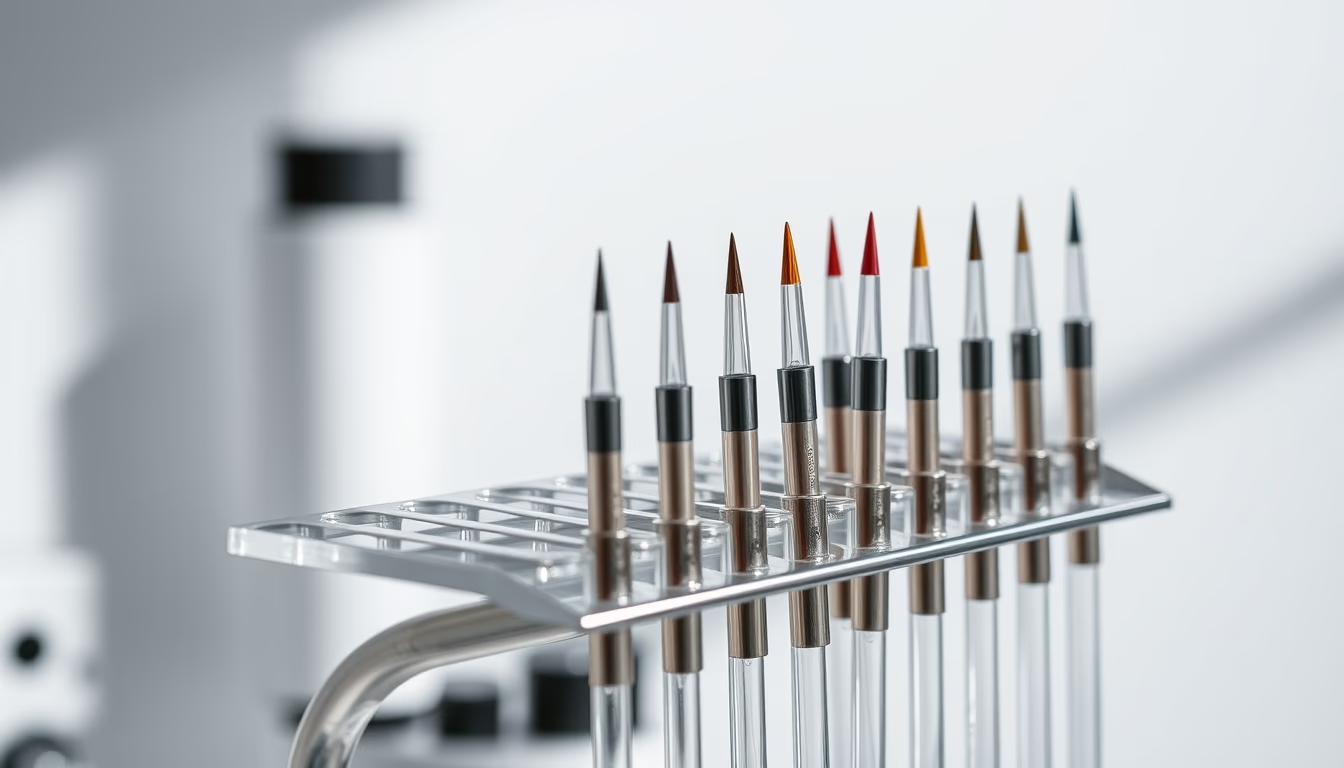
Spectrophotometer cuvettes are precision optical containers used to hold samples in spectrophotometric analysis.
About this subject
Spectrophotometer cuvettes are essential components in laboratory analyses that measure the absorbance or transmittance of light through a liquid sample. Made from materials such as glass, quartz, or optical polymers (polystyrene, PMMA), each type is chosen according to the wavelength range: glass and plastic work in the visible spectrum (380-780 nm), while quartz is mandatory for ultraviolet (below 380 nm). The optical precision of cuvettes requires standardized path lengths (usually 1 cm) and polished faces that minimize light scattering.
Proper handling of cuvettes directly impacts result reliability. They should be handled by the frosted sides to avoid fingerprints on the optical windows. Cleaning is critical: residues can absorb light and distort readings. Disposable plastic cuvettes are common for quick assays but suffer from scratches and cloudiness. Reusable quartz cuvettes require cleaning with specific solvents and should never be dried in an oven, as heat deforms the cuvette.
Interestingly, the term 'cuvette' comes from French ('cuvette' meaning container) and has become an international standard. In Brazil, clinical, pharmaceutical, and environmental laboratories use millions of cuvettes annually. The choice between standard or micro-volume cuvettes depends on sample volume: common cuvettes need 2-3 mL, while modern versions with reduced path length require only 0.5 µL.
The evolution of polymeric materials has enabled the production of low-cost optical cuvettes for single use, reducing cross-contamination risks. However, periodic calibration of the spectrophotometer with reference cuvettes is indispensable to ensure measurement accuracy, especially in regulatory applications such as pharmaceutical quality control.
Frequently Asked Questions
What are spectrophotometer cuvettes?
They are optical containers, usually rectangular, used to hold liquid samples during absorbance or transmittance measurements in a spectrophotometer. They have transparent windows that allow the light beam to pass through.
How to choose between glass, quartz, or plastic cuvettes?
The choice depends on the wavelength of the analysis. For visible light (380-780 nm), glass or plastic is sufficient. For ultraviolet (below 380 nm), quartz is mandatory because glass and plastic absorb that radiation. Consider cost and reusability.
Why is cuvette cleaning important?
Residues on the optical windows absorb or scatter light, altering results. Dirty cuvettes lead to inaccurate readings. They should be washed with mild detergent or appropriate solvents and rinsed with distilled water, avoiding touching the optical faces.
Direct URL
https://pub-c7d6a6ea828543ac903a74a341ccb2e1.r2.dev/imagens/spectrophotometer-cuvettes-macro-closeup-fresh12.avifHow to credit
Include a visible link back to UtilizAí. Copy one of the snippets below:
<a href="https://xn--utiliza-eza.com/en/midia/imagens/spectrophotometer-cuvettes-macro-closeup-fresh12">Spectrophotometer cuvettes</a> by <a href="https://xn--utiliza-eza.com">UtilizAí</a>, licensed under <a href="https://creativecommons.org/licenses/by/4.0/">CC BY 4.0</a>.
[Spectrophotometer cuvettes](https://xn--utiliza-eza.com/en/midia/imagens/spectrophotometer-cuvettes-macro-closeup-fresh12) by [UtilizAí](https://xn--utiliza-eza.com), CC BY 4.0
License: CC-BY-4.0