Spectrophotometer cuvettes
1344×768 · AVIF · CC BY 4.0
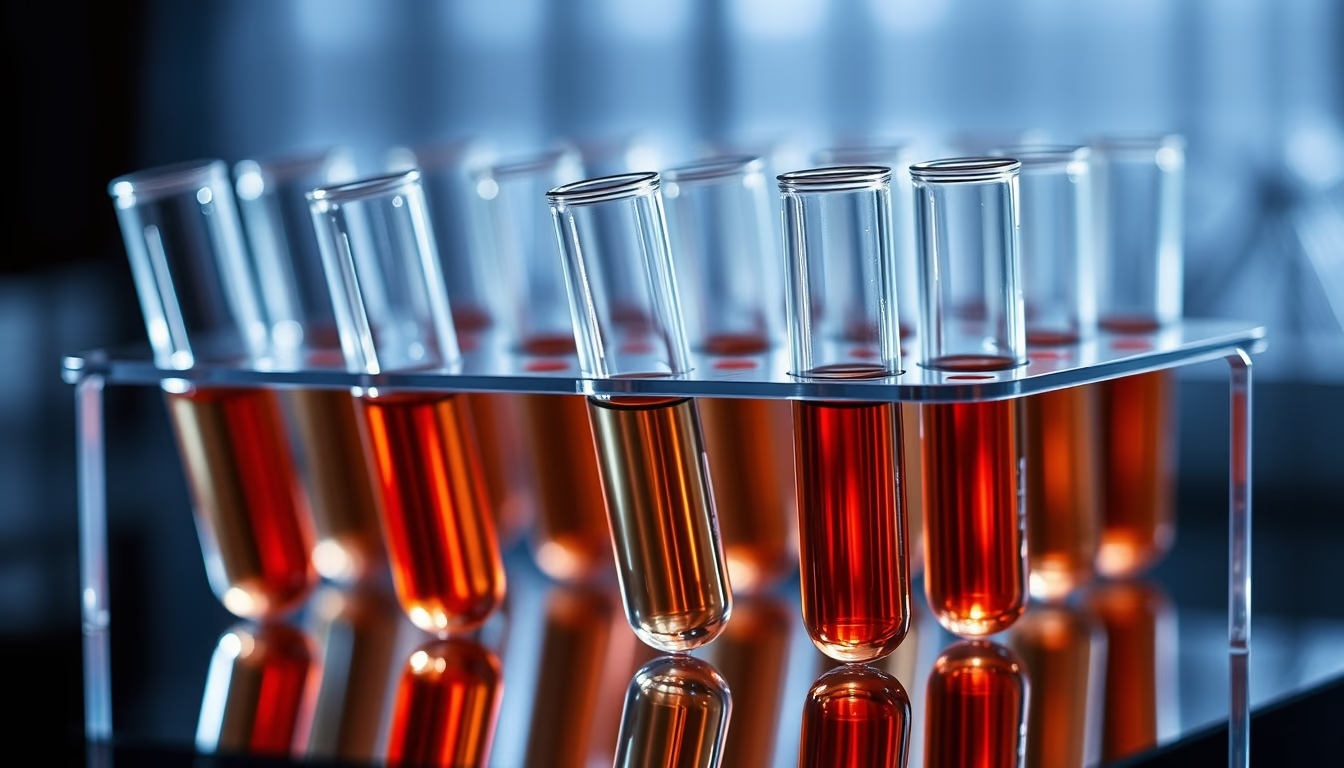
Spectrophotometer cuvettes are optical containers used in chemical and biological analyses to measure absorbance or transmittance of light.
About this subject
Spectrophotometer cuvettes, also known as cells or cuvettes, are small transparent containers designed to hold liquid samples during spectroscopic measurements. Made from materials such as glass, quartz, or plastic (typically polystyrene or polymethyl methacrylate), each type has specific transparency ranges in the ultraviolet (UV), visible (VIS), and near-infrared (NIR) spectrum. Quartz cuvettes are the most versatile, transmitting light from 190 nm in the UV to 2500 nm in the NIR, making them essential for protein and DNA analyses. Glass cuvettes work only above 320 nm, while disposable plastic ones are convenient for routine assays in the visible range.
The internal optical path length, typically 1 cm (standard), determines measurement sensitivity according to the Beer-Lambert law. Cuvettes with shorter paths (0.1 mm to 1 mm) are used for highly concentrated samples. There are also flow-through cuvettes for liquid chromatography and thermostatted cuvettes for enzyme kinetics. The optical surface must be free of scratches and dirt, as any imperfection scatters light and compromises accuracy. Therefore, handling by frosted edges and cleaning with appropriate solvents, never with abrasive materials, is recommended.
In analytical chemistry and biochemistry, the cuvette is a critical component that directly affects result quality. Improper material choice can lead to spectral interference, such as absorption by the container at low wavelengths. For example, polystyrene cuvettes absorb strongly below 300 nm, making UV readings impossible. Additionally, capped cuvettes prevent evaporation or contamination during long kinetics. Although common in labs, high-precision cuvettes require periodic calibration and verification to ensure exact correspondence between nominal and actual path length.
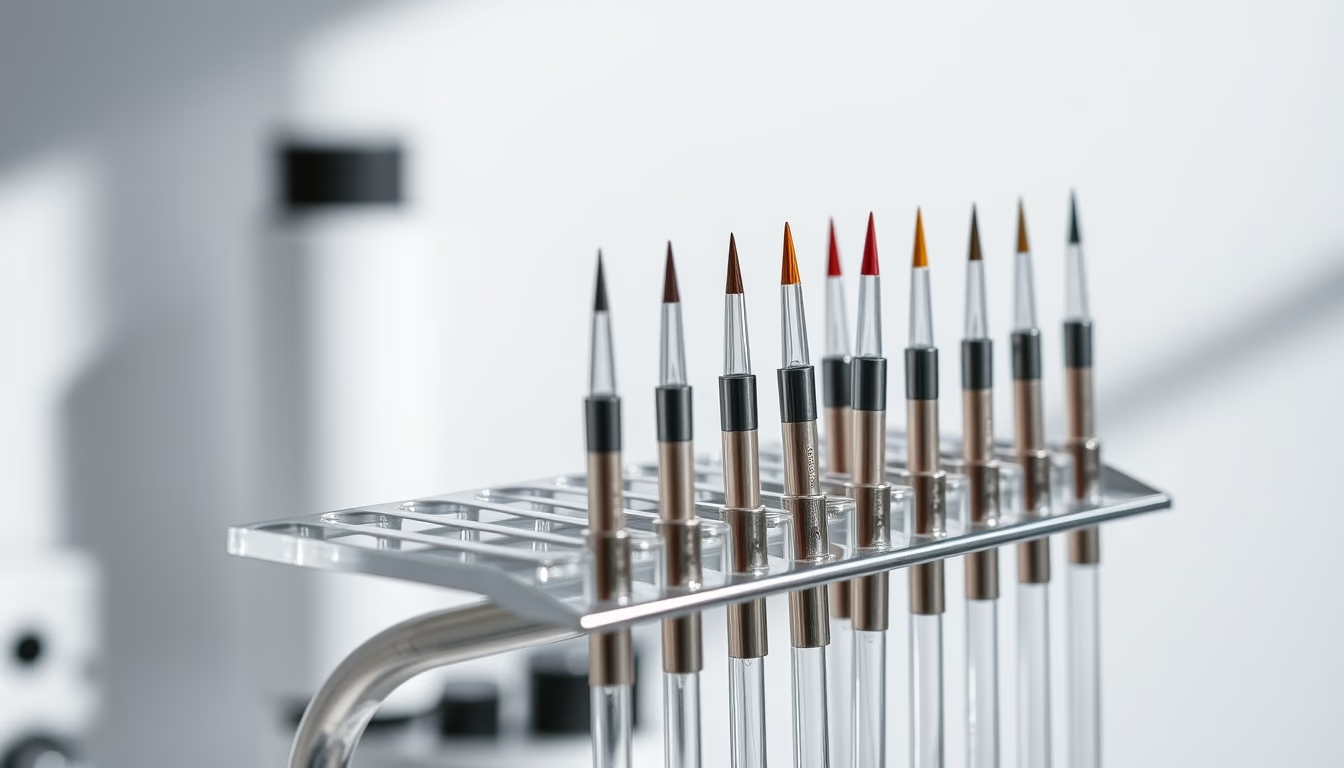
The artistic photography of cuvettes like this one explores the symmetry and transparency of scientific objects, transforming analytical tools into aesthetic elements. The arrangement highlights geometric shapes and material purity, connecting art and science by revealing the beauty of instruments that quantify molecules invisible to the naked eye.
Frequently Asked Questions
What is the difference between quartz, glass, and plastic cuvettes?
Quartz cuvettes transmit UV (190 nm), visible, and NIR light, ideal for DNA and protein analyses. Glass cuvettes work only above 320 nm, while plastic (polystyrene) ones are disposable and used in the visible range, but absorb below 300 nm.
How should a spectrophotometer cuvette be cleaned?
Wash with distilled water and mild detergent, rinse thoroughly, and dry with compressed air or soft tissue. For organic residues, use solvents like ethanol or acetone. Never use abrasive materials or brushes that could scratch the optical surface.
What does a 1 cm optical path length mean in cuvettes?
It is the internal distance light travels through the sample, typically 1 cm. This standardizes absorbance according to Beer-Lambert law, enabling concentration calculations. Shorter path cuvettes (e.g., 0.1 mm) are used for concentrated samples.
Direct URL
https://pub-c7d6a6ea828543ac903a74a341ccb2e1.r2.dev/imagens/spectrophotometer-cuvettes-fine-art-photography-fresh14.avifHow to credit
Include a visible link back to UtilizAí. Copy one of the snippets below:
<a href="https://xn--utiliza-eza.com/en/midia/imagens/spectrophotometer-cuvettes-fine-art-photography-fresh14">Spectrophotometer cuvettes</a> by <a href="https://xn--utiliza-eza.com">UtilizAí</a>, licensed under <a href="https://creativecommons.org/licenses/by/4.0/">CC BY 4.0</a>.
[Spectrophotometer cuvettes](https://xn--utiliza-eza.com/en/midia/imagens/spectrophotometer-cuvettes-fine-art-photography-fresh14) by [UtilizAí](https://xn--utiliza-eza.com), CC BY 4.0
License: CC-BY-4.0