Neuromorphic chip
1344×768 · AVIF · CC BY 4.0
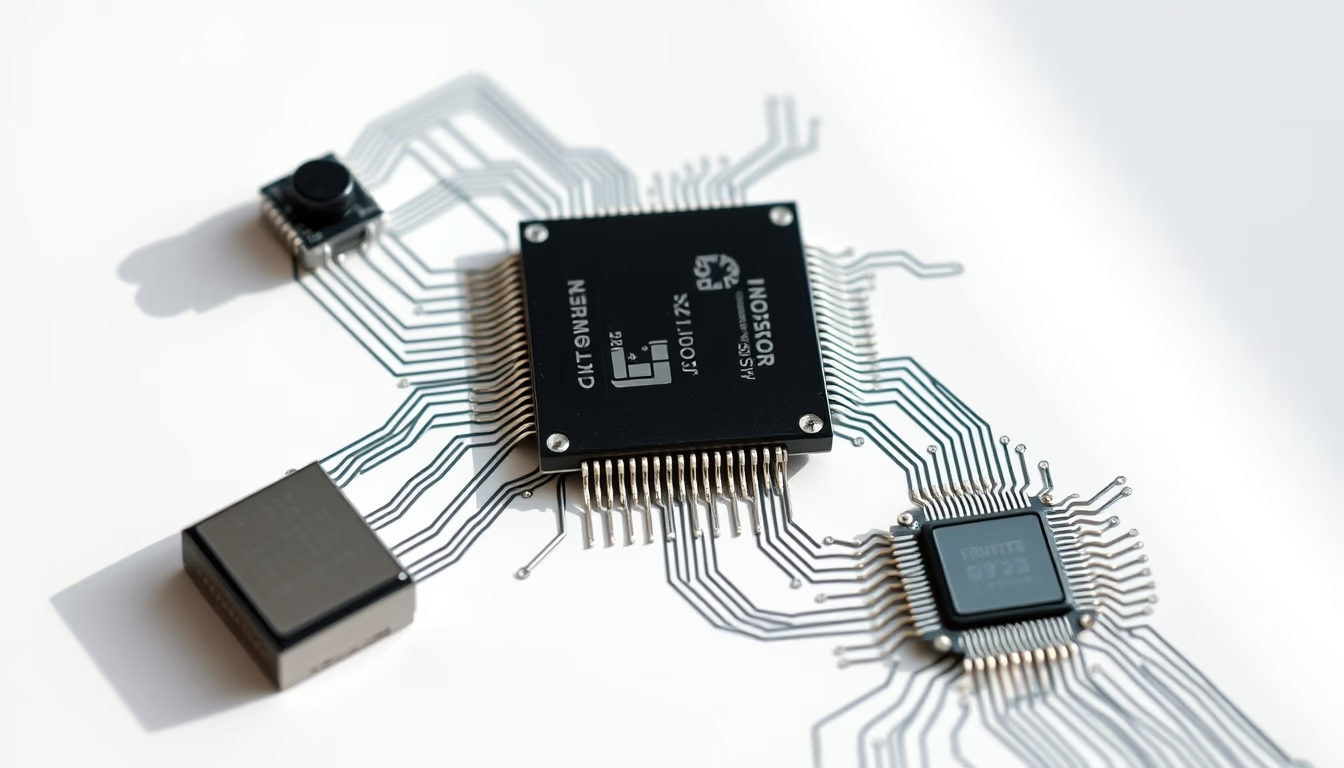
Neuromorphic chip: architecture inspired by the human brain, promising energy efficiency and parallel processing for AI.
About this subject
Neuromorphic chips break away from the traditional von Neumann architecture, which separates memory and processing. Inspired by the human brain, these devices integrate memory and computation into units called artificial neurons and synapses, enabling massive parallel processing and low energy consumption. Unlike conventional processors that execute sequential instructions, neuromorphic chips operate asynchronously and event-driven, firing only when needed, similar to biological neurons.
Research led by institutions such as Intel (with the Loihi chip) and IBM (with TrueNorth) advances hardware that emulates neural plasticity. The Loihi 2, for example, has 128 cores that simulate adaptive synapses, enabling continuous real-time learning without external training. This technology is particularly promising for Internet of Things (IoT) applications, autonomous robotics, and sensory signal processing, where energy efficiency is critical.
A key advantage is the ability to process complex sensory data, such as vision and hearing, with minimal latency. In speech recognition systems, a neuromorphic chip can consume thousands of times less energy than a traditional processor for similar tasks. However, challenges remain: programming these chips requires new software paradigms, and large-scale integration is still limited by fabrication processes.
In the Brazilian context, research groups at universities like USP and UNICAMP explore neuromorphic algorithms for applications in precision agriculture and environmental monitoring. The advancement of this technology could democratize access to low-power AI, especially in mobile devices and embedded systems.
Frequently Asked Questions
What is a neuromorphic chip and how does it differ from a regular processor?
A neuromorphic chip is a processor inspired by the human brain, integrating memory and processing into artificial neurons. Unlike traditional von Neumann chips, it operates in parallel and asynchronously, consuming far less energy for AI tasks.
What are the main practical applications of neuromorphic chips?
They are used in IoT, autonomous robotics, speech and image recognition, and sensory processing. For instance, in edge devices that require low power consumption and real-time response.
Are there neuromorphic chips commercially available today?
Yes, Intel markets the Loihi 2 for research, and IBM developed TrueNorth. However, widespread adoption is still limited due to software and fabrication challenges.
Direct URL
https://pub-c7d6a6ea828543ac903a74a341ccb2e1.r2.dev/imagens/neuromorphic-chip-minimalist-composition-p8.avifHow to credit
Include a visible link back to UtilizAí. Copy one of the snippets below:
<a href="https://xn--utiliza-eza.com/en/midia/imagens/neuromorphic-chip-minimalist-composition-p8">Neuromorphic chip</a> by <a href="https://xn--utiliza-eza.com">UtilizAí</a>, licensed under <a href="https://creativecommons.org/licenses/by/4.0/">CC BY 4.0</a>.
[Neuromorphic chip](https://xn--utiliza-eza.com/en/midia/imagens/neuromorphic-chip-minimalist-composition-p8) by [UtilizAí](https://xn--utiliza-eza.com), CC BY 4.0
License: CC-BY-4.0