Library study room
1344×768 · AVIF · CC BY 4.0
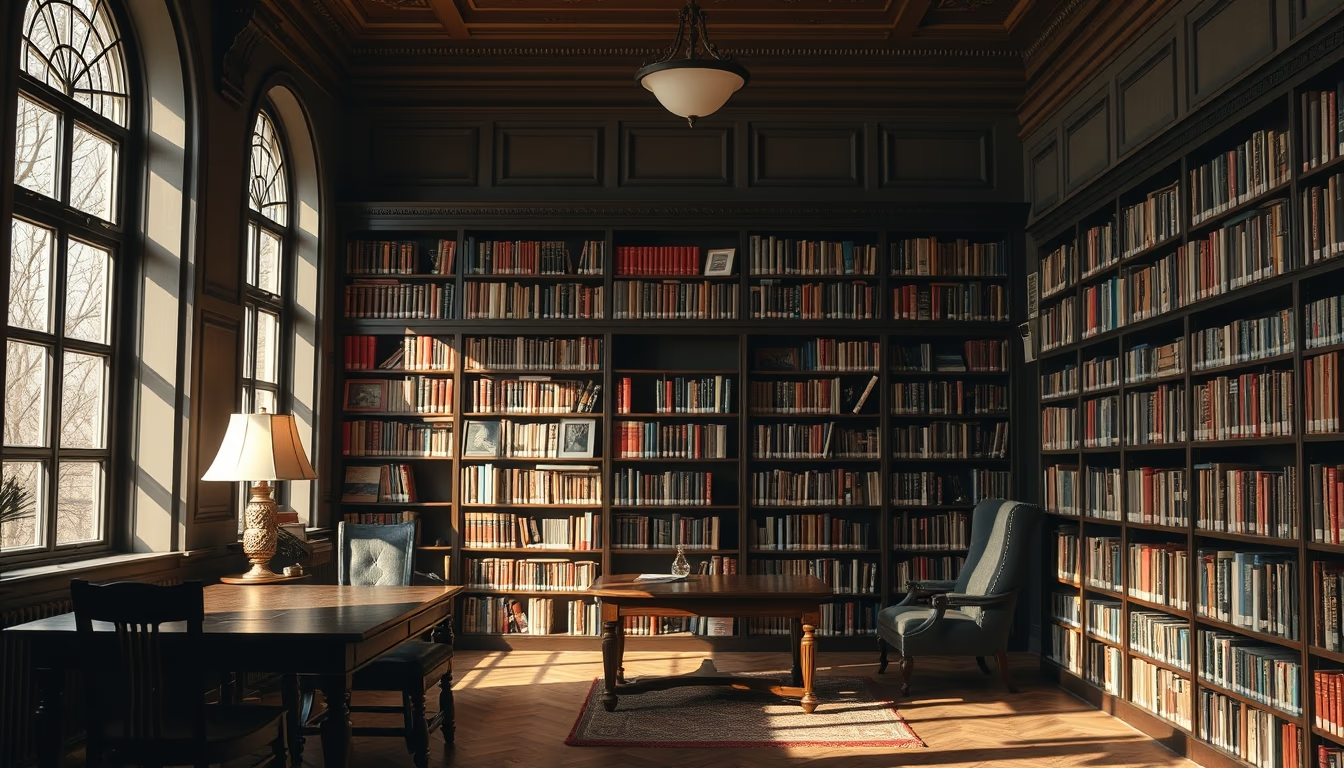
A sala de estudo em bibliotecas oferece um ambiente silencioso e focado, essencial para estudantes e pesquisadores.
Sobre o tema
As salas de estudo em bibliotecas são espaços projetados para concentração e produtividade. Geralmente equipadas com mesas individuais ou cabines, essas salas contam com iluminação direcionada e isolamento acústico para minimizar distrações. Muitas bibliotecas universitárias, como as da Universidade de São Paulo, oferecem salas de estudo em grupo com quadros brancos e telas para colaboração, enquanto as bibliotecas públicas mantêm áreas silenciosas para leitura e estudo individual.
Historicamente, o conceito de sala de estudo remonta às primeiras bibliotecas monásticas medievais, onde monges copistas trabalhavam em scriptoria. No século XIX, com a democratização do acesso ao conhecimento, bibliotecas públicas incorporaram salas de leitura e estudo. Hoje, a tecnologia transformou esses espaços: tomadas elétricas, wi-fi de alta velocidade e computadores são itens padrão. Bibliotecas como a Biblioteca Nacional do Rio de Janeiro preservam áreas históricas de estudo, combinando arquitetura clássica com equipamentos modernos.
No Brasil, as salas de estudo ganharam destaque durante a expansão do ensino superior nas décadas de 1960 e 1970. A Biblioteca Central da UnB, por exemplo, foi planejada com amplas áreas de estudo individual. Em 2023, a Biblioteca Mário de Andrade, em São Paulo, registrou mais de 2 milhões de visitantes, muitos utilizando suas salas de estudo. Esses ambientes são tão demandados que algumas instituições implementam sistemas de reserva online para garantir rotatividade e justiça no uso.
Curiosamente, a disposição das salas de estudo segue princípios de ergonomia e psicologia ambiental. Estudos mostram que a cor azul-claro e a luz natural aumentam a concentração. Em bibliotecas como a da Faculdade de Direito da UFMG, as salas de estudo foram projetadas com janelas amplas voltadas para jardins, reduzindo o estresse. Para usuários com deficiência, normas da ABNT determinam acessibilidade, incluindo mesas reguláveis em altura e sinalização tátil.
Perguntas frequentes
Por que as salas de estudo em bibliotecas são tão silenciosas?
As salas de estudo são projetadas com isolamento acústico e regras rígidas de silêncio para criar um ambiente livre de distrações, favorecendo a concentração. Muitas bibliotecas utilizam materiais como painéis absorventes e carpetes para reduzir o ruído.
Como reservar uma sala de estudo em bibliotecas públicas?
A maioria das bibliotecas públicas requer reserva antecipada pelo site ou aplicativo. Algumas permitem reservas de até 2 horas por dia. É necessário ter um cartão de biblioteca ativo e seguir as políticas de uso, como proibição de alimentos.
Quais são as regras de uso em salas de estudo?
As regras comuns incluem manter o silêncio, não usar celular em volume alto, não reservar para grupos maiores que a capacidade, devolver a chave no horário e manter a limpeza. Bibliotecas universitárias podem permitir bebidas lacradas, mas não alimentos.
URL direta
https://pub-c7d6a6ea828543ac903a74a341ccb2e1.r2.dev/imagens/library-study-room-fine-art-photography-p0.avifComo creditar
Inclua um link visível de volta pro UtilizAí. Copie um dos snippets abaixo:
<a href="https://xn--utiliza-eza.com/midia/imagens/library-study-room-fine-art-photography-p0">Library study room</a> by <a href="https://xn--utiliza-eza.com">UtilizAí</a>, licensed under <a href="https://creativecommons.org/licenses/by/4.0/">CC BY 4.0</a>.
[Library study room](https://xn--utiliza-eza.com/midia/imagens/library-study-room-fine-art-photography-p0) by [UtilizAí](https://xn--utiliza-eza.com), CC BY 4.0
Licença: CC-BY-4.0