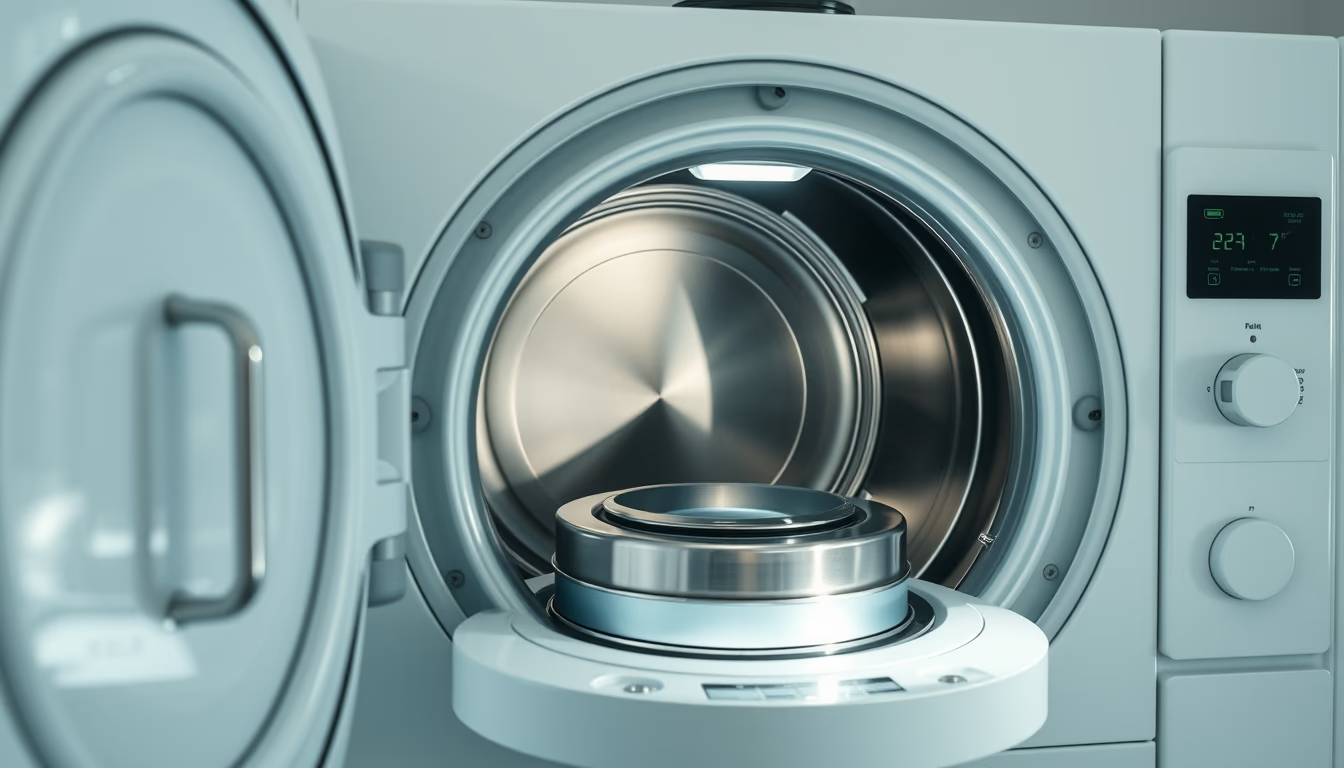
Fume hood chemistry
1344×768 · AVIF · CC BY 4.0

Fume hoods are essential equipment in chemistry laboratories to protect against toxic vapors and hazardous reactions.
About this subject
Fume hoods, also known as chemical fume hoods or exhaust hoods, are localized ventilation devices that protect the user and the environment from hazardous chemicals. They operate by drawing contaminated air from the interior, filtering or exhausting it outdoors, while maintaining a physical barrier (usually tempered glass) between the operator and the reagents. This containment principle is fundamental for preventing inhalation of toxic gases, exposure to particles, and explosive reactions.
The history of fume hoods dates back to the 19th century, when laboratories began using rudimentary ventilation systems. The modern design, with laminar airflow and speed control, was standardized in the 1950s with standards such as ANSI/ASHRAE 110 for containment performance. Regulations like the Brazilian standard NBR 14755 require periodic inspections and a minimum face velocity of 0.5 m/s to ensure safety.
There are several types of fume hoods, including horizontal flow (air blown toward the user) and vertical flow (more common in chemistry). Hoods for radioactive substances or peroxides have special requirements, such as stainless steel lining and HEPA filtration systems. Additionally, proper operator positioning and material organization inside the hood are crucial: maintain a distance of at least 15 cm from the front edge and never block the exhaust grilles.
Periodic maintenance is essential for proper operation. Airflow sensors, failure alarms, and containment tests using tracer gas are performed to certify efficiency. In many universities and industries, the fume hood is considered the most important safety equipment in the lab, necessary for handling strong acids, organic solvents, and carcinogenic agents. Without it, many experiments and industrial processes would be unfeasible or extremely dangerous.
Frequently Asked Questions
What is the minimum face velocity required for a fume hood?
The standard minimum face velocity is typically 0.5 m/s (100 fpm) for general chemical use, as per ANSI/ASHRAE 110 and many local regulations. This may vary for specific applications such as radioactive or perchloric acid hoods.
What is the difference between horizontal and vertical flow fume hoods?
Horizontal flow hoods direct air from the top toward the operator, offering splash protection. Vertical flow hoods have air descending and exhausted at the bottom, providing better containment for vapors and are more common in chemistry labs.
How can I tell if a fume hood is working properly?
Check the airflow indicator (e.g., a ribbon or digital anemometer), perform smoke or tracer gas tests, and ensure no alarms are triggered. Annual certification and preventive maintenance are recommended to ensure safety.
Direct URL
https://pub-c7d6a6ea828543ac903a74a341ccb2e1.r2.dev/imagens/fume-hood-chemistry-documentary-photography-fresh12.avifHow to credit
Include a visible link back to UtilizAí. Copy one of the snippets below:
<a href="https://xn--utiliza-eza.com/en/midia/imagens/fume-hood-chemistry-documentary-photography-fresh12">Fume hood chemistry</a> by <a href="https://xn--utiliza-eza.com">UtilizAí</a>, licensed under <a href="https://creativecommons.org/licenses/by/4.0/">CC BY 4.0</a>.
[Fume hood chemistry](https://xn--utiliza-eza.com/en/midia/imagens/fume-hood-chemistry-documentary-photography-fresh12) by [UtilizAí](https://xn--utiliza-eza.com), CC BY 4.0
License: CC-BY-4.0