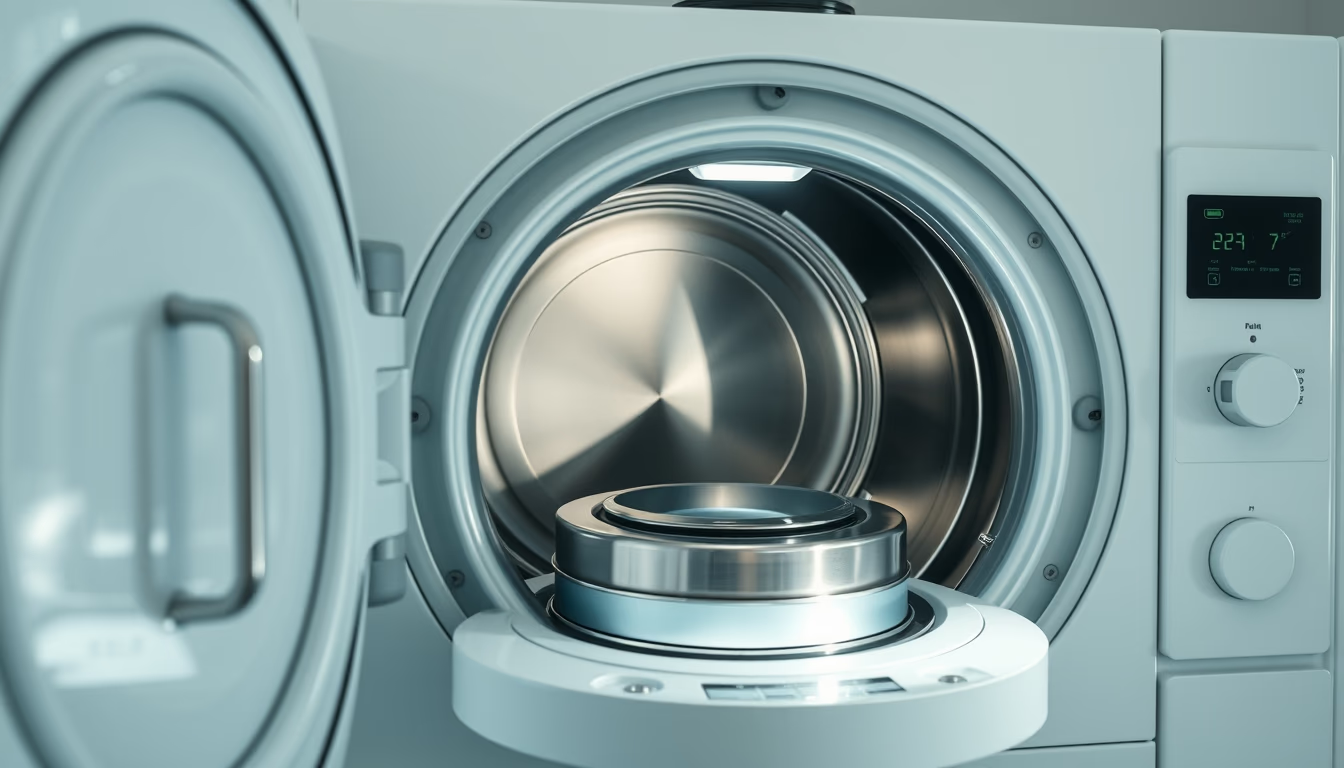
Fume hood chemistry
1344×768 · AVIF · CC BY 4.0

A chemical fume hood is a ventilation device that protects the user from toxic gases and vapors during chemistry laboratory experiments.
About this subject
A chemical fume hood is a critical safety device found in chemistry and biology laboratories. It consists of an enclosed workspace with a movable sash and an exhaust system that draws air away from the operator, preventing inhalation of hazardous fumes, vapors, or dust. The primary purpose is to contain and remove airborne contaminants, ensuring a safe working environment for scientists and technicians.
There are several types of fume hoods: conventional (ducted), which expel air outside; ductless (recirculating) hoods that use filters to clean air before returning it to the lab; and specially designed hoods for radioactive or biological materials. Performance is typically measured by face velocity (0.3, 0.5 m/s) and containment efficiency, following standards like ANSI Z9.5 or EN 14175. Regular certification and maintenance are essential to ensure proper function.
Proper use involves positioning materials at least 6 inches inside the hood, keeping the sash at the recommended height, and avoiding clutter that disrupts airflow. Modern hoods often feature airflow monitors, alarms, and energy-saving modes. The first fume hoods appeared in the 1920s as simple wooden boxes with fans; today they are made from corrosion-resistant materials like stainless steel or polypropylene.
Interesting fact: ductless fume hoods are increasingly popular in teaching labs where minimal ventilation is available, but they require careful selection of filters for specific chemicals. Some advanced hoods incorporate variable air volume (VAV) systems that adjust airflow based on sash position, reducing energy costs by up to 50% compared to constant volume hoods.
Frequently Asked Questions
What is the difference between a fume hood and a biosafety cabinet?
A fume hood is designed to protect the user from chemical vapors, while a biosafety cabinet protects both the user and the sample from biological agents, using HEPA filters and directed airflow.
How often should a fume hood be tested?
Testing is recommended annually or more frequently if heavily used. Certification includes face velocity measurement, smoke pattern tests, and containment tests per standards like ANSI Z9.5.
Can a fume hood be used to store chemicals?
No, fume hoods are not designed for long-term storage of chemicals because clutter obstructs airflow and reduces safety. Chemicals should be stored in dedicated cabinets.
Direct URL
https://pub-c7d6a6ea828543ac903a74a341ccb2e1.r2.dev/imagens/fume-hood-chemistry-aerial-drone-shot-fresh15.avifHow to credit
Include a visible link back to UtilizAí. Copy one of the snippets below:
<a href="https://xn--utiliza-eza.com/en/midia/imagens/fume-hood-chemistry-aerial-drone-shot-fresh15">Fume hood chemistry</a> by <a href="https://xn--utiliza-eza.com">UtilizAí</a>, licensed under <a href="https://creativecommons.org/licenses/by/4.0/">CC BY 4.0</a>.
[Fume hood chemistry](https://xn--utiliza-eza.com/en/midia/imagens/fume-hood-chemistry-aerial-drone-shot-fresh15) by [UtilizAí](https://xn--utiliza-eza.com), CC BY 4.0
License: CC-BY-4.0