Analytical balance closeup
1344×768 · AVIF · CC BY 4.0

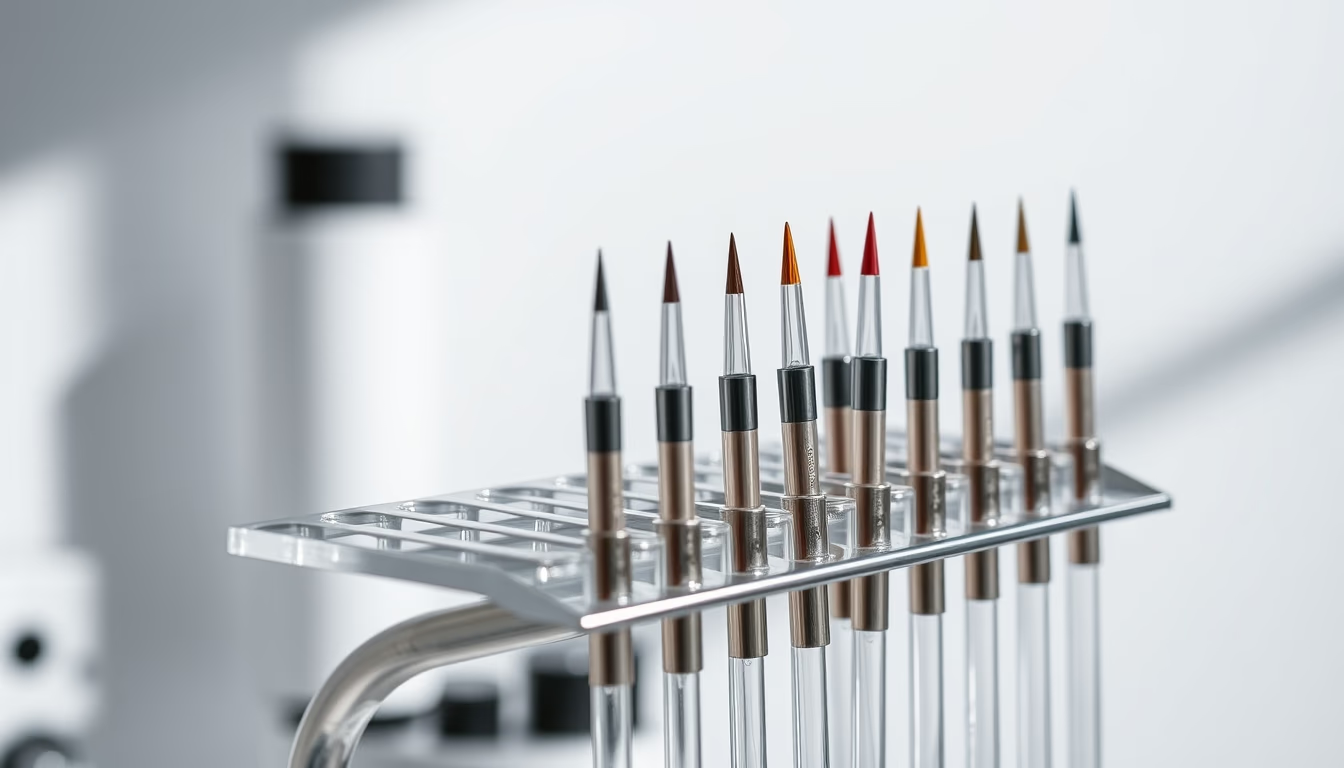
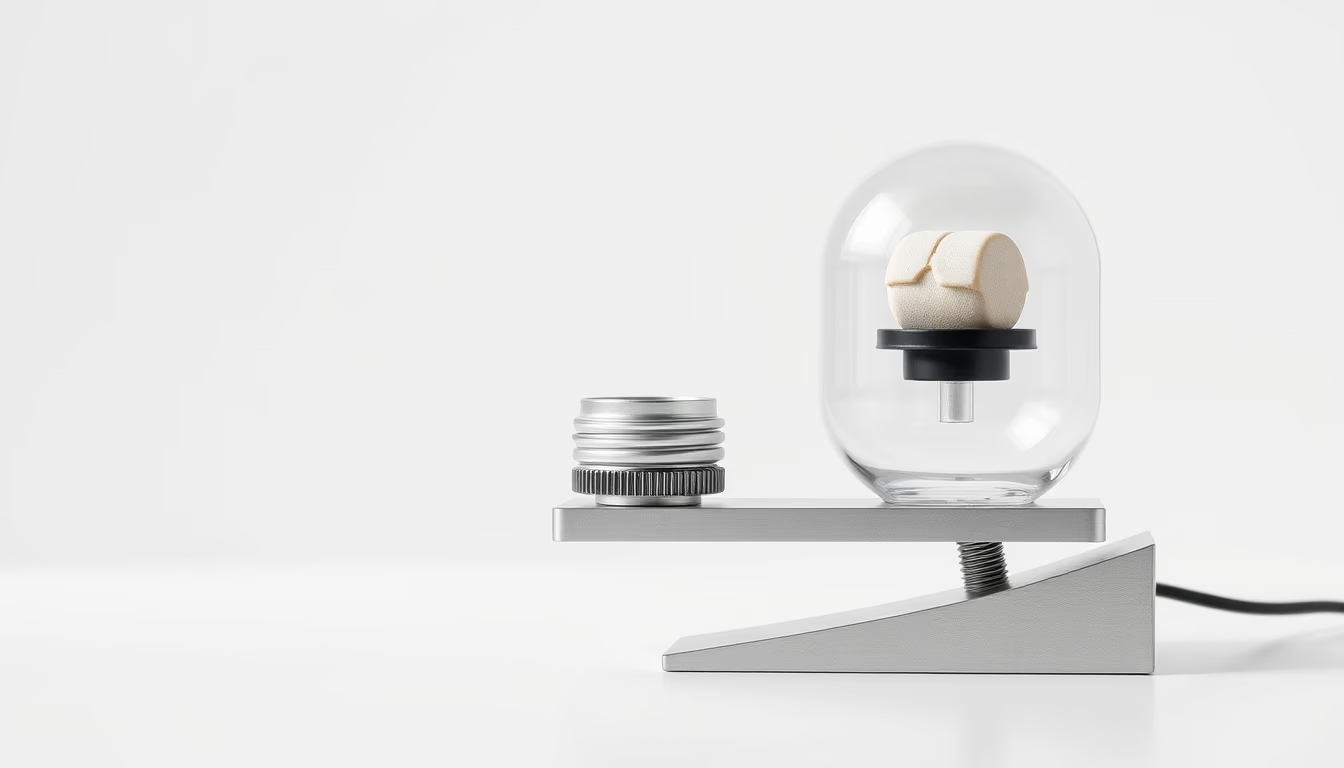
High-precision analytical balance, essential in laboratories for mass measurements with accuracy of 0.1 mg or 0.01 mg.
About this subject
The analytical balance is a mass measurement instrument used in chemistry, pharmacy, biology, and quality control laboratories. Its main feature is high sensitivity, capable of detecting variations as small as 0.0001 g (0.1 mg) or even 0.00001 g (0.01 mg) in more sophisticated models. This precision is essential for quantitative analyses, such as preparing standard solutions, determining density, and gravimetric assays.
Unlike common precision scales, analytical balances feature a glass draft shield to protect the sample from air currents and temperature fluctuations, which could compromise the reading. The modern operating principle is based on electromagnetic load cells, replacing older lever and weight systems. Calibration must be performed periodically with certified standard weights, and the instrument requires leveling and a vibration-free environment.
Historically, the first analytical balances appeared in the 18th century with the development of chemistry as a science. Antoine Lavoisier used precision balances to prove the Law of Conservation of Mass. Today, digital models with LCD displays and computer interfaces allow automated data recording, reducing human error. Interestingly, most analytical balances can measure masses up to 200 grams, making them unsuitable for heavy objects.
Careful handling is crucial: the sample must be at room temperature, the operator should use tweezers or gloves to avoid grease transfer, and the equipment needs to be turned on in advance for thermal stabilization. Ignoring these details can ruin entire experiments, making the analytical balance one of the most demanding instruments in the laboratory.
Frequently Asked Questions
What is an analytical balance?
It is a laboratory instrument that measures mass with high precision, typically to 0.1 mg or 0.01 mg. It has a glass draft shield for protection against air currents and is used in chemical and pharmaceutical analyses.
What is the difference between analytical and semi-analytical balances?
An analytical balance has a precision of 0.1 mg or better, while a semi-analytical balance has a precision of 1 mg. Also, analytical balances have a closed glass chamber, unlike semi-analytical ones which may be open.
How do you calibrate an analytical balance?
Calibration should be performed with certified standard weights, following the manufacturer's procedure. Typically, you turn on the balance, level it, and use a known weight (e.g., 100 g) to adjust the reading.
Direct URL
https://pub-c7d6a6ea828543ac903a74a341ccb2e1.r2.dev/imagens/analytical-balance-closeup-studio-editorial-portrait-fresh12.avifHow to credit
Include a visible link back to UtilizAí. Copy one of the snippets below:
<a href="https://xn--utiliza-eza.com/en/midia/imagens/analytical-balance-closeup-studio-editorial-portrait-fresh12">Analytical balance closeup</a> by <a href="https://xn--utiliza-eza.com">UtilizAí</a>, licensed under <a href="https://creativecommons.org/licenses/by/4.0/">CC BY 4.0</a>.
[Analytical balance closeup](https://xn--utiliza-eza.com/en/midia/imagens/analytical-balance-closeup-studio-editorial-portrait-fresh12) by [UtilizAí](https://xn--utiliza-eza.com), CC BY 4.0
License: CC-BY-4.0