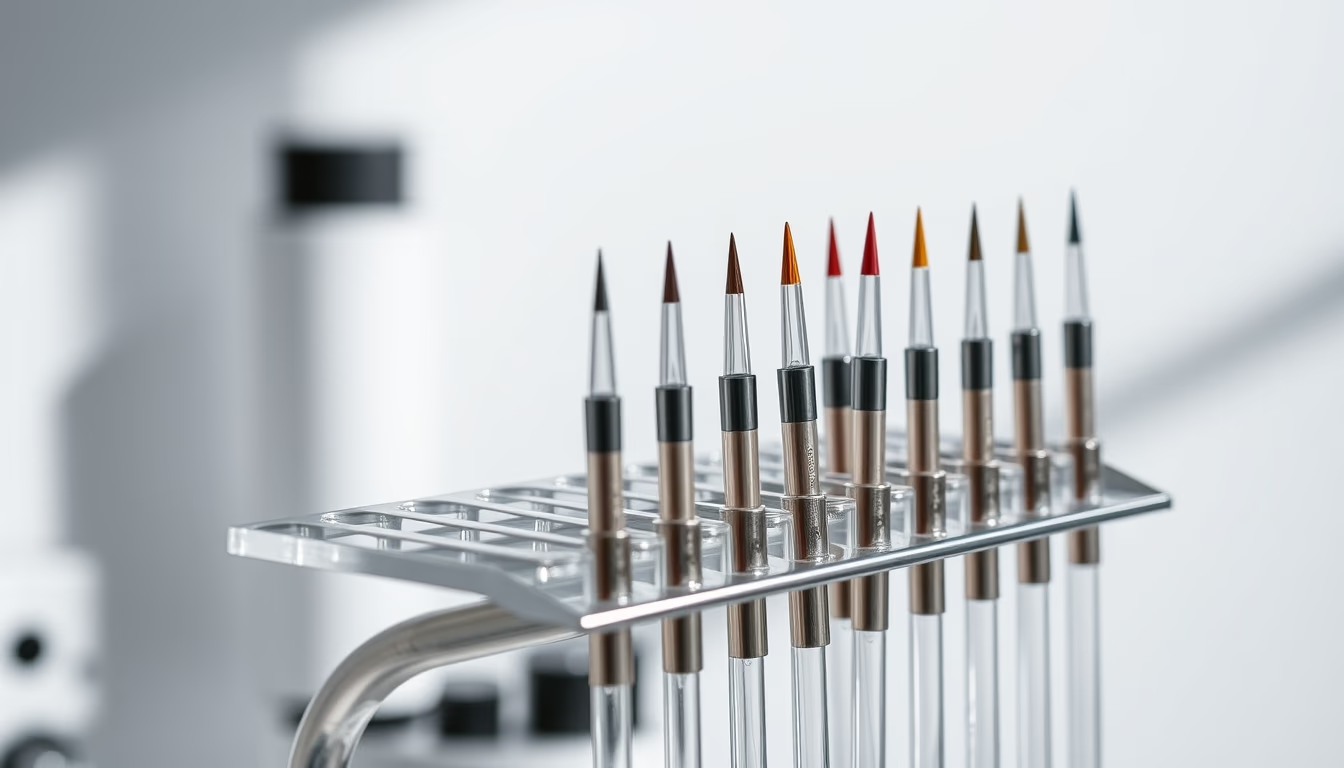
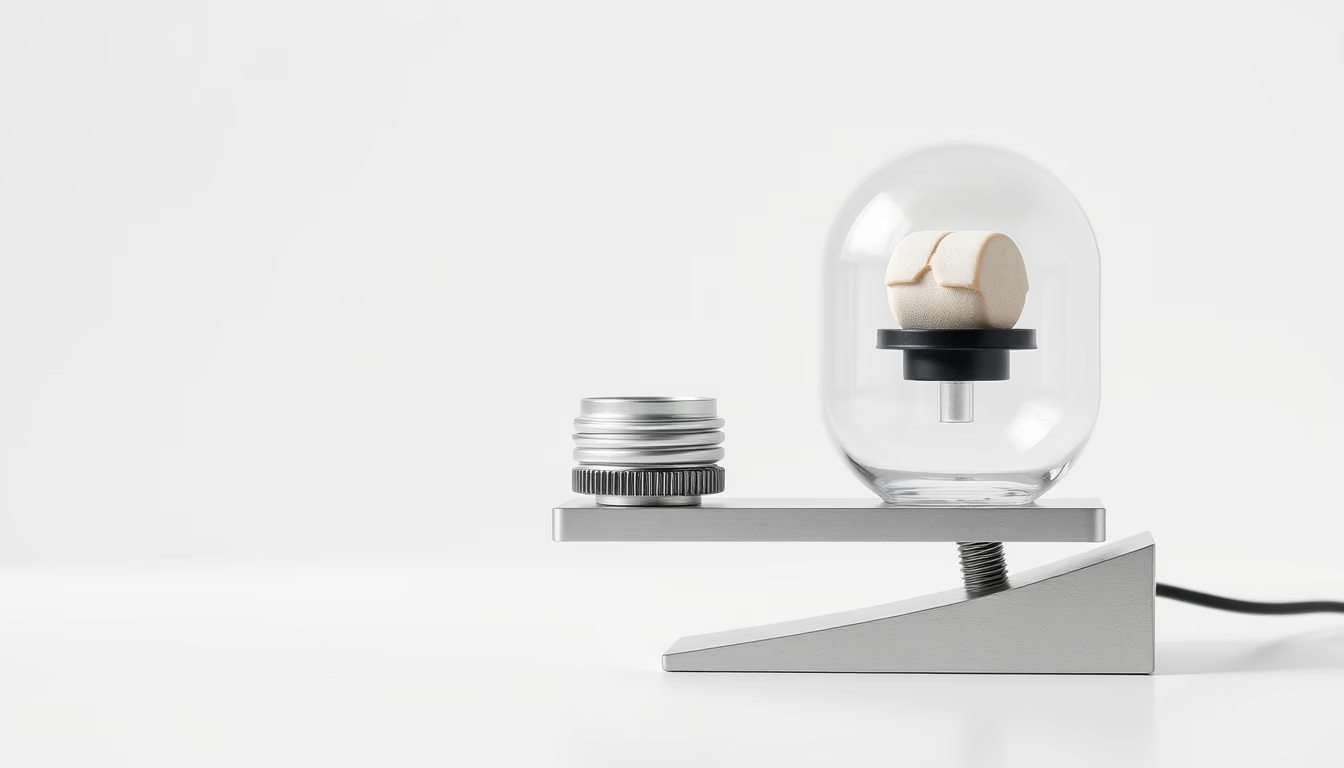
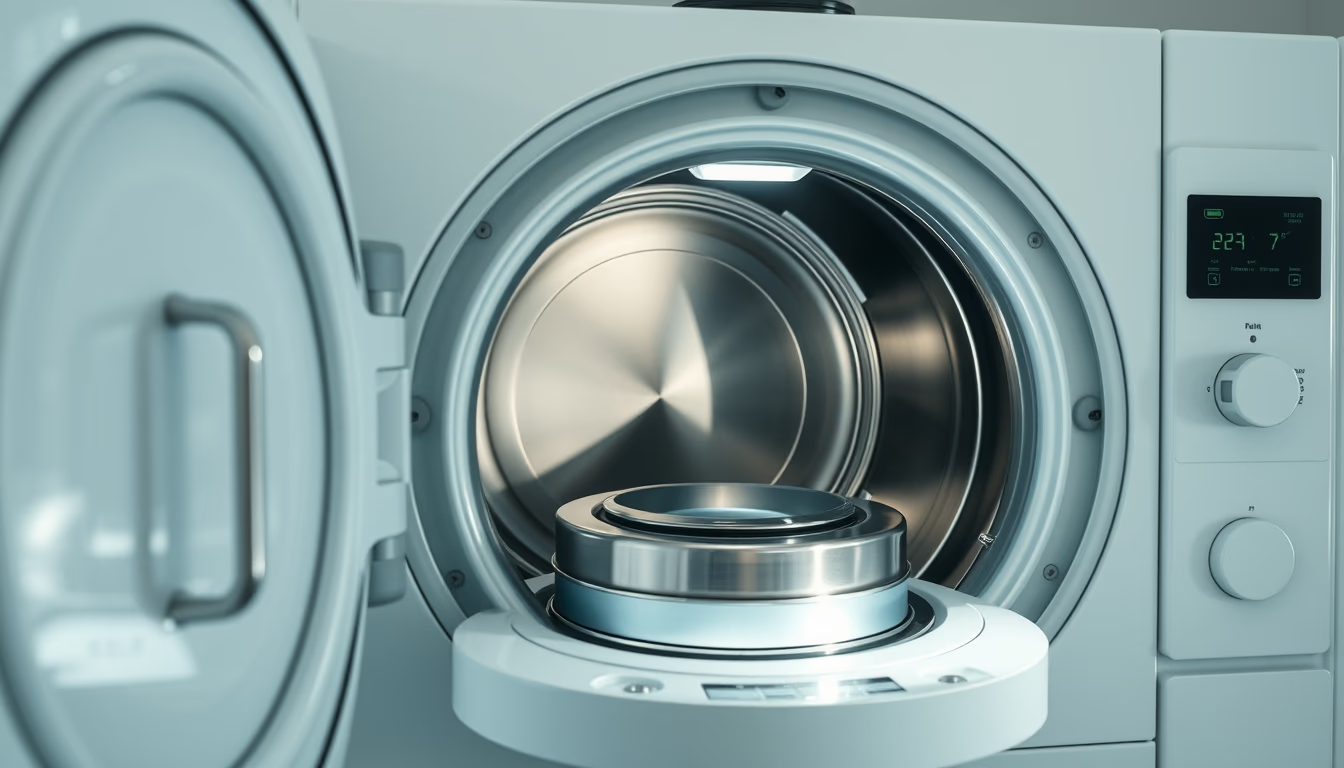
Analytical balance closeup
1344×768 · AVIF · CC BY 4.0

Analytical balance closeup: a high-precision instrument for mass measurement, used in chemistry, pharmacy, and research laboratories.
About this subject
An analytical balance is a laboratory instrument designed to measure mass with extremely high accuracy, typically to 0.0001 gram (0.1 mg) or better. Its construction includes a weighing chamber with sliding glass doors to protect the sample from air drafts and dust, which could affect precision. The operating principle is based on load cells or electromagnetic compensation, ensuring stable readings even in environments with temperature variations.
These instruments are indispensable for quantitative analysis in analytical chemistry, preparation of standards for chromatography, pharmaceutical formulation, and quality control. Modern analytical balances have automatic internal calibration, which adjusts the device using an internal reference weight, eliminating the need for frequent manual calibration. Major brands like Mettler Toledo, Sartorius, and Shimadzu dominate the market, featuring touchscreens, USB connectivity, and data tracking software.
Unlike precision balances (which measure to 0.01 gram), analytical balances require extra care: leveling with a bubble, stabilization time, use of tweezers to handle objects, and avoiding vibrations on the bench. The ideal ambient temperature is 20, 25°C, as variations can cause thermal expansion of components. In the food industry, they are used to verify moisture and ash content; in jewelry, to weigh precious metals with purity certification.
Interestingly, before electronics, analytical balances used a two-pan system with sliding weights, like the classic Mettler two-pan balance. Today, digital versions achieve resolutions of 0.01 mg (semi-micro balances) and 0.001 mg (microbalances). Calibration must be checked with certified weights (class E1 or E2) before each use or according to ISO 17025 standards.
Frequently Asked Questions
What is the difference between an analytical balance and a precision balance?
An analytical balance measures with a precision of 0.1 mg or better, while a precision balance measures to 0.01 g. The analytical balance has a weighing chamber with draft protection and requires more careful operation.
How often should an analytical balance be calibrated?
It is recommended to calibrate daily or before each use, using certified weights. Many modern models have automatic internal calibration, but periodic external verification (e.g., weekly) is essential to ensure traceability.
Why does an analytical balance have a glass chamber with doors?
The chamber protects the sample from air currents, dust, and temperature variations, which can cause reading fluctuations. The sliding doors allow minimal access, reducing interference.
Direct URL
https://pub-c7d6a6ea828543ac903a74a341ccb2e1.r2.dev/imagens/analytical-balance-closeup-fine-art-photography-fresh16.avifHow to credit
Include a visible link back to UtilizAí. Copy one of the snippets below:
<a href="https://xn--utiliza-eza.com/en/midia/imagens/analytical-balance-closeup-fine-art-photography-fresh16">Analytical balance closeup</a> by <a href="https://xn--utiliza-eza.com">UtilizAí</a>, licensed under <a href="https://creativecommons.org/licenses/by/4.0/">CC BY 4.0</a>.
[Analytical balance closeup](https://xn--utiliza-eza.com/en/midia/imagens/analytical-balance-closeup-fine-art-photography-fresh16) by [UtilizAí](https://xn--utiliza-eza.com), CC BY 4.0
License: CC-BY-4.0