Wiener schnitzel plate
1344×768 · AVIF · CC BY 4.0
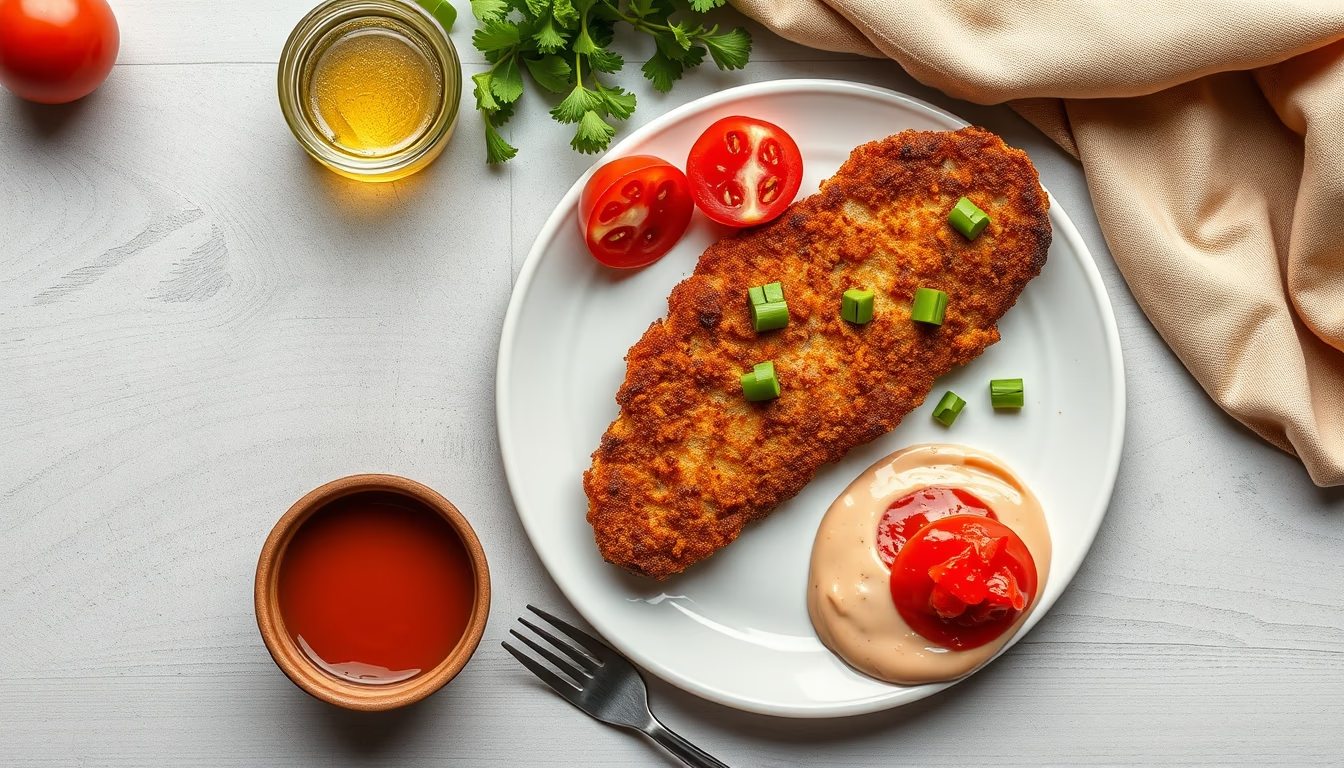
Wiener schnitzel is a classic Austrian dish of breaded and fried meat, a culinary symbol of Vienna.
About this subject
Wiener schnitzel, Austria's most iconic dish, consists of a thin slice of meat breaded and fried until golden brown. Traditionally made with veal, the recipe requires the meat to be tenderized, seasoned, coated in flour, egg, and breadcrumbs, then fried in hot fat or clarified butter. The dish's origin is debated: some trace it to the Milanese cotoletta, possibly introduced by Austrian rule in Lombardy during the 19th century. Regardless, Wiener schnitzel became a Viennese culinary symbol, protected by Austrian law which reserves the name 'Wiener Schnitzel' exclusively for veal versions.
It is served with classic sides: potato salad with onion and mustard, cucumber salad in vinegar, lingonberry jam (or cranberry), and lemon slices to squeeze over the meat. The combination of acidic and crunchy elements balances the richness of frying. In traditional Viennese restaurants like Figlmüller, the schnitzel is famously larger than the plate, a hallmark of the establishment.
Wiener schnitzel's popularity spread across Central Europe, notably in Germany, Hungary, and the Czech Republic, where pork variations are common. In Brazil, the dish is often found in German and Austrian cuisine restaurants, typically made with pork cutlets. The breading and frying technique influenced Brazilian dishes like bife à milanesa, which follows similar principles.
To enjoy an authentic Wiener schnitzel, the texture should be crispy and the meat tender, never greasy. The correct oil temperature is crucial to prevent the coating from absorbing excess fat. Traditionally served immediately after frying, it ensures maximum crunch. Pairing with an Austrian Grüner Veltliner wine or a light beer enhances the experience.
Frequently Asked Questions
What is the origin of Wiener schnitzel?
The origin is debated, but it is believed to be inspired by the Milanese cotoletta, introduced to Vienna during Austrian rule in Lombardy in the 19th century. The dish has become an Austrian culinary icon.
What meat is traditionally used for Wiener schnitzel?
Traditionally, veal is used. In Austria, the term 'Wiener Schnitzel' is legally protected for the veal version. Pork variations are common in other countries.
What are typical side dishes for Wiener schnitzel?
Classic accompaniments include potato salad, cucumber salad, lingonberry jam (or cranberry), and lemon slices. These items provide contrast to the crispy richness of the schnitzel.
Direct URL
https://pub-c7d6a6ea828543ac903a74a341ccb2e1.r2.dev/imagens/wiener-schnitzel-plate-isometric-flat-lay-fresh17.avifHow to credit
Include a visible link back to UtilizAí. Copy one of the snippets below:
<a href="https://xn--utiliza-eza.com/en/midia/imagens/wiener-schnitzel-plate-isometric-flat-lay-fresh17">Wiener schnitzel plate</a> by <a href="https://xn--utiliza-eza.com">UtilizAí</a>, licensed under <a href="https://creativecommons.org/licenses/by/4.0/">CC BY 4.0</a>.
[Wiener schnitzel plate](https://xn--utiliza-eza.com/en/midia/imagens/wiener-schnitzel-plate-isometric-flat-lay-fresh17) by [UtilizAí](https://xn--utiliza-eza.com), CC BY 4.0
License: CC-BY-4.0