Watercolor brush splash
1344×768 · AVIF · CC BY 4.0
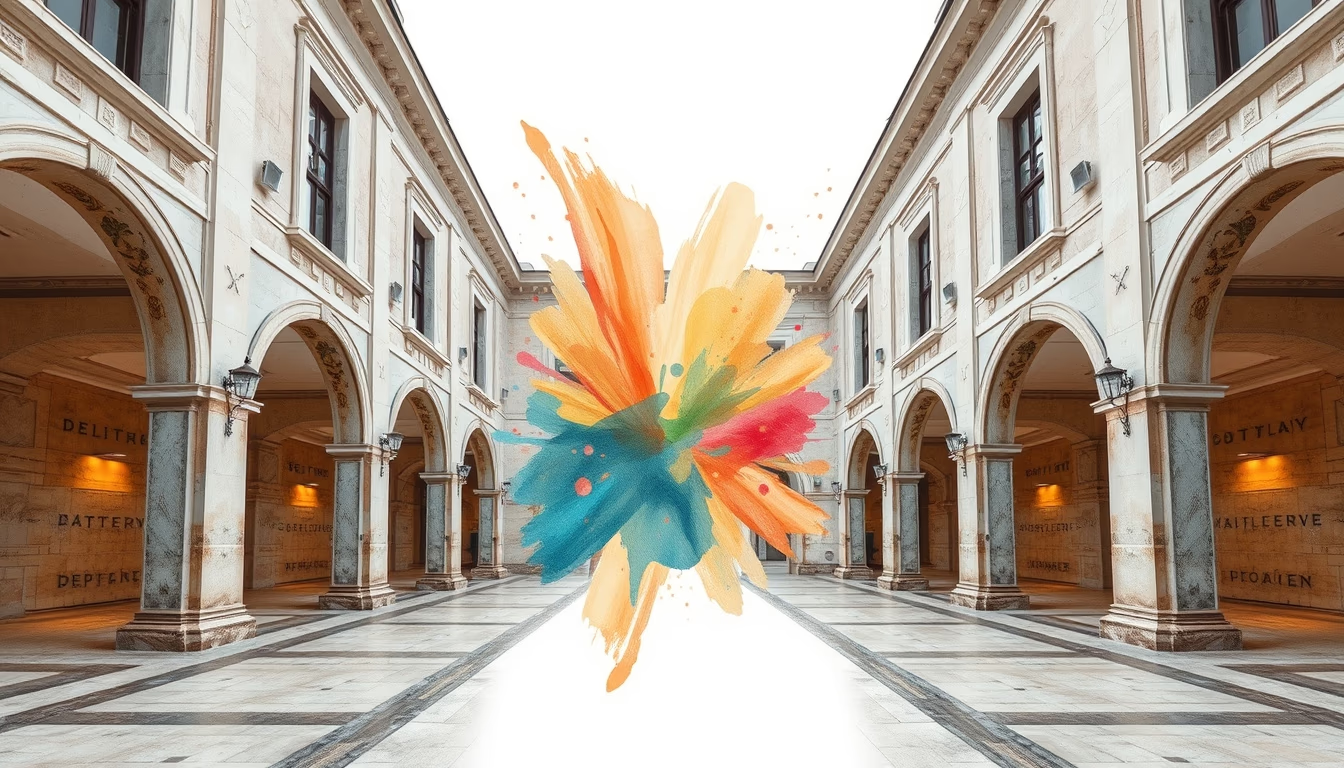
Watercolor brush splash is an artistic technique involving spreading paint with broad, fluid strokes, creating unpredictable effects and unique textures widely used in architectural illustration.
About this subject
The watercolor brush splash technique dates back to the early days of watercolor as a fine art medium. Masters like J.M.W. Turner in the 19th century already exploited the fluidity of water to create atmospheric landscapes, where controlled accidents produced dramatic skies and churning seas. The fast, broad stroke loaded with pigment and water generates organic stains that expand on paper, revealing the interaction between color and moisture. Unlike splatter, which uses discrete droplets, splash is a continuous motion that blends areas of color, creating smooth transitions and visual surprises.
In architecture, the watercolor brush splash is a classic tool for sketches and light studies. Schools such as the Architectural Association and the University of São Paulo teach this technique so architects can capture the atmosphere of a space before detailing technical lines. The contrast between broad washes and precise pen or pencil strokes conveys movement, temperature, and depth, helping to communicate design concepts. Architectural illustrators like Thomas Schaller and David Gentherman use splash to suggest filtered sunlight, diffused shadows, or the buzz of an urban environment.
Today, the brush splash transcends paper and finds its place in digital tools. Brush packs that simulate the technique are popular in software like Procreate and Photoshop, allowing designers and architectural photographers to overlay watery textures onto real images. This fusion of manual and digital aligns with the trending-2026 trend, which values imperfection and organicity in digital media. Splash is also used in branding, book illustration, and even motion design, where animations of spreading ink evoke creativity and fluidity.
Frequently Asked Questions
How do you make a watercolor brush splash?
Use a flat or round brush loaded with plenty of water and pigment; flick your wrist quickly in an arc over the paper; adjust the water amount to control spread and color intensity.
What is the difference between splash and splatter?
Splash is a broad, continuous motion that spreads paint fluidly; splatter is achieved by tapping the brush against your hand, creating isolated droplets.
Why use splash in architecture?
Splash adds energy and suggests movement, complementing the dry lines of architectural drawing and conveying the atmosphere, light, and feel of a space.
Direct URL
https://pub-c7d6a6ea828543ac903a74a341ccb2e1.r2.dev/imagens/watercolor-brush-splash-architectural-photography-p1.avifHow to credit
Include a visible link back to UtilizAí. Copy one of the snippets below:
<a href="https://xn--utiliza-eza.com/en/midia/imagens/watercolor-brush-splash-architectural-photography-p1">Watercolor brush splash</a> by <a href="https://xn--utiliza-eza.com">UtilizAí</a>, licensed under <a href="https://creativecommons.org/licenses/by/4.0/">CC BY 4.0</a>.
[Watercolor brush splash](https://xn--utiliza-eza.com/en/midia/imagens/watercolor-brush-splash-architectural-photography-p1) by [UtilizAí](https://xn--utiliza-eza.com), CC BY 4.0
License: CC-BY-4.0