Urban farm rooftop
1344×768 · AVIF · CC BY 4.0
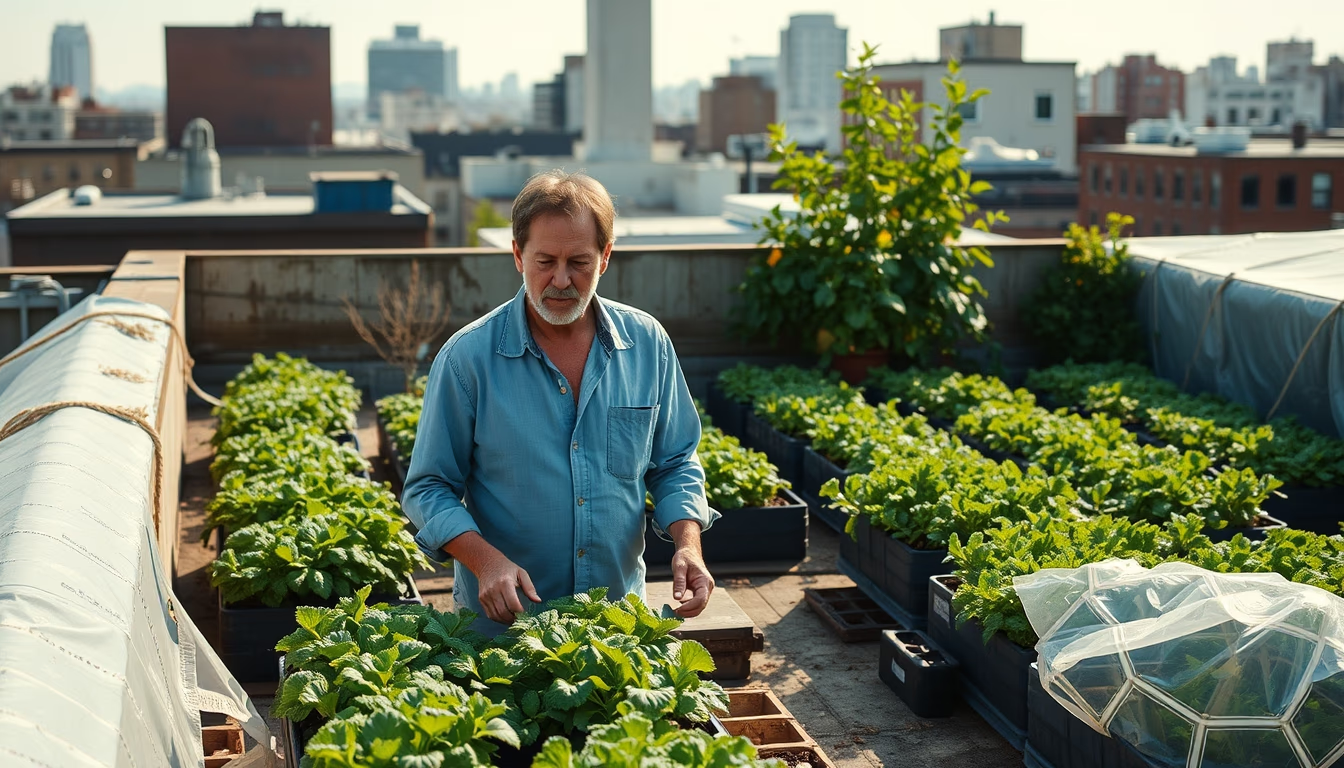
Rooftop urban farms turn idle spaces into sources of fresh food in large cities.
About this subject
Rooftop urban farms are an urban agriculture practice that uses building rooftops and flat roofs to grow food. This approach has spread in metropolises such as São Paulo, Rio de Janeiro, and Belo Horizonte, where high land costs and lack of green spaces foster creative solutions. Productive green roofs can host vegetables, herbs, and even fruit trees, depending on the structure and load-bearing capacity of the building.
Beyond providing fresh food and reducing food miles, rooftop farms help regulate building temperatures, cutting air conditioning needs. Studies from Embrapa show a green roof can reduce indoor temperature by up to 5°C, while also retaining rainwater and mitigating urban flooding. In São Paulo, the city's Green Roofs program encourages community gardens on schools and hospitals.
Implementation requires technical care: proper waterproofing, drainage system, lightweight substrate, and species adapted to intense sun and wind. Many projects use hydroponics or modular pots to optimize space. By 2023, New York City already had over 100 commercial rooftop farms, and in Brazil the movement is growing backed by NGOs and startups supplying kits and consulting.
This trend aligns with UN Sustainable Development Goals, especially food security and sustainable cities. By 2026, the number of rooftop farms in Brazilian capitals is expected to triple, driven by tax incentives and demand for local organic food.
Frequently Asked Questions
What technical considerations are needed to set up a rooftop farm?
Proper waterproofing, an efficient drainage system, lightweight substrate (such as coconut fiber and perlite), and plants tolerant of direct sun and wind are essential. A structural engineer must assess the roof to ensure it can bear the extra load.
Which foods are best suited for rooftop urban farms?
Leafy greens (lettuce, arugula, spinach), aromatic herbs (basil, mint, parsley), cherry tomatoes, bell peppers, and strawberries are recommended. Deep-rooted species or large trees require robust structures and are uncommon.
Does a rooftop garden help reduce building temperature?
Yes. Plants and substrate act as thermal insulation, reducing heat absorption. Studies show indoor temperature can drop by up to 5°C in summer, cutting air conditioning use and improving thermal comfort.
Direct URL
https://pub-c7d6a6ea828543ac903a74a341ccb2e1.r2.dev/imagens/urban-farm-rooftop-documentary-photography-p3.avifHow to credit
Include a visible link back to UtilizAí. Copy one of the snippets below:
<a href="https://xn--utiliza-eza.com/en/midia/imagens/urban-farm-rooftop-documentary-photography-p3">Urban farm rooftop</a> by <a href="https://xn--utiliza-eza.com">UtilizAí</a>, licensed under <a href="https://creativecommons.org/licenses/by/4.0/">CC BY 4.0</a>.
[Urban farm rooftop](https://xn--utiliza-eza.com/en/midia/imagens/urban-farm-rooftop-documentary-photography-p3) by [UtilizAí](https://xn--utiliza-eza.com), CC BY 4.0
License: CC-BY-4.0