Underwater camera housing
1344×768 · AVIF · CC BY 4.0
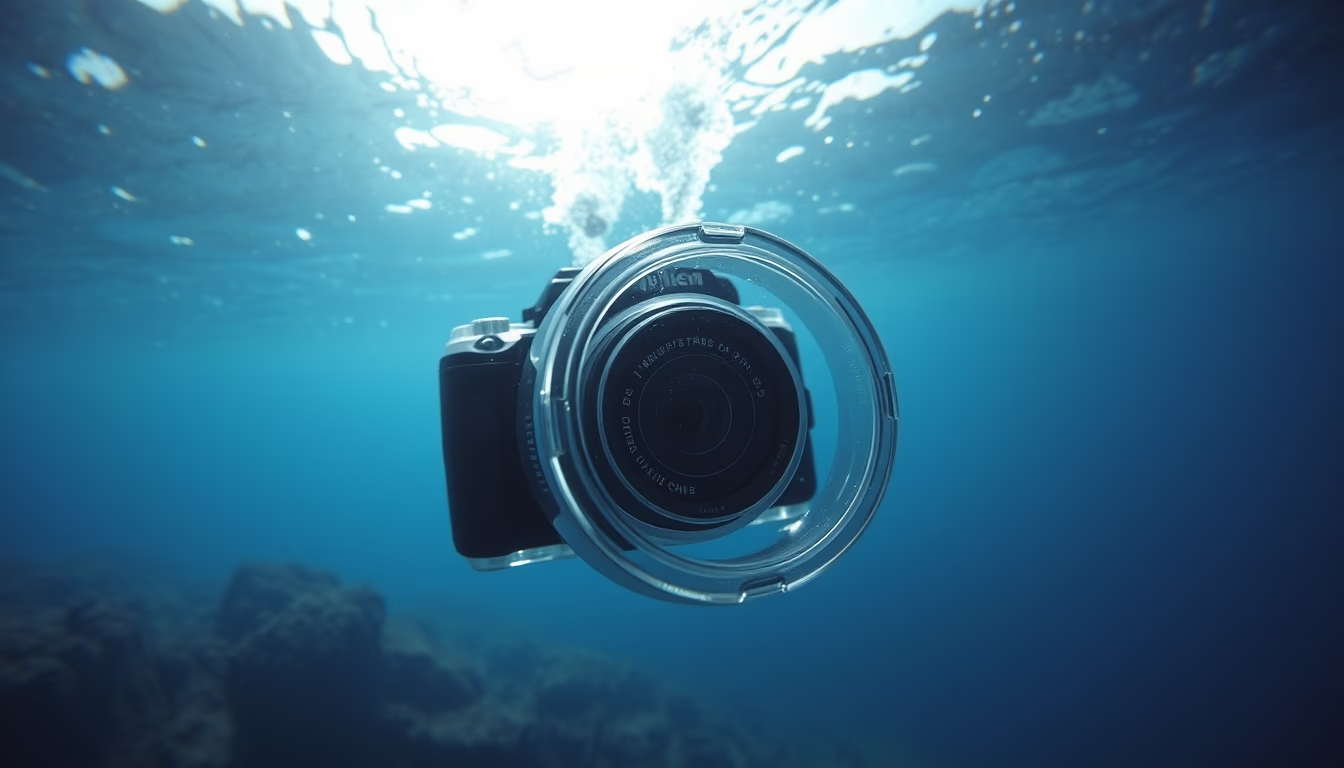
Underwater camera housing, essential for diving photography, with fisheye lens for wide-angle shots.
About this subject
Underwater camera housings are rugged enclosures that allow cameras and video equipment to operate at depths typically up to 40 meters or more, depending on the model. They are constructed from corrosion-resistant materials such as anodized aluminum or high-strength polycarbonate, sealed with rubber O-rings to prevent water ingress. Many housings include external controls that replicate camera buttons, enabling adjustments to aperture, speed, and focus underwater. For wide-angle photography, fisheye lenses are often attached because they compensate for water refraction, capturing scenes with a field of view up to 180 degrees.
The use of these housings is essential in recreational diving, marine life photography, and scientific underwater documentation. Brands like Ikelite, Nauticam, and Aquatica are industry references, offering models for DSLR and mirrorless cameras. The choice of housing depends on the desired depth, camera type, and available lenses. In tropical waters such as Brazil's Fernando de Noronha and Abrolhos archipelago, underwater photographers use these devices to record coral reefs, sea turtles, and colorful fish schools.
The evolution of camera housings has followed advances in digital cameras. Today, compact housings for action cams like GoPro are popular, but professional models for full-frame cameras provide full exposure control. A key maintenance step is periodic lubrication of rubber seals with silicone grease to ensure proper sealing. In scientific expeditions, specialized housings are designed to withstand extreme pressures in ocean trenches, reaching thousands of meters in depth.
Frequently Asked Questions
What is the most common material for underwater camera housings?
The most common materials are anodized aluminum (strong and lightweight) and high-strength polycarbonate (more affordable and durable). Both are sealed with rubber O-rings.
How deep can a typical underwater housing go?
Recreational housings usually support up to 40 meters depth. Professional models can reach 100 meters or more. Specialized housings for ocean research reach thousands of meters.
Is it necessary to use a fisheye lens with an underwater housing?
It is not mandatory but highly recommended for wide-angle photography, as the fisheye lens compensates for water refraction and expands the field of view, ideal for underwater landscapes and schools of fish.
Direct URL
https://pub-c7d6a6ea828543ac903a74a341ccb2e1.r2.dev/imagens/underwater-camera-housing-fish-eye-wide-angle-fresh17.avifHow to credit
Include a visible link back to UtilizAí. Copy one of the snippets below:
<a href="https://xn--utiliza-eza.com/en/midia/imagens/underwater-camera-housing-fish-eye-wide-angle-fresh17">Underwater camera housing</a> by <a href="https://xn--utiliza-eza.com">UtilizAí</a>, licensed under <a href="https://creativecommons.org/licenses/by/4.0/">CC BY 4.0</a>.
[Underwater camera housing](https://xn--utiliza-eza.com/en/midia/imagens/underwater-camera-housing-fish-eye-wide-angle-fresh17) by [UtilizAí](https://xn--utiliza-eza.com), CC BY 4.0
License: CC-BY-4.0