Underwater camera housing
1344×768 · AVIF · CC BY 4.0
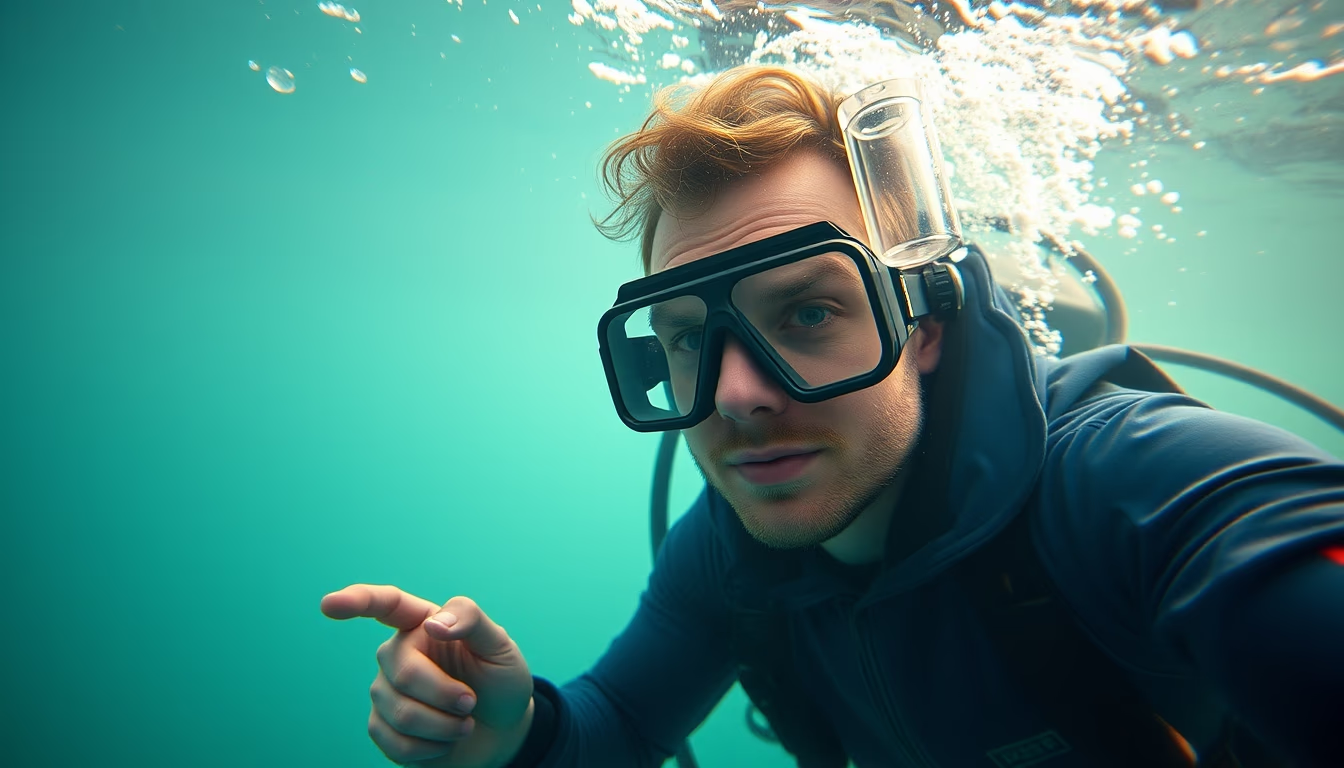
Learn about underwater camera housings, their role in protecting cameras during dives, and key features like materials and depth ratings.
About this subject
An underwater camera housing is a waterproof enclosure that allows cameras and camcorders to be used in aquatic environments, protecting the equipment from pressure, moisture, and corrosion. These devices are essential for photographers and videographers who want to capture images underwater, whether in recreational diving, scientific expeditions, or film productions. Housings are typically made from anodized aluminum or high-strength polycarbonate, each offering distinct advantages: aluminum provides greater rigidity and durability at depth, while polycarbonate is lighter and more affordable.
Depth ratings vary widely by model and construction. Basic housings can withstand up to 40 meters, while professional units for technical diving may reach 100 meters or more. Camera controls are accessed through external buttons, levers, and dials that activate internal functions via rubber seals or mechanical linkages. Most housings allow full access to camera features such as zoom, focus, aperture, and shutter release, as well as flash synchronization.
The history of underwater housings dates back to the early 20th century, when pioneers like Louis Boutan adapted watertight boxes for film cameras. As technology advanced, housings evolved to support digital cameras and high-definition video systems. Today, brands like Nauticam, Aquatica, and Ikelite dominate the market, offering solutions for mirrorless, DSLR, and action cameras. In addition to protection, modern housings incorporate accessories such as lens ports, external lighting connectors, and buoyancy adjustment systems.
Practical use of a housing requires regular maintenance, including lubricating O-rings and checking seals before each dive. For beginners, dedicated housings for compact cameras and smartphones make underwater photography more accessible. Choosing the right housing depends on the camera type, desired depth, and budget, and is a critical investment for capturing clear, safe underwater images.
Frequently Asked Questions
What is the maximum depth an underwater camera housing can withstand?
Depth ratings vary: basic housings are rated for up to 40 meters, while professional models can handle 100 meters or more, depending on materials and construction.
What materials are used to make underwater camera housings?
Common materials include anodized aluminum and high-strength polycarbonate. Aluminum offers greater rigidity and durability, while polycarbonate is lighter and more affordable.
How do I control the camera functions inside the housing?
The housing features external buttons, levers, and dials that connect to the camera's controls through mechanical seals, allowing operation of functions like zoom, focus, aperture, and shutter release.
Direct URL
https://pub-c7d6a6ea828543ac903a74a341ccb2e1.r2.dev/imagens/underwater-camera-housing-film-grain-authentic-fresh12.avifHow to credit
Include a visible link back to UtilizAí. Copy one of the snippets below:
<a href="https://xn--utiliza-eza.com/en/midia/imagens/underwater-camera-housing-film-grain-authentic-fresh12">Underwater camera housing</a> by <a href="https://xn--utiliza-eza.com">UtilizAí</a>, licensed under <a href="https://creativecommons.org/licenses/by/4.0/">CC BY 4.0</a>.
[Underwater camera housing](https://xn--utiliza-eza.com/en/midia/imagens/underwater-camera-housing-film-grain-authentic-fresh12) by [UtilizAí](https://xn--utiliza-eza.com), CC BY 4.0
License: CC-BY-4.0