Underwater camera housing
1344×768 · AVIF · CC BY 4.0
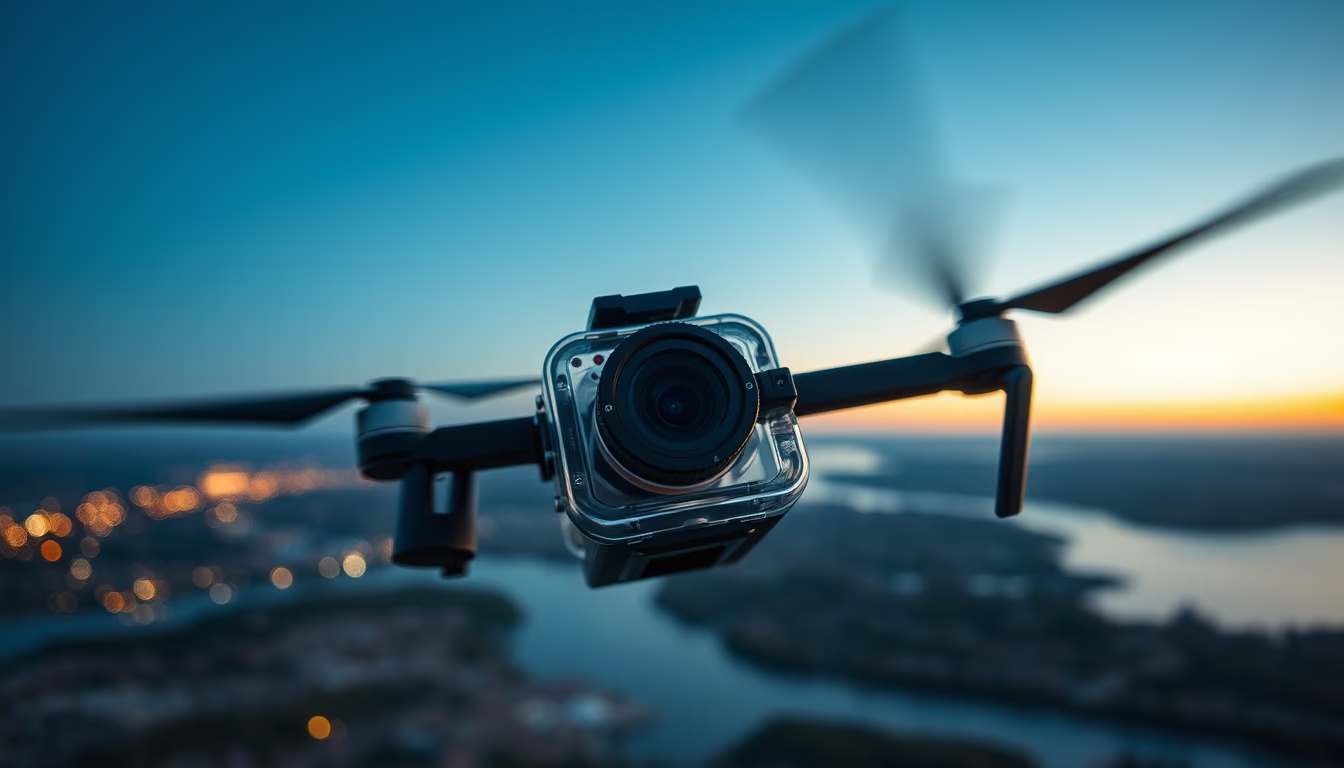
Underwater camera housing, essential for photography and filming in aquatic environments, with pressure and depth resistance.
About this subject
An underwater camera housing is a waterproof enclosure that allows cameras to be used in aquatic environments, such as recreational diving, scientific research, or filmmaking. Typically made of polycarbonate, aluminum, or titanium, these housings are designed to withstand water pressure at depths ranging from a few meters to over 100 meters, depending on the model. Sealing is achieved through rubber O-rings and robust locking mechanisms.
The history of underwater housings dates back to the 1940s, when explorer and filmmaker Jacques Cousteau helped popularize underwater photography with early prototypes. Since then, technology has advanced significantly, with external controls for zoom, focus, and shutter release without compromising waterproof integrity. Modern models may include connectivity for remote triggering and heating systems to prevent lens fogging.
In Brazil, waterproof housings are widely used in marine biology expeditions, such as those by Projeto Tamar and the Oceanographic Institute of USP, where researchers document species like sea turtles and corals. The diving tourism industry in destinations like Fernando de Noronha and Abrolhos also drives demand for amateur and professional equipment.
Interestingly, some models allow compact action cameras to be attached to more robust housings, extending their operational depth. Proper maintenance of O-rings is critical: silicone grease should be applied periodically, and the sealing surfaces must be free of hair or sand before closing, to avoid flooding and equipment loss.
Frequently Asked Questions
What is the maximum depth an underwater camera housing can withstand?
It depends on the model and material. Polycarbonate housings for amateur use typically reach 40 meters, while aluminum or titanium models for technical or professional diving can exceed 100 meters.
Can any camera be used inside an underwater housing?
No. Housings are often designed for specific camera models, as external controls must align precisely with camera buttons. Universal cases exist for compact cameras but may limit functionality.
How to prevent lens fogging inside the housing?
Place silica gel packets inside the housing before sealing to absorb moisture. Some advanced housings feature internal heating systems that reduce vapor formation.
Direct URL
https://pub-c7d6a6ea828543ac903a74a341ccb2e1.r2.dev/imagens/underwater-camera-housing-aerial-drone-shot-fresh3.avifHow to credit
Include a visible link back to UtilizAí. Copy one of the snippets below:
<a href="https://xn--utiliza-eza.com/en/midia/imagens/underwater-camera-housing-aerial-drone-shot-fresh3">Underwater camera housing</a> by <a href="https://xn--utiliza-eza.com">UtilizAí</a>, licensed under <a href="https://creativecommons.org/licenses/by/4.0/">CC BY 4.0</a>.
[Underwater camera housing](https://xn--utiliza-eza.com/en/midia/imagens/underwater-camera-housing-aerial-drone-shot-fresh3) by [UtilizAí](https://xn--utiliza-eza.com), CC BY 4.0
License: CC-BY-4.0