Tugboat working harbor
1344×768 · AVIF · CC BY 4.0
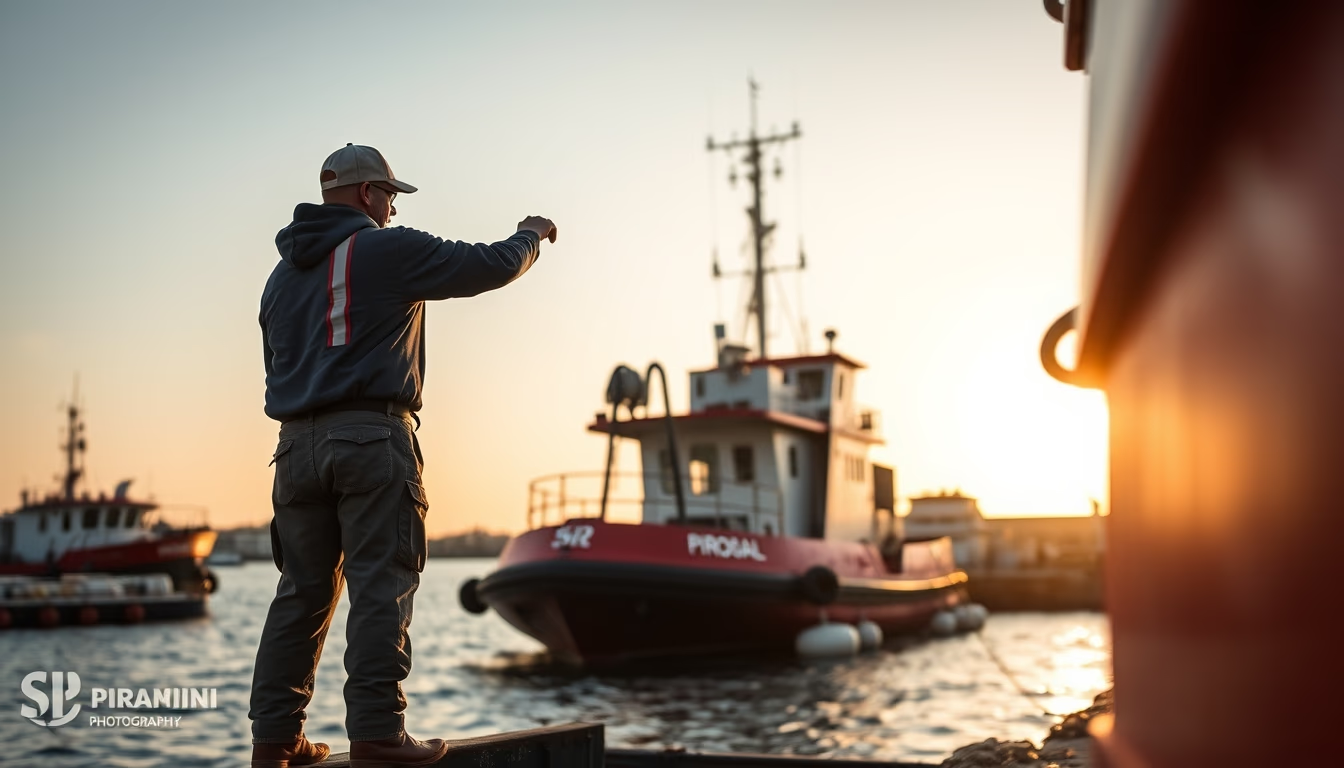
Tugboats are essential vessels for maneuvering ships in ports, ensuring safety and efficiency in maritime operations.
About this subject
Tugboats are vessels designed to assist larger ships during maneuvers in ports, canals, and anchorage areas. Their primary function is to push or pull vessels that cannot move on their own in confined spaces, such as docking and undocking. Historically, the first tugboats emerged in the 19th century with steam engines, replacing oars and sails. Modern tugboats use azimuth thrusters, which rotate 360 degrees for high maneuverability.
Technically, tugboats have robust hulls, shallow drafts, and powerful engines. Power ranges from 3,000 to over 10,000 horsepower (hp), depending on the application. Different types include harbor, ocean-going, and river tugs. Propulsion can be conventional propellers, azimuth thrusters, or Voith-Schneider systems, offering precise control of direction and thrust. These features allow tugboats to operate in adverse conditions like strong winds and currents.
Economically, tugboats are vital for global trade, handling cargo in ports such as Santos, Rotterdam, and Shanghai. They also respond to emergencies, like firefighting and towing disabled ships. Without them, port efficiency would drop sharply, increasing collision risks. Interestingly, some tugs have icebreaking capabilities for polar regions.
Onboard, the crew is usually small, three to five people, including captain, engineer, and deckhands. Shifts can last 12 hours, and the routine demands constant training. International regulations like SOLAS set safety standards. The future points to autonomous and hybrid tugboats, reducing emissions and operating costs while maintaining their essential role in maritime operations.
Frequently Asked Questions
What is the typical power of a tugboat?
Common harbor tugboats have between 3,000 and 6,000 hp, but ocean-going tugs can exceed 10,000 hp.
How do tugboats maneuver so precisely?
They use azimuth thrusters that rotate 360°, allowing them to push or pull in any direction without a rudder.
How many crew members work on a tugboat?
Usually 3 to 5 people, including captain, engineer, and deckhands, working 12-hour shifts.
Direct URL
https://pub-c7d6a6ea828543ac903a74a341ccb2e1.r2.dev/imagens/tugboat-working-harbor-documentary-photography-p2.avifHow to credit
Include a visible link back to UtilizAí. Copy one of the snippets below:
<a href="https://xn--utiliza-eza.com/en/midia/imagens/tugboat-working-harbor-documentary-photography-p2">Tugboat working harbor</a> by <a href="https://xn--utiliza-eza.com">UtilizAí</a>, licensed under <a href="https://creativecommons.org/licenses/by/4.0/">CC BY 4.0</a>.
[Tugboat working harbor](https://xn--utiliza-eza.com/en/midia/imagens/tugboat-working-harbor-documentary-photography-p2) by [UtilizAí](https://xn--utiliza-eza.com), CC BY 4.0
License: CC-BY-4.0