Tower of pisa lean
1344×768 · AVIF · CC BY 4.0
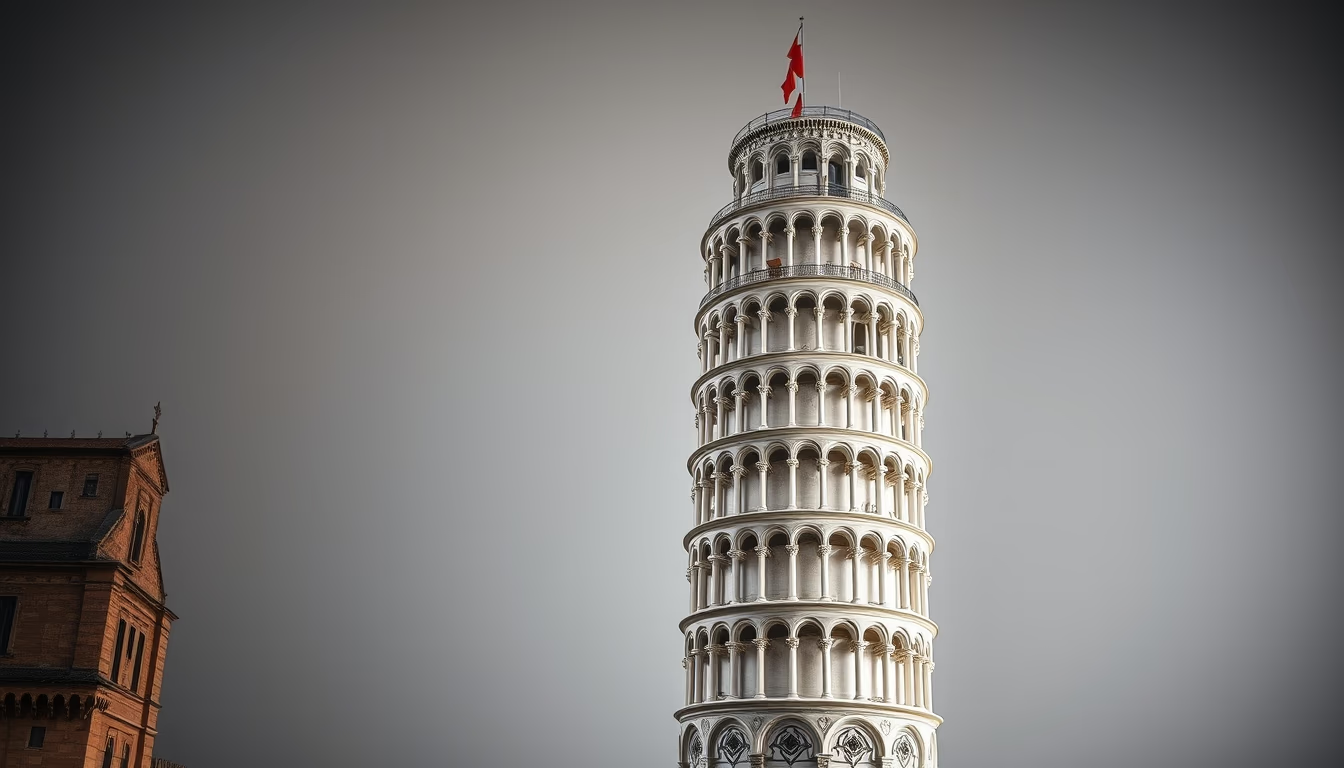
The lean of the Leaning Tower of Pisa, a 12th-century architectural phenomenon in Italy, began due to unstable soil and continues to fascinate engineers and tourists.
About this subject
The Leaning Tower of Pisa, globally famous for its distinctive tilt, is the bell tower of the Cathedral of Pisa, Italy. Construction began in 1173 and took about 200 years to complete, with interruptions due to wars and financial crises. The tilt started during construction when the soft clay soil beneath the foundation gave way under the weight of the structure. The original foundation was only three meters deep, insufficient to support the 56-meter-tall building.
Over the centuries, the tower continued to lean gradually, reaching a maximum angle of about 5.5 degrees in the 1990s. Emergency measures were taken between 1990 and 2001 to stabilize the structure, including soil extraction from the opposite side of the tilt and the installation of lead counterweights. These interventions reduced the lean to approximately 3.97 degrees, ensuring the monument's safety.
The Leaning Tower of Pisa is one of Italy's most recognizable symbols and was declared a UNESCO World Heritage Site in 1987. The tilt is not just a tourist curiosity but also a landmark of medieval engineering and human perseverance. Legends associate the tower with Galileo Galilei's experiments on falling objects, though conclusive historical evidence is lacking.
Today, the tower is constantly monitored. Geotechnical studies indicate that even after corrections, it still moves very slowly, about 1 to 2 millimeters per year. The lean, though reduced, remains a testament to the interaction between human engineering and the forces of nature.
Frequently Asked Questions
Why is the Leaning Tower of Pisa tilted?
The tilt occurred due to unstable soil composed of clay, sand, and marine shells, which gave way under the tower's weight during construction in the 12th century. The shallow foundation of only three meters was insufficient to distribute the load properly.
What is the current tilt angle of the Leaning Tower of Pisa?
After stabilization work between 1990 and 2001, the lean was reduced from about 5.5 degrees to approximately 3.97 degrees. The angle varies slightly depending on climatic and geological conditions.
Is the Leaning Tower of Pisa at risk of falling?
Not currently. Engineering interventions such as soil removal and counterweights stabilized the structure. However, the tower is continuously monitored as it still moves slowly, about 1 to 2 mm per year.
Direct URL
https://pub-c7d6a6ea828543ac903a74a341ccb2e1.r2.dev/imagens/tower-of-pisa-lean-studio-still-life-p6.avifHow to credit
Include a visible link back to UtilizAí. Copy one of the snippets below:
<a href="https://xn--utiliza-eza.com/en/midia/imagens/tower-of-pisa-lean-studio-still-life-p6">Tower of pisa lean</a> by <a href="https://xn--utiliza-eza.com">UtilizAí</a>, licensed under <a href="https://creativecommons.org/licenses/by/4.0/">CC BY 4.0</a>.
[Tower of pisa lean](https://xn--utiliza-eza.com/en/midia/imagens/tower-of-pisa-lean-studio-still-life-p6) by [UtilizAí](https://xn--utiliza-eza.com), CC BY 4.0
License: CC-BY-4.0