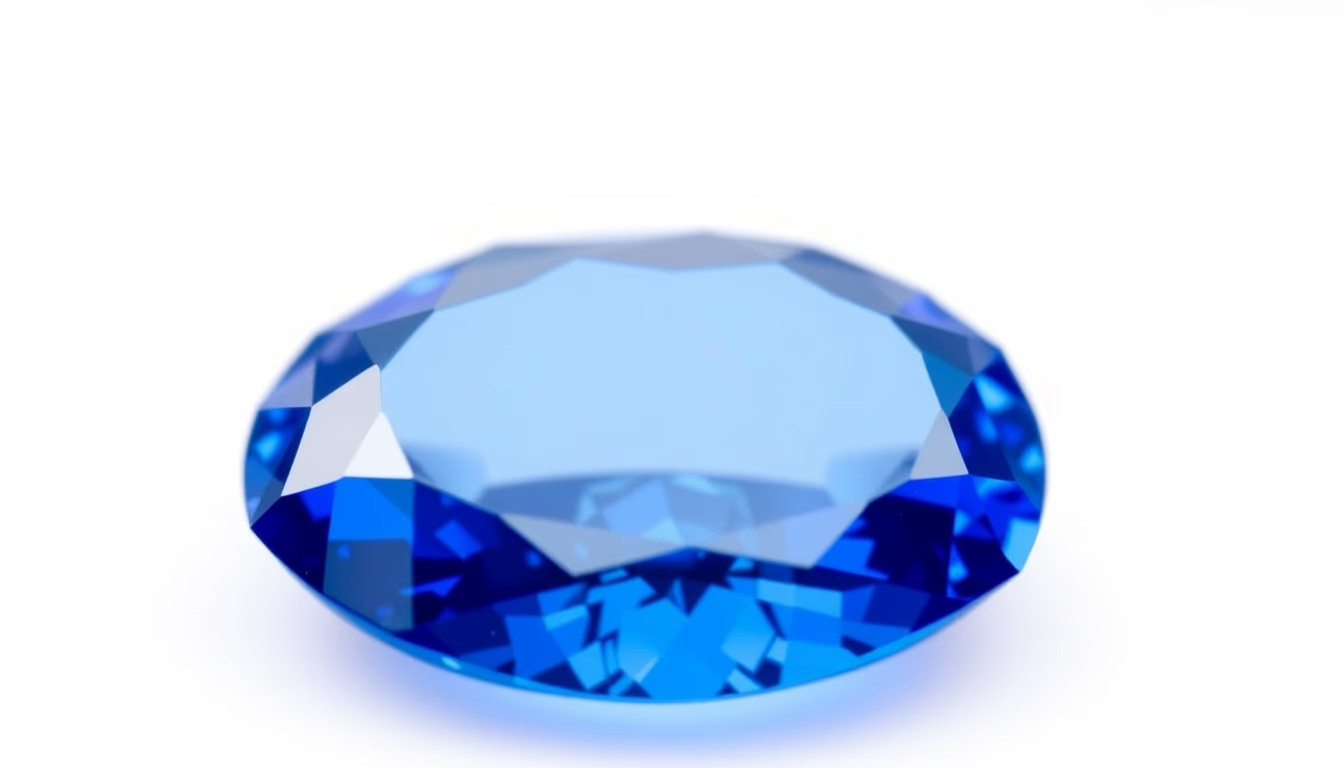
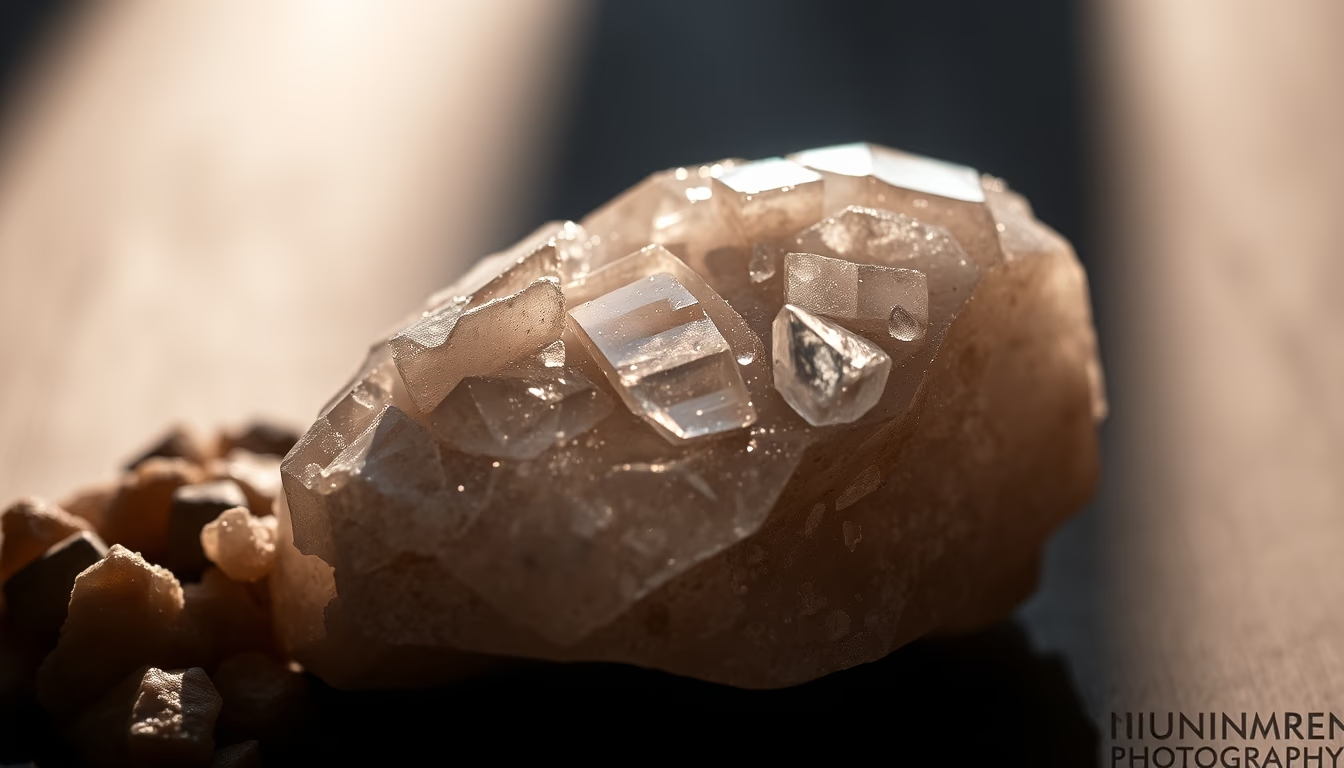
Topaz blue gemstone
1344×768 · AVIF · CC BY 4.0
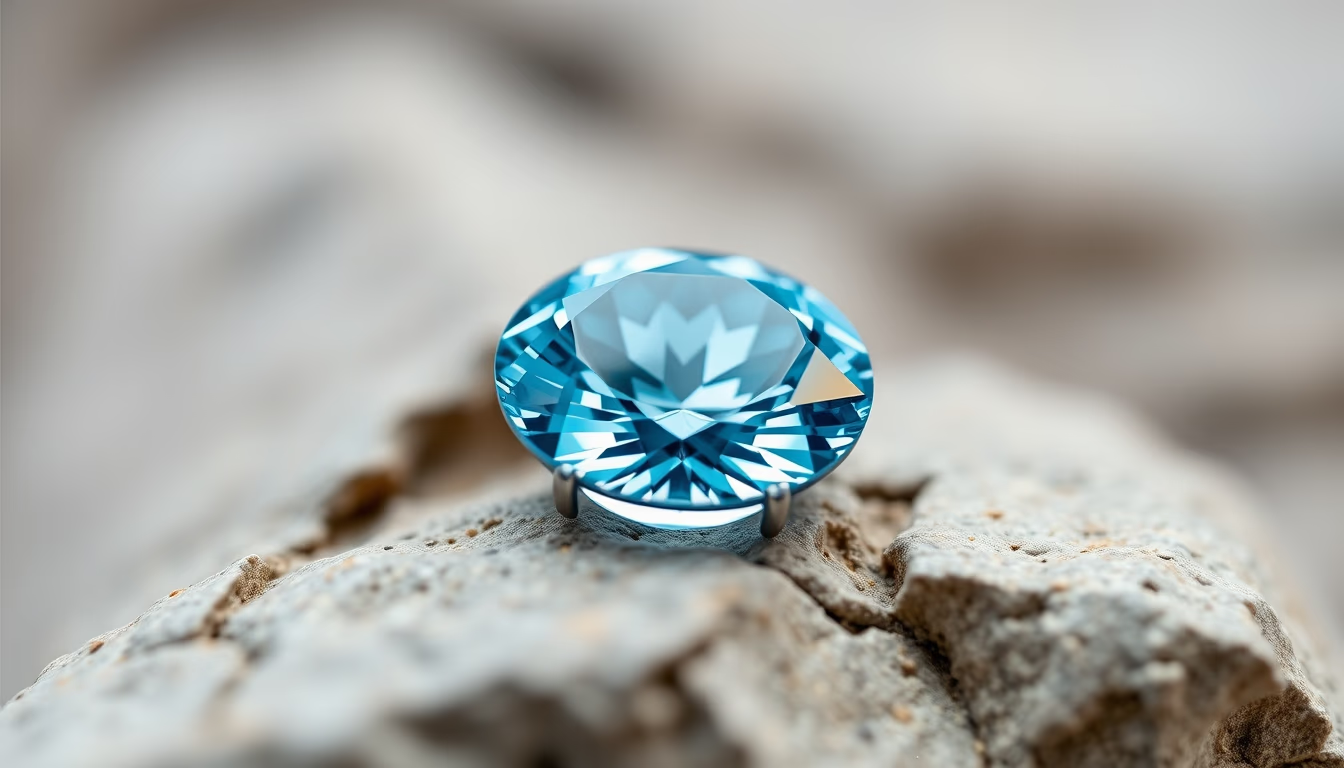
O topázio azul é uma variedade valiosa do mineral topázio, conhecido por sua cor intensa e clareza, amplamente utilizado em joalheria.
Sobre o tema
O topázio azul é uma das gemas mais populares e acessíveis no mercado de joias. Sua cor azul pode variar de tons claros, como o céu, a azuis profundos, semelhantes ao safira. A coloração natural do topázio é geralmente incolor ou amarelo pálido; o azul é obtido principalmente por tratamento térmico ou irradiação de topázios incolores ou de cor clara. Esse processo é estável e amplamente aceito na indústria gemológica.
Os principais depósitos de topázio estão no Brasil, especialmente nos estados de Minas Gerais, Rio Grande do Sul e Bahia. O Brasil é o maior produtor mundial de topázio, incluindo a variedade azul. Outras fontes importantes incluem Paquistão, Sri Lanka, México e Rússia. O topázio azul é frequentemente confundido com água-marinha ou safira azul, mas diferencia-se pela dureza (8 na escala Mohs) e pela clivagem perfeita em uma direção.
Historicamente, o topázio era conhecido pelos antigos egípcios e romanos, que acreditavam que a pedra tinha poderes de proteção e cura. Na cultura moderna, o topázio azul é a pedra de nascimento de dezembro, juntamente com a tanzanita e a turquesa. É também oferecido como presente para o 4º aniversário de casamento.
A qualidade do topázio azul é avaliada pela saturação da cor, pureza (ausência de inclusões visíveis) e lapidação. As cores mais valorizadas são o "London Blue" (azul escuro profundo) e o "Swiss Blue" (azul médio vibrante). Gemas de alta qualidade podem atingir preços significativos, mas geralmente são mais acessíveis que safiras ou água-marinhas de tom similar.
Perguntas frequentes
O topázio azul é natural ou tratado?
A maioria dos topázios azuis disponíveis no mercado é submetida a tratamento térmico ou irradiação para obter a cor azul. O topázio azul natural é extremamente raro e geralmente possui tom mais claro. O tratamento é estável e não diminui o valor da gema, sendo amplamente aceito.
Como diferenciar topázio azul de água-marinha?
O topázio azul tem dureza 8 na escala Mohs, enquanto a água-marinha tem dureza 7,5-8. Além disso, o topázio apresenta clivagem perfeita em uma direção, o que o torna mais frágil em certos ângulos. A água-marinha geralmente tem tom mais esverdeado ou azul-claro, enquanto o topázio pode ter azul mais intenso.
Quais são os cuidados com joias de topázio azul?
Evite impactos fortes, pois o topázio pode lascar ao longo de sua clivagem. Limpe com água morna e sabão neutro, usando escova macia. Não use limpadores ultrassônicos ou vapor, pois o calor ou vibração podem danificar a pedra ou o tratamento. Guarde separado de outras gemas para evitar riscos.
URL direta
https://pub-c7d6a6ea828543ac903a74a341ccb2e1.r2.dev/imagens/topaz-blue-gemstone-tilt-shift-miniature-p8.avifComo creditar
Inclua um link visível de volta pro UtilizAí. Copie um dos snippets abaixo:
<a href="https://xn--utiliza-eza.com/midia/imagens/topaz-blue-gemstone-tilt-shift-miniature-p8">Topaz blue gemstone</a> by <a href="https://xn--utiliza-eza.com">UtilizAí</a>, licensed under <a href="https://creativecommons.org/licenses/by/4.0/">CC BY 4.0</a>.
[Topaz blue gemstone](https://xn--utiliza-eza.com/midia/imagens/topaz-blue-gemstone-tilt-shift-miniature-p8) by [UtilizAí](https://xn--utiliza-eza.com), CC BY 4.0
Licença: CC-BY-4.0